
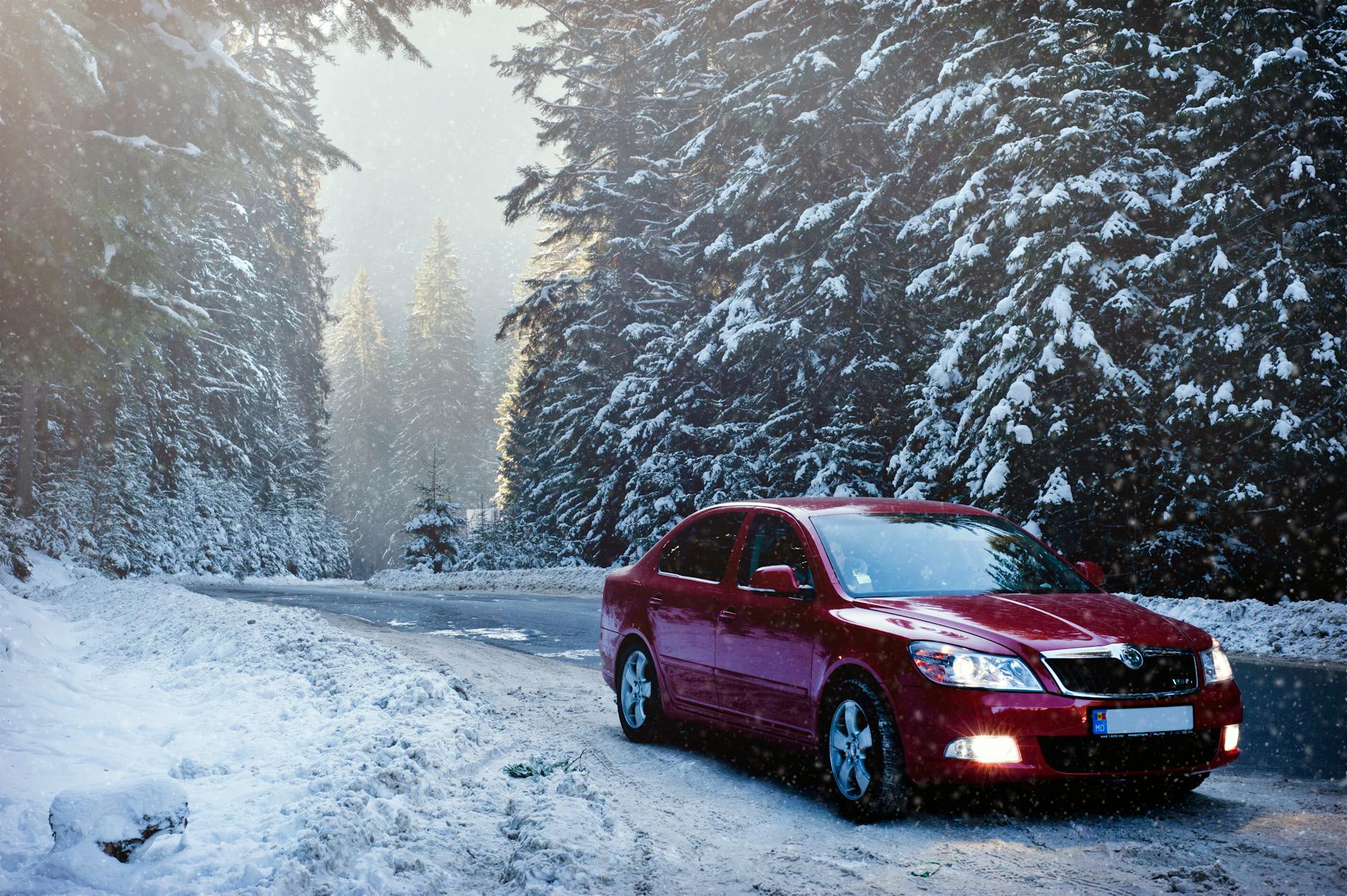
Every winter, thousands of drivers get caught off guard by the first real storm of the season. A stalled car on a rural road in July is an inconvenience. The same breakdown in sub-zero temperatures is a genuine medical emergency — hypothermia can set in faster than most people expect, and help can be 30 minutes or more away. The good news: a well-stocked winter car emergency kit costs very little, fits in your trunk, and turns a potential crisis into a minor hassle.
Below is the no-fluff checklist of what every driver should keep in the vehicle before the first snowfall, why each item matters, and how to build a kit you'll actually trust when the temperature drops.
Why a Winter Car Kit Isn't Optional
The mindset shift is simple: in cold climates, being stranded without supplies isn't just uncomfortable — it can be dangerous. A single-car slide-off on a quiet county road can leave you waiting a long time for a tow or a passing driver. If your engine won't run (and therefore your heater won't either), your body is on its own against the cold.
A proper kit does three jobs: it keeps you warm, keeps you visible, and gives you the tools to get moving again on your own. Build around those three goals and you can't go far wrong.
The 15-Item Winter Emergency Kit Checklist
Here's the core list. None of these are "nice to have" — treat them as mandatory before winter sets in.
- Jump starter or jumper cables. Cold murders weak batteries. A compact lithium jump starter can crank a dead battery even in deep cold and doesn't require a second vehicle.
- Ice scraper and snow brush. Obvious — and yet the single most commonly forgotten item in the car when the first storm hits.
- Compact folding snow shovel. Critical for digging a tire out of a drift or clearing packed snow from around your wheels.
- Road flares or LED safety triangles. Make yourself seen before another driver finds you the hard way.
- Reflective vest. For the moment you have to step out of the vehicle on a shoulder in low visibility.
- Warm blanket. A space blanket packs into a pocket, but wool or fleece holds up far better for extended exposure.
- Waterproof gloves and a warm hat. Your hands are your first casualty in the cold — protect them so you can still work.
- Portable phone charger or 12V power bank. A dead phone means no roadside-assistance call. Keep it charged.
- Water. At least one liter. Dehydration impairs decision-making fast, even in the cold.
- Energy bars or trail mix. Calories are heat. Keep non-perishable food that won't freeze solid.
- Small first aid kit. Bandages, gauze, tape, and any personal medications.
- Tow or recovery strap. Rated to your vehicle's weight, for when a good Samaritan can pull you clear.
- Flashlight or headlamp with spare batteries. Winter means long nights and early darkness.
- Traction aid. Sand, kitty litter, or dedicated traction boards for grip under spinning tires.
- Portable tire inflator and an accurate gauge. Tire pressure drops roughly 1 PSI for every 10°F temperature drop — and a slow leak in freezing weather can strand you fast.
Keep You Warm: Clothing and Heat
If your car dies, your heat dies with it. Pack as if you may have to sit for hours without the engine running: a quality blanket, an extra hat and gloves, and a few chemical hand warmers take up almost no space. If you commute in truly brutal cold, stash a sleeping bag rated for freezing temps in the trunk. Calories matter too — your body burns fuel to stay warm, so keep shelf-stable snacks that won't turn to bricks.
Keep You Visible: Signaling and Safety

Visibility saves lives in winter. Reduced daylight, blowing snow, and icy roads mean other drivers may not see a stalled vehicle until it's too late. LED safety triangles or flares behind your car, a reflective vest before you step out, and a bright flashlight or headlamp are the difference between being found and being a hazard. If you're stranded, stay with the vehicle — it's far easier for rescuers to spot a car than a person on foot.
Get Moving Again: Traction and Recovery
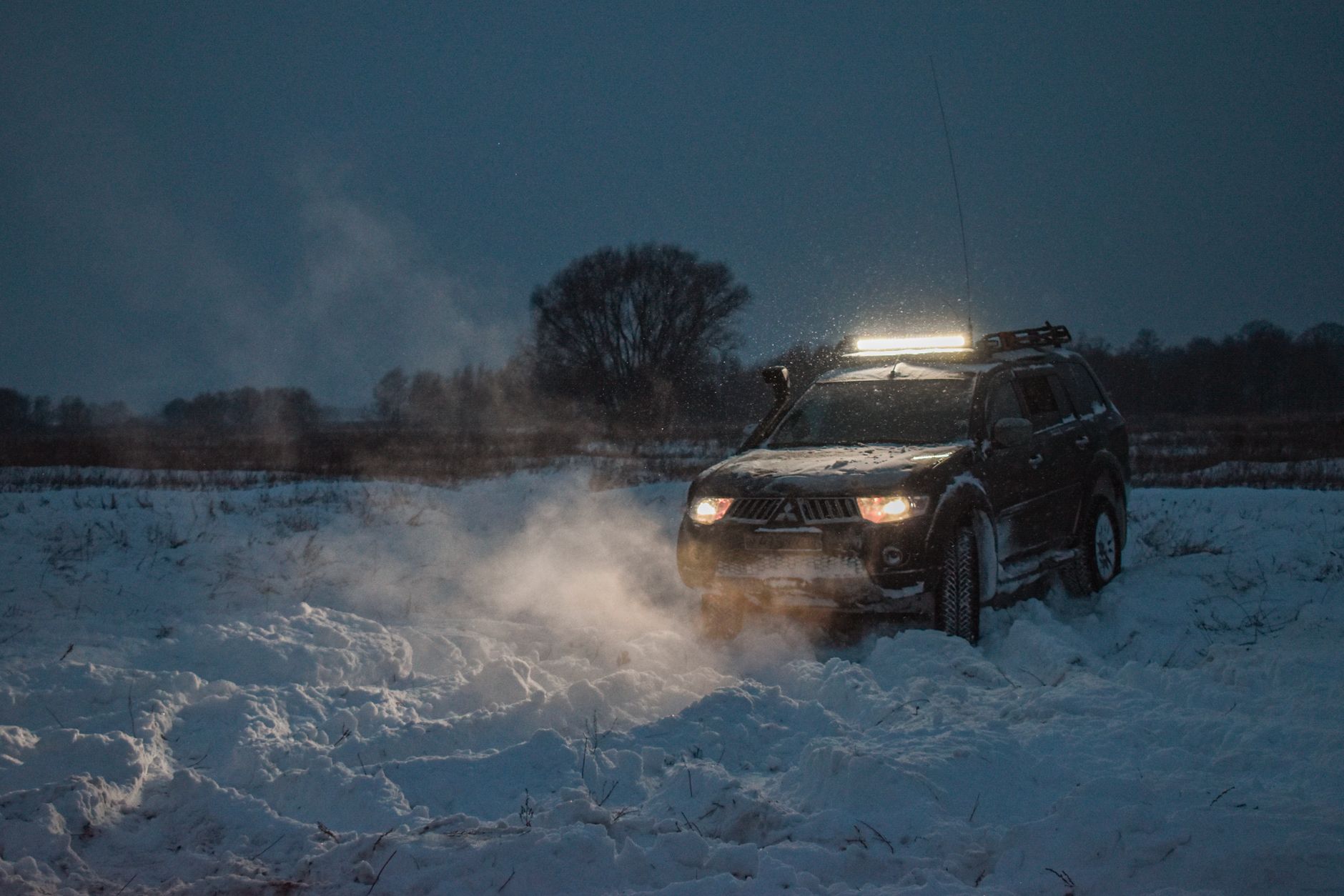
Most winter "emergencies" are really just a stuck tire. A folding shovel, a bag of sand or kitty litter, and a set of traction boards will get you unstuck in the vast majority of cases. Keep a tow strap rated to your vehicle's weight so a passing truck can pull you free safely — never improvise with a rope that isn't rated for recovery loads.
Don't Forget Tire Pressure
Cold air is dense air, which means your tires lose pressure as the temperature falls — roughly 1 PSI for every 10°F drop. Underinflated tires handle worse on ice, wear unevenly, and are more prone to failure. A compact cordless inflator lets you top off in a parking lot or on the shoulder without hunting for a gas-station pump, and it doubles as a lifesaver if you pick up a slow leak miles from anywhere.

Charge Up: Dead Batteries and Dead Phones

Battery failure is the number-one winter breakdown call. Cold reduces a battery's cranking power dramatically, and an older battery that struggled all fall will quit entirely in a cold snap. Carry a compact lithium jump starter — it fits in a glove box, needs no second car, and most double as a USB power bank to keep your phone alive. Pair it with a quality gauge so you can keep tabs on tire pressure all season instead of guessing.

Where to Store It All
A single sturdy tote or duffel in the trunk keeps everything together and easy to grab. Check the kit at the start of every winter: swap dead batteries, replace used supplies, top off water, and make sure nothing has frozen or degraded. Keep the items you'd need fast — scraper, gloves, flashlight — within reach of the driver's seat, not buried under the spare.
For a head start on the tire-safety essentials, our full lineup of inflators, gauges, and deflators covers the air-pressure side of the kit with professional-grade tools built to last.
Build It Before You Need It
The whole point of a winter emergency kit is that it's ready before the storm, not assembled in a panic after you're already stuck. Spend an afternoon this fall putting one together, stash it in the trunk, and give it a quick check each month. It's cheap insurance against the one night you really don't want to be caught unprepared. Stay warm, stay visible, and keep the tools on hand to get yourself moving again.