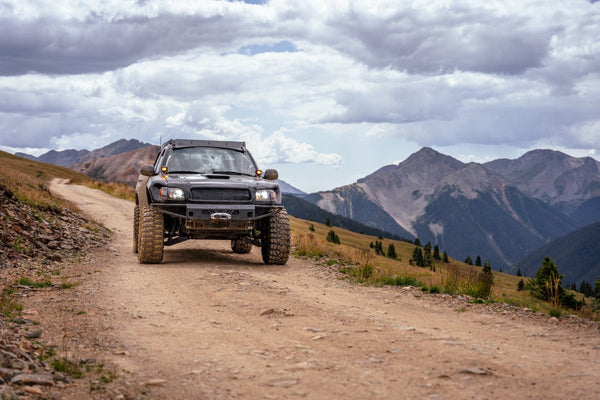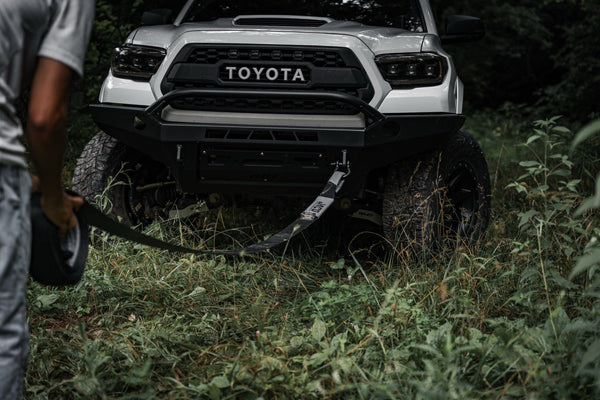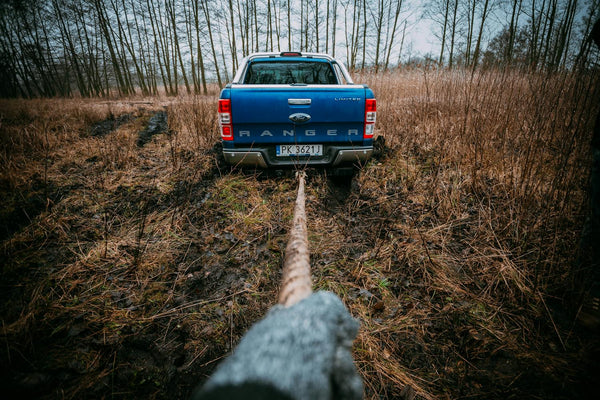

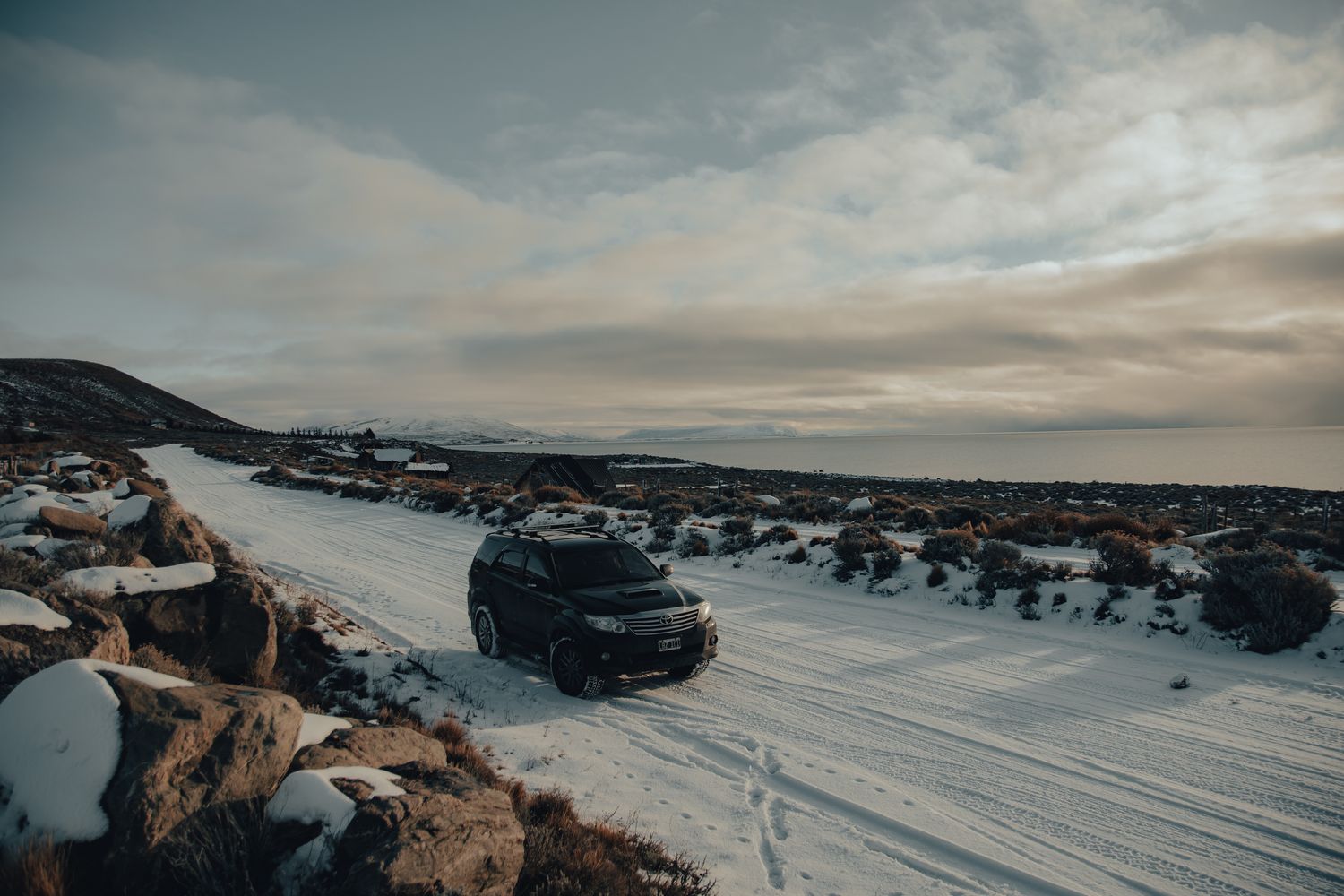
If you've ever stared at a dealer sticker that says "4WD" on one truck and "AWD" on a similar-looking SUV next to it and wondered what the actual difference is — you're not alone. The two systems sound interchangeable, the marketing makes them sound interchangeable, and a lot of drivers use the terms as if they are. They're not. The mechanics under the floor are genuinely different, and that difference shows up the moment the pavement gets slick, the dirt turns to mud, or the road tilts up a steep, loose climb.
Here's the honest, no-jargon breakdown of how 4WD and AWD work, where each one shines, where each one struggles, and how to figure out which one belongs in your driveway.
The Short Answer
All-wheel drive (AWD) sends power to all four wheels all the time (or automatically, on demand), and it's tuned for traction on paved or lightly unpaved surfaces — wet roads, snow, dirt, the occasional gravel two-track.
Four-wheel drive (4WD) also drives all four wheels, but it's built around a low-range transfer case and a much heavier-duty drivetrain. It's designed for serious off-road work — rocks, deep mud, steep grades, sand, and the kind of terrain where you actually need torque multiplication.
Said another way: AWD is for traction. 4WD is for capability. They overlap in the middle, but they were engineered for different ends of the spectrum.
How AWD Actually Works
An AWD system has a center differential (or a clutch pack that acts like one) sitting between the front and rear axles. It splits engine torque between the two ends of the car continuously, and it can change that split on the fly. On dry pavement, most modern AWD systems send the majority of power to one axle (often the front in car-based crossovers, the rear in performance-oriented vehicles) and shuffle torque to the other end only when sensors detect slip.
Because the system uses a differential — not a locked, mechanical connection — the front and rear axles can spin at slightly different speeds. That's critical, because when you turn a corner, the front wheels actually travel a longer arc than the rear ones. If they were forced to spin at exactly the same rate, you'd get binding, tire scrub, and driveline stress.
That same flexibility is why AWD works so well on the street. It's invisible until you need it: you merge onto a wet highway, you pull out of a snowy parking spot, you climb a wet boat ramp — and the system has already moved torque to the wheel that needs it before you've even noticed.
How 4WD Actually Works
A traditional 4WD system uses a transfer case, which is a beefy gearbox bolted to the back of the transmission. When you shift it into 4WD, it mechanically locks the front and rear driveshafts together so they spin at the same speed. Both axles get equal torque. No differential between them, no slip — just a hard, mechanical link.
That's a strength off-road and a weakness on dry pavement. On dirt, sand, or snow, the surface lets the tires scrub a little when you turn — so locking the axles together is fine. On dry asphalt, those tires can't slip, and you get driveline bind that stresses parts and chirps the tires every time you turn the wheel. That's why old-school 4WD systems are labeled "part-time" — they're designed to be engaged only when you're off-road or on a loose surface.
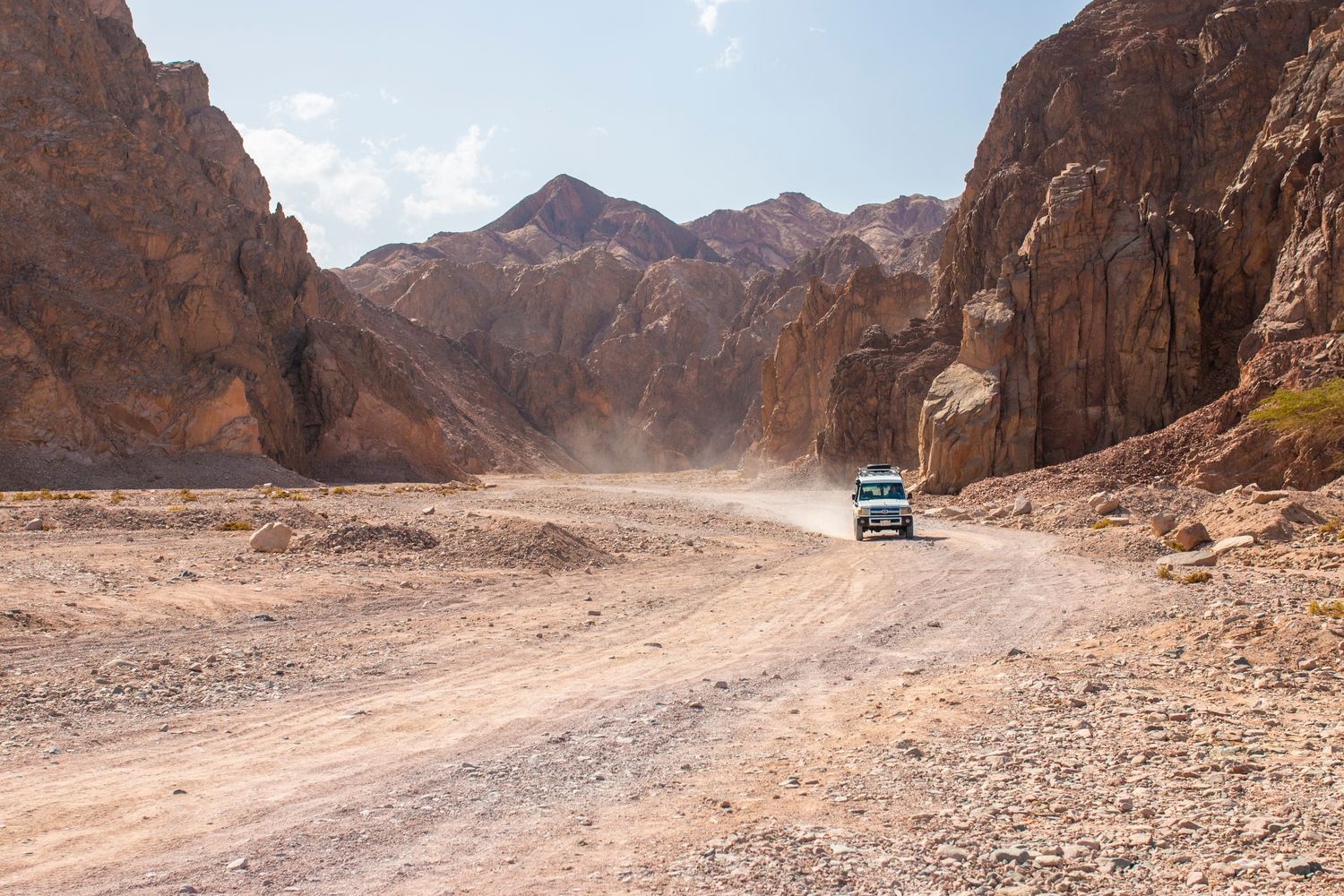
The other defining feature of 4WD is the low range, usually called 4-Low or 4L. Shifting into 4L runs the drivetrain through a much shorter set of gears inside the transfer case, multiplying torque by roughly 2.5×–4×. That's what lets a truck crawl up a rocky ledge at idle, or pull a stuck rig out of mud without overheating the transmission. AWD systems don't have a low range, period. That single feature is the cleanest line you can draw between the two systems.
Full-Time, Part-Time, and "Automatic" 4WD — A Quick Glossary
The waters get muddier because modern trucks and SUVs blur the categories:
- Part-time 4WD: The classic setup. 2WD on the road, 4-High or 4-Low when you need it. Found in trucks like the Tacoma, 4Runner (base), Wrangler, and Bronco. Cannot be left in 4WD on dry pavement.
- Full-time 4WD: A 4WD system with a center differential, so it can stay engaged on pavement. Includes 4-Low. Found in the Land Cruiser, some 4Runner trims, Land Rovers, and heavy-duty trucks. Effectively a "best of both" system, but more complex and heavier.
- Automatic / on-demand 4WD: A computer-controlled clutch decides when to engage the front axle. Often marketed as "4WD Auto." Behaves like AWD on the street but has a true 4-Low for off-road. Common in modern Ford F-150s, Ram 1500s, and many newer SUVs.
- AWD: Always-on or on-demand torque to all four wheels, no low range. Found in nearly every car-based crossover (RAV4, CR-V, Outback, Crosstrek), most car-based SUVs, and many performance sedans.
If you're shopping a vehicle and the spec sheet doesn't mention 4-Low, it's not a true 4WD system regardless of what the badge on the tailgate says.
When AWD Is the Right Choice
AWD is the better answer for most drivers who never plan to leave maintained roads. It's the right tool when:
- You live somewhere with real winters — snowy commutes, slick on-ramps, icy parking lots.
- You drive on wet roads regularly. The torque vectoring in modern AWD systems is genuinely good in the rain.
- You take occasional gravel forest roads, dirt two-tracks to a trailhead, or sand-packed beach roads.
- You want better fuel economy than a body-on-frame 4WD truck (AWD systems are typically lighter and more efficient).
- You value smooth, hands-off behavior over outright capability.
An AWD Subaru or RAV4 will absolutely get you to most cabins, ski lots, and gravel campsites without complaint. What it will struggle with is anything that demands ground clearance, articulation, or low-speed torque — washouts, big rocks, mud bogs, steep loose climbs.
When 4WD Is the Right Choice
4WD earns its weight and complexity when the terrain gets serious:
- You wheel actual off-road trails — rocks, deep ruts, washouts.
- You tow heavy or off-road on loose surfaces (a 4-Low gear is gold when launching boats up a slick ramp or backing a trailer up a dirt grade).
- You overland and need predictable, mechanical capability in remote areas where being stuck is a real problem.
- You live somewhere with deep snow or unmaintained winter roads — not just commuter snow.
- You want a vehicle with locking differentials, since lockers are almost exclusively offered on 4WD platforms.
The trade-off is real: heavier, thirstier, more complex, and generally a less refined ride on the highway. A 4Runner is not a Crosstrek and never will be. But if your weekends include actual dirt, that trade is worth it.
Tires Matter More Than the Drivetrain — Always
Here's the truth almost no dealer will tell you: the single biggest factor in winter and off-road traction isn't whether you have AWD or 4WD. It's your tires. A 2WD pickup on aggressive snow tires will out-traction an AWD crossover on bald all-seasons every single time. A 4WD truck on cheap highway tires will get stuck in mud that a 2WD truck on real all-terrains crawls right through.
The drivetrain decides how power gets to the ground. The tires decide whether that power actually does anything. Match the tire to the terrain, then worry about the drivetrain.
The same logic applies to tire pressure. Even the best off-road tire is dramatically less capable if it's at highway PSI when you hit the dirt. Airing down to 18–22 PSI (for most light truck off-road work) lengthens the tire's contact patch, lets it conform to obstacles, and dramatically improves grip and ride quality. Airing back up to spec before you hit pavement protects the sidewalls and your fuel economy. A good gauge is the cheapest capability upgrade you'll ever buy.

Common Myths, Cleared Up
"AWD helps you stop better in snow." It doesn't. AWD only helps you accelerate. Braking is the same on every vehicle — four wheels, four brake calipers. AWD will get you up an icy hill faster than 2WD; it won't stop you any sooner at the bottom.
"4WD is always better in snow." Usually false. For paved, snowy commutes, AWD is often a better daily driver because you don't have to think about engaging anything and it works well on plowed surfaces. 4WD wins when the snow is deep and the road is unmaintained.
"My SUV has AWD, so I can go anywhere." Marketing has done a lot of damage here. AWD without low range, real ground clearance, and proper tires is a wet-weather and snow-day system — not an off-road system. Treat it accordingly.
"4WD on dry pavement is fine on my new truck." Only if it's full-time 4WD or 4WD Auto. Engaging a part-time 4WD system on dry pavement will damage the transfer case over time. Read your owner's manual.
How to Decide Which One You Need
Be honest about how you actually use a vehicle, not how you imagine using it. Most people benefit from AWD; a smaller group genuinely needs 4WD; a few should be running both, in different vehicles.
Pick AWD if your driving is 95% pavement with occasional dirt roads, you want a daily that handles winter without fuss, and fuel economy matters.
Pick 4WD if you spend real time off-road, tow heavy on loose surfaces, live somewhere unmaintained roads are normal in winter, or you want a platform you can build into an overland or wheeling rig.
Pick 4WD Auto / full-time 4WD if you want the daily-driver smoothness of AWD with a real off-road system underneath. It's the most expensive choice and arguably the best of both worlds.
And whatever drivetrain you choose, spend the money on good tires, check your pressures before every long drive, and keep a quality gauge in the glovebox. The drivetrain decides where the power goes. The tires decide whether you get there.
Need a reliable gauge for daily checks and trail use? Browse the full JACO tire pressure gauge collection — from compact analog gauges to professional-grade digital units built for cars, trucks, ATVs, and bikes.