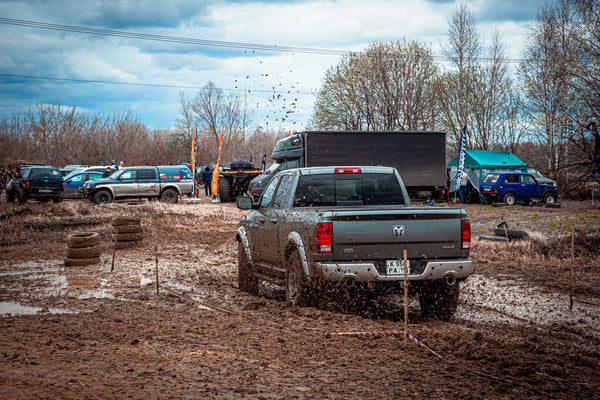


There's a moment every off-roader dreads: wheels spinning, mud flying, and your rig going absolutely nowhere. Whether it's a rain-soaked trail, a sandy wash, or a rocky shelf that got the better of your approach angle, getting stuck is part of the adventure. What separates a minor inconvenience from a full-blown crisis is one simple thing — knowing how to use a recovery strap safely.
Recovery straps are one of the most essential pieces of off-road gear you can carry, yet they're also one of the most commonly misused. A botched recovery can snap hardware, damage vehicles, or — in the worst case — seriously injure someone. This guide walks you through everything you need to know to pull off a safe, successful vehicle recovery every time.
What Is a Recovery Strap (And What It Isn't)?
A recovery strap — sometimes called a snatch strap or kinetic recovery rope — is a heavy-duty nylon strap designed to stretch under load. That elasticity is the key: when the recovery vehicle accelerates, the strap stretches and then rebounds, transferring kinetic energy to the stuck vehicle and helping pull it free.
This is fundamentally different from a tow strap, which has little to no stretch and is designed for flat-tow situations (like pulling a disabled vehicle on pavement). Using a tow strap for recovery pulls can be dangerous because the sudden shock load has nowhere to go — it gets absorbed by the attachment points, which can fail catastrophically.
Quick rule: Recovery = stretch. Towing = no stretch. Don't mix them up.
Essential Recovery Gear You Need

Before you ever hit the trail, make sure your recovery kit includes:
- Recovery strap — Rated for at least 2x your vehicle's gross weight. For most full-size trucks and SUVs, look for a minimum 30,000 lb break strength. The JACO TowPro Recovery Tow Strap is rated at 31,542 lbs and features reinforced loop ends for secure attachment.
- D-ring shackles — 3/4" bow shackles rated for your vehicle weight. These connect the strap to your recovery points.
- Recovery points — Factory tow hooks or aftermarket recovery points bolted to the frame. Never attach to a bumper, tie-down loop, or ball hitch.
- Gloves — Heavy leather work gloves protect your hands from frayed fibers and pinch points.
- A spotter — Someone outside both vehicles calling directions. Non-negotiable for safety.
Optional but helpful: a tree saver strap, snatch block (pulley), and a portable air compressor for airing tires back up post-recovery.
Step-by-Step: How to Perform a Safe Recovery Pull
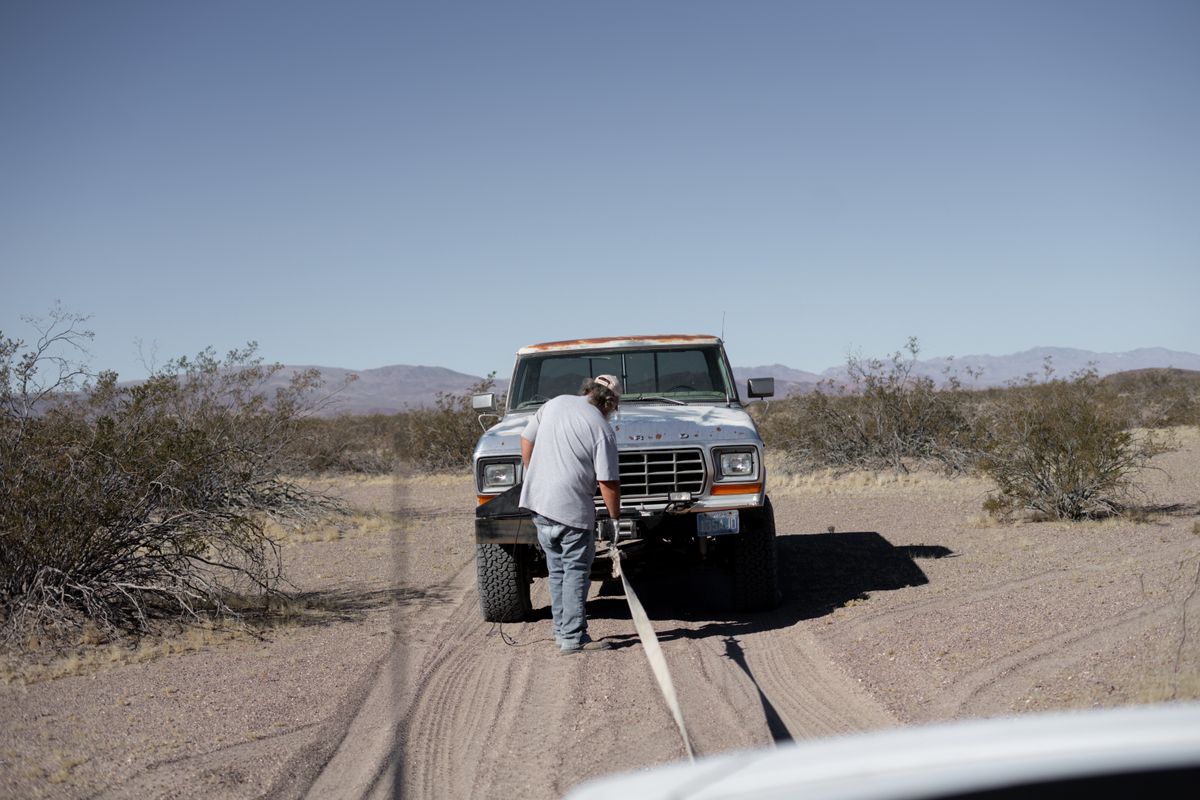

1. Assess the Situation
Before hooking anything up, figure out why the vehicle is stuck. Is it high-centered? Buried to the axles? Stuck on one side? The angle and direction of the pull matters enormously. You want to pull in the direction that offers the least resistance — usually straight back the way the vehicle came in.
2. Position the Recovery Vehicle
The recovery vehicle should be on solid ground, lined up as straight as possible with the stuck vehicle. Angled pulls put lateral stress on attachment points and can cause the strap to slip. Leave enough distance between vehicles for the full length of the strap — typically 20 to 30 feet — with a slight amount of slack.
3. Attach the Strap Correctly

Thread the strap's loop ends through properly rated D-ring shackles, then pin the shackles to frame-mounted recovery points. Never wrap a strap around a ball hitch, axle, or suspension component. These aren't designed for the shock loads involved in a kinetic recovery.
Double-check that shackle pins are finger-tight plus a quarter turn back. Over-tightening can make them impossible to remove after the load is applied, and cross-threading can cause failure.
4. Clear the Area
Everyone not in a vehicle needs to move well away from the strap's line of pull — at least two strap-lengths to the side. If a strap or shackle fails under load, the energy release can be deadly. Never stand near, over, or behind a loaded recovery strap.
Pro tip: Drape a heavy blanket or recovery damper over the middle of the strap. If it snaps, the weight absorbs energy and pulls the strap down instead of letting it whip through the air.
5. Execute the Pull
Communication is everything. Agree on signals beforehand — hand signals, walkie-talkies, or horn honks. The recovery vehicle should accelerate smoothly and steadily (not floor it). The strap should stretch and load gradually. The stuck vehicle should be in gear and applying gentle throttle to assist.
If the first pull doesn't work, stop and reassess. Repeated yanking at full force is how straps and attachment points fail. Consider changing the pull angle, digging out around the tires, or reducing tire pressure for more traction.
Common Mistakes That Can Get Someone Hurt
Recovery mishaps are almost always preventable. Here are the most common errors:
- Using a tow strap instead of a recovery strap. No stretch = shock loads = broken hardware.
- Attaching to a ball hitch. Ball hitches are designed for downward tongue weight, not horizontal shock loads. They can shear off and become a projectile.
- Jerking the strap. A controlled, steady pull with a kinetic strap does the work. Jerking creates unpredictable peak loads.
- Using a damaged strap. Inspect your strap before every use. Frayed edges, cuts, UV fading, or stretched-out loops mean it's time for a replacement.
- Not using a damper. A $15 recovery damper or even a floor mat draped over the strap can prevent a catastrophic whip if something fails.
- Standing in the danger zone. The area directly in front of, behind, and alongside the strap is a no-go zone during a pull.
How to Choose the Right Recovery Strap
Not all straps are created equal. Here's what to look for:
- Break strength: Minimum 2x your vehicle's gross weight. A 6,000 lb truck needs at least a 12,000 lb strap — but more is better. The JACO TowPro at 31,542 lbs gives you massive safety margin for full-size trucks and SUVs.
- Width: 3" straps are standard for most truck and SUV recoveries. Wider = stronger and more durable.
- Length: 20-30 feet is ideal. Too short and vehicles are dangerously close; too long and you lose kinetic energy.
- Loop ends vs. hooks: Reinforced loop ends are safer than hooks. Hooks can bend or detach under extreme load. Loops paired with D-ring shackles give you a secure, adjustable connection.
- Material: High-quality nylon with proper UV treatment lasts years. Cheap polyester straps lose strength quickly in sun exposure.
Caring for Your Recovery Strap

A recovery strap is a piece of safety equipment. Treat it like one:
- Rinse after every use. Mud, sand, and grit work into the fibers and weaken them over time.
- Dry completely before storing. Mildew and moisture degrade nylon faster than anything.
- Store out of direct sunlight. UV is the #1 killer of nylon straps. Keep it in a gear bag in your truck.
- Inspect regularly. Check loop ends for wear, look for cuts or fraying along the length, and feel for stiff or crunchy spots (a sign of UV or chemical damage).
- Replace when in doubt. A recovery strap that fails at the wrong moment can total a vehicle or worse. When it shows wear, retire it.
When to Call for Professional Recovery
There's no shame in calling a professional. If a vehicle is buried past the axles, rolled onto its side, or stuck in a way that requires winching from an anchor point you can't safely reach, it's time to call a tow service that specializes in off-road recovery. The cost of a professional extraction is always less than the cost of a broken vehicle — or a trip to the emergency room.
Hit the Trail Prepared
Off-roading is about pushing limits and exploring new terrain, but it's also about being prepared for when things don't go as planned. A quality recovery strap, the right attachment hardware, and the knowledge to use them safely are non-negotiable items in any off-road kit.
Take the time to practice recovery techniques in a controlled setting before you need them on the trail. Pair up with a buddy, find a safe spot, and run through the steps. When the real situation comes, you'll be calm, confident, and ready to get back on the trail.
Check out the full JACO TowPro Recovery Tow Strap and browse our complete lineup of off-road recovery gear to make sure you're covered before your next adventure.