

There's a moment on every overlander's first trip when the pavement ends, the cell signal drops, and the real adventure begins. Overlanding — the practice of self-reliant, vehicle-based travel through remote terrain — has exploded in popularity over the past few years. But unlike a weekend car camping trip, overlanding demands preparation. The gear you bring (and the gear you leave behind) can make the difference between an unforgettable adventure and an expensive tow back to civilization.
Whether you're planning your first overnight trail run or a multi-day backcountry expedition, this guide covers the essential gear categories every overlander needs to pack — plus practical tips on what to prioritize when your budget and cargo space are limited.
What Makes Overlanding Different From Car Camping?
Car camping typically means driving to a designated campsite with amenities nearby — bathrooms, potable water, maybe even cell service. Overlanding flips that script. You're driving remote, unpaved routes where the nearest town might be hours away. Your vehicle is your lifeline: transportation, shelter support, and supply carrier all in one.
That self-reliance factor is what makes gear selection so critical. You can't just run to the store if you forgot something. Every piece of equipment needs to earn its spot in your rig.
Tire Management: Your Most Important Gear Category

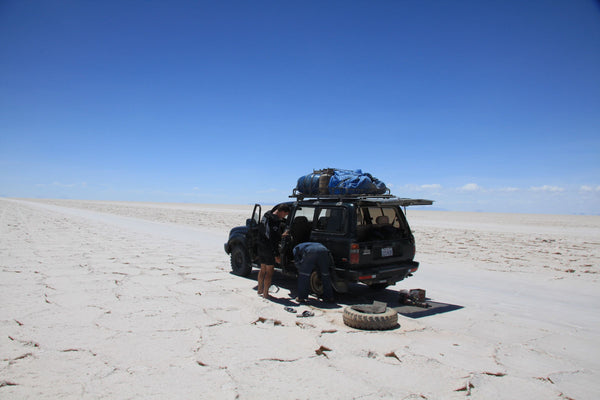
Ask any experienced overlander what gear they check first, and the answer is always tires. On remote trails, a tire issue isn't an inconvenience — it's a potential trip-ender. Here's what you need:
- Portable air compressor: After airing down for trail traction (typically 15-25 PSI for most off-road vehicles), you need a reliable way to air back up before hitting pavement. A compressor like the JACO TrailPro Heavy Duty Portable Air Compressor delivers 3.5 CFM and runs off your vehicle's 12V outlet, making it a trail essential.
- Tire pressure gauge: Accurate pressure readings matter more off-road than on. Running 2 PSI too low on rocks can mean a pinch flat; 5 PSI too high on sand means you're digging in instead of floating over. A quality digital gauge like the JACO ElitePro Digital Tire Pressure Gauge removes the guesswork.
- Tire deflator: Manually letting air out of four tires is tedious. A dedicated deflator tool speeds the process and lets you hit your target PSI precisely.
- Tire repair kit: Plug kits handle the most common trail punctures. The JACO TRX-50 Heavy Duty Tire Repair Kit includes reamer tools, plug strips, and a pressure gauge — everything you need for a trailside fix.
- Full-size spare tire: Not a donut. A full-size spare that matches your other tires, properly inflated and ready to mount.
Recovery Gear: Because Getting Stuck Is Part of the Fun

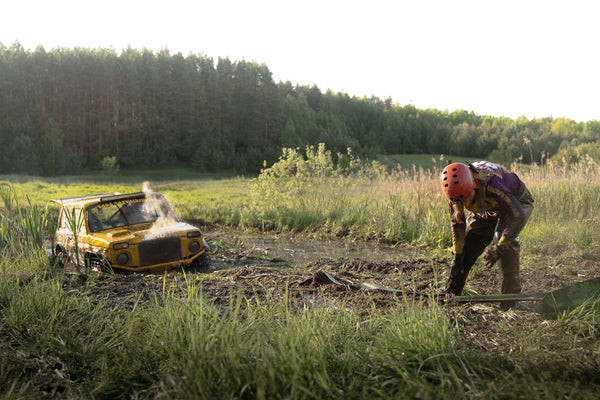
If you're overlanding properly, you will get stuck at some point. That's not pessimism — it's just how remote trails work. Mud bogs, sand washes, steep inclines, and water crossings all have a way of humbling even experienced drivers. Having recovery gear ready means getting unstuck is a 15-minute detour, not a 3-day ordeal.
- Recovery strap: A kinetic recovery strap (not a tow strap — the stretch matters) lets another vehicle pull you free safely. The JACO TowPro Recovery Tow Strap is rated to 31,542 lbs and uses reinforced loop ends instead of metal hooks, reducing the risk of projectile failure.
- D-ring shackles: The connection point between your strap and your recovery points. Always use rated shackles — never improvise with hardware store carabiners.
- Traction boards: MaxTrax or similar boards slide under your tires to provide grip in sand, mud, or snow. They work when you're alone and no recovery vehicle is available.
- Hi-lift jack or bottle jack: Standard car jacks don't work well on uneven ground. A hi-lift jack is versatile but requires training to use safely.
- Shovel: Sometimes the simplest tool is the most effective. A compact folding shovel can dig out tires, level a campsite, or clear a trail obstacle.
Cargo Management: Secure Everything

Overlanding rigs carry a lot of weight — water, fuel, food, tools, camping gear, recovery equipment. All of that weight becomes a projectile on rough terrain if it's not properly secured. Good cargo management isn't optional; it's a safety requirement.
- Ratchet straps: Quality ratchet tie-down straps keep gear locked in place over washboard roads and steep descents. Use straps rated well above your cargo weight — vibration and impact loads multiply the effective force on your tie-downs.
- Storage containers: Hard-sided bins with latching lids beat cardboard boxes and duffel bags. They stack, they're waterproof, and they don't collapse when something heavy shifts on top of them.
- Roof rack or bed rack system: If you're running a truck, a bed rack lets you mount a rooftop tent while still using the bed for cargo. For SUVs, a quality roof rack expands your carrying capacity significantly.
- Gear bags: For organizing smaller items within your storage system, durable utility bags keep things sorted and accessible. Designate bags by category: tools, kitchen, first aid, recovery gear.
Navigation and Communication
Your phone's GPS works great until it doesn't — and in overlanding country, it usually doesn't. Cell signal disappears quickly once you leave paved roads, and offline maps have their limits. Smart overlanders build redundancy into their navigation setup.
- Offline GPS device or app: Gaia GPS, onX Offroad, or a dedicated Garmin unit with downloaded trail maps. Load your route before you leave cell range.
- Paper maps: They don't need batteries, can't lose signal, and give you the big-picture view that GPS screens often miss. USGS topographic maps are the gold standard for backcountry navigation.
- Two-way radios: If you're traveling in a group, GMRS radios keep your convoy connected. Range is typically 2-5 miles in mountainous terrain.
- Satellite communicator: Devices like the Garmin inReach allow text messaging and SOS signaling via satellite. For truly remote overlanding, this is a non-negotiable safety item.
Camp Kitchen Essentials

You can survive on granola bars and jerky, but a decent camp kitchen setup makes multi-day overlanding trips dramatically more enjoyable. You don't need a gourmet setup — just reliable basics.
- Portable stove: A two-burner propane stove handles everything from morning coffee to full dinners. Compact single-burner options work well for solo trips.
- Water storage and filtration: Carry at least 2 gallons per person per day. A gravity water filter (like the Sawyer or Platypus GravityWorks) lets you refill from streams when available.
- Cookware: A small pot, a skillet, and a kettle cover 90% of camp cooking needs. Opt for nesting sets that pack down small.
- Cooler: A quality rotomolded cooler keeps ice for 3-5 days, which extends your fresh food window significantly. Some overlanders invest in 12V fridge/freezer units for extended trips.
Shelter and Sleep Systems
Where you sleep on an overlanding trip depends on your rig and your budget, but the basics remain the same: stay dry, stay warm, stay off the ground if possible.
- Rooftop tent (RTT): The most popular overlanding shelter. RTTs mount to your roof rack or bed rack and deploy in minutes. They keep you elevated off wet or uneven ground and pack away without taking up interior cargo space.
- Ground tent: A quality 3-season tent is lighter and cheaper than an RTT, but takes more time to set up and puts you on the ground. Still a great option, especially for beginners testing the waters.
- Sleeping bag and pad: Match your sleeping bag's temperature rating to the lowest temps you expect, then subtract 10 degrees for a comfort margin. An insulated sleeping pad is just as important as the bag — cold ground will steal your body heat faster than cold air.
- Lighting: A headlamp for hands-free tasks and a camp lantern for ambient light. LED options last hundreds of hours on a single set of batteries.
First Aid and Emergency Preparedness
Remote overlanding means remote emergencies. Help could be hours away, so your first aid kit needs to go beyond band-aids and aspirin.
- Comprehensive first aid kit: Trauma shears, tourniquets, chest seals, and SAM splints in addition to the standard supplies. Wilderness first aid kits are designed for extended time-to-rescue scenarios.
- Fire extinguisher: Mount one within reach of the driver's seat. Vehicle fires from electrical issues or fuel leaks happen, especially on rough terrain.
- Emergency blanket and extra clothing: Weather changes fast in the backcountry. Pack layers even in summer — mountain temps can drop 30+ degrees after sunset.
- Tool kit: Basic wrenches, pliers, zip ties, duct tape, extra fuses, and JB Weld. These simple tools fix a surprising number of trail breakdowns.
Building Your Kit: Start Simple, Upgrade Over Time
The single biggest mistake new overlanders make is trying to buy everything at once. You don't need a $60,000 build to start overlanding. You need a reliable vehicle, good tires, basic recovery gear, and a way to manage tire pressure on the trail.
Start with the essentials — tire management, recovery basics, and a simple camp setup. Do a few shorter trips close to home. Figure out what you actually use, what you wish you had, and what sat in your rig untouched. Then upgrade strategically based on real experience, not Instagram builds.
The trail will teach you what you need. Your job is to show up prepared enough to listen.