


Memorial Day weekend is the unofficial start of road trip season — and AAA expects more than 40 million Americans to hit the road over the long weekend this year. If your vehicle has been sitting through a slushy spring, or you've just been driving the same in-town loop for months, the worst possible time to discover a problem is two hours from home with a trunk full of coolers and kids in the back seat.
The good news: a solid pre-trip vehicle check takes about 15–20 minutes in your driveway. Here are the 10 quick checks that catch most weekend disasters before they happen.
1. Check Your Tire Pressure (All Five — Including the Spare)
Tires are the #1 source of roadside breakdowns over Memorial Day weekend, and underinflation is the most common cause. Cold tire pressure should match the spec on the placard inside your driver's door jamb — not the max PSI molded into the sidewall.
Check pressure when tires have been sitting for at least three hours (cold readings only). Don't trust your gas station gauge — they're notoriously inaccurate, and the digital ones at most pumps drift by 2–4 PSI. A solid handheld gauge takes five seconds per tire and pays for itself the first time it catches a slow leak.
And yes — check the spare. A spare tire that's been ignored for two years is often half-flat or completely dead when you need it.

2. Inspect Tread Depth and Sidewall Condition
Tread depth determines how your tires perform in rain — a real concern for spring road trips. The classic penny test still works: insert a penny into the tread groove with Lincoln's head pointing down. If you can see the top of his head, you're at or below 2/32" — legally bald and dangerous in wet conditions.
While you're crouched down, look for sidewall cracks (dry rot), bulges (impact damage from potholes), or visible cords. Any of those = replace before the trip. A blowout at 75 mph isn't worth saving $200.
3. Test the Battery Before You Trust It
Batteries fail more often in summer than winter — heat kills the chemistry inside. The average car battery lasts 3–5 years, so if yours is in that range, it's living on borrowed time.
Most auto parts stores will load-test your battery for free. Or grab a $25 multimeter and test resting voltage: 12.6V or higher is healthy; below 12.4V means your battery is starting to fade. If you've had any slow-crank symptoms recently, replace it now — not at a rest stop in the middle of nowhere.
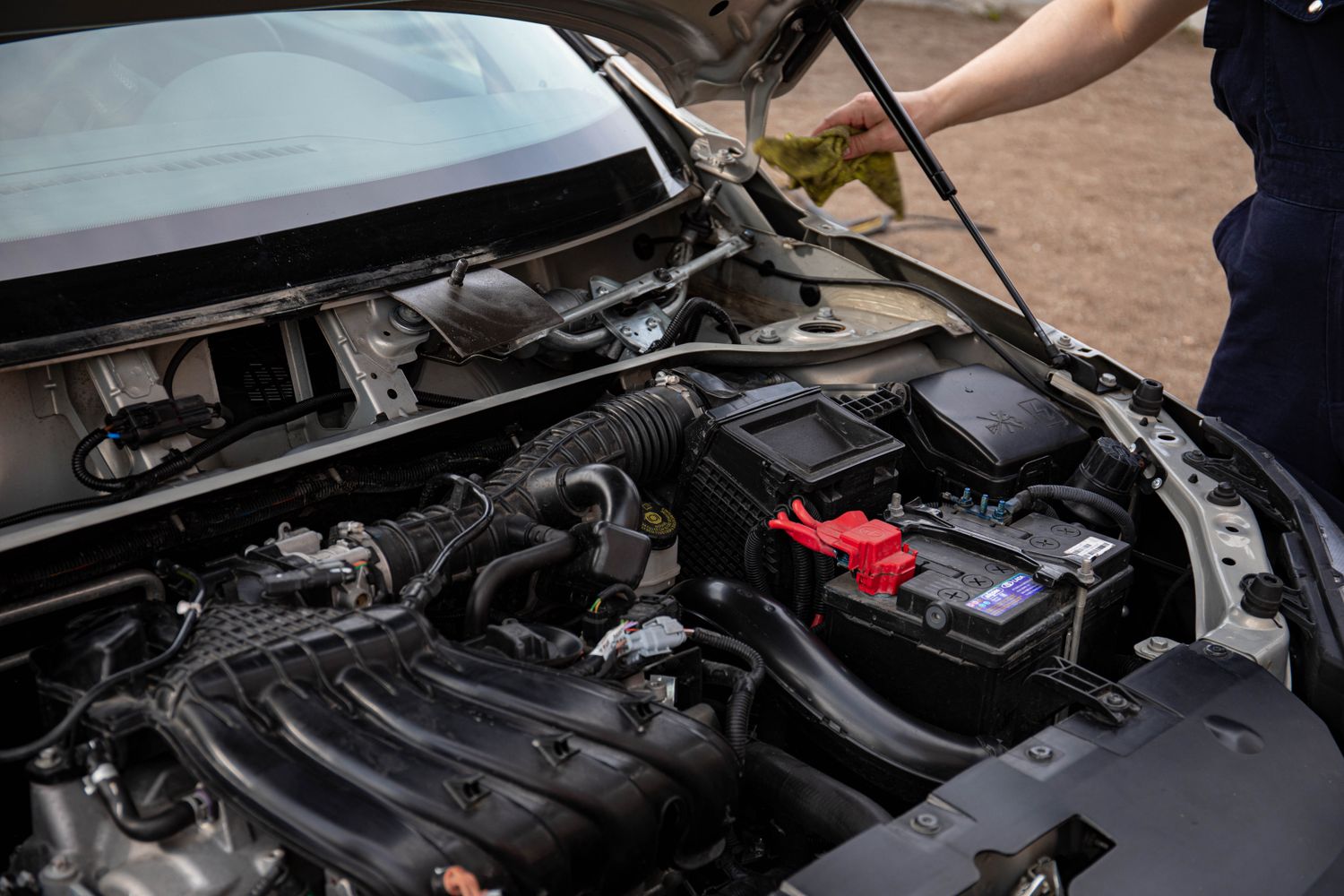
4. Top Off Your Fluids
Pop the hood and run through the big seven: engine oil, coolant, brake fluid, power steering fluid, transmission fluid, windshield washer fluid, and (if applicable) differential fluid. Most have clearly marked dipsticks or reservoirs with min/max lines.
If your oil is dark and gritty and you're due for a change, do it before you leave — not after you log 800 highway miles. Coolant should be at the cold-fill line, and washer fluid should be full (you'll burn through it on bug-splattered highways faster than you think).
5. Check Wiper Blades and Lights
Wipers degrade in UV and heat — if yours streak, chatter, or skip, replace them. Spring storms are unpredictable, and a $20 set of blades is cheap insurance against driving blind through a downpour.
Walk around the car with the lights on: headlights (low and high beam), taillights, brake lights, turn signals, and reverse lights. A burned-out brake light is one of the most common reasons drivers get pulled over on long trips.
6. Pack a Real Emergency Kit
The minimum kit for any road trip:
- Jumper cables or portable jump pack
- Tire pressure gauge and portable inflator
- Tire plug/repair kit
- Flashlight (with fresh batteries)
- Basic tool roll (screwdrivers, pliers, adjustable wrench)
- First-aid kit
- Reflective triangles or road flares
- Water, snacks, and a phone charger
If you've never patched a tire on the side of the road, a plug kit and a portable inflator can be the difference between a 20-minute delay and a four-hour tow truck wait.

7. Secure Your Cargo Properly
Holiday traffic, sudden lane changes, and panic stops are when poorly secured cargo turns into a problem. Anything in the bed of a truck, on a roof rack, or in a cargo carrier needs real tie-downs — not bungees, not rope from the garage.
Use ratchet straps with a working load limit (WLL) at least 1/3 of the cargo weight, anchored to actual tie-down points (not plastic trim or door handles). Always rate by WLL, not break strength. If you're hauling bikes, kayaks, coolers, or camp gear, learn the right strap pattern before you're sweating in a parking lot at 6 AM.

8. Confirm Your Brakes Feel Right
You don't need a shop visit for a quick brake sanity check. On a quiet road, do a few firm stops from 30 mph. The pedal should feel firm — not spongy. The car should stop straight, with no pulling left or right. Listen for grinding, squealing, or scraping.
If anything feels off, get them inspected before you load up the family. Brakes that are "fine for now" tend to fail on long downhill grades — exactly the kind of terrain you'll hit on a holiday weekend in the mountains.
9. Test the AC Before You Need It
Memorial Day is often the first 85°F+ weekend of the year. If you haven't run the AC since last September, fire it up at home and confirm it actually gets cold within a minute or two. Weak AC usually means low refrigerant — a 30-minute shop visit before the trip beats baking on I-70 with three kids and a dog.
10. Plan Your Route — and Have a Backup
Cell service drops in plenty of scenic places. Download Google Maps offline coverage for your destination and any major detour zones. Pull up Waze and check for major construction or road closures along your route. Note rest stops and gas stations every 100–150 miles, especially if you're towing or driving an EV.
And if you're heading anywhere remote — national parks, mountain passes, dispersed camping — let someone know your route and your expected check-in time.
The Bottom Line
Memorial Day road trips are about the destination, not the breakdown. Twenty minutes in your driveway with a tire gauge, a flashlight, and this checklist saves you from 90% of the things that go wrong on the highway. Keep your emergency kit stocked, your tires properly inflated, and your cargo strapped down — and the rest of the weekend takes care of itself.
Looking for more pre-trip resources? Browse our full library of tire pressure gauges, portable inflators, and ratchet straps — built for the people who actually use them.