

You're cruising at 70 mph on the interstate, music on, coffee in the cup holder. Then it happens: a sharp bang, the steering wheel lurches in your hands, and your car suddenly pulls hard toward the shoulder. A tire just blew. What you do in the next five seconds will decide whether this becomes a story you tell at dinner or a serious crash.
Tire blowouts cause roughly 75,000 accidents and around 400 deaths every year in the United States, according to NHTSA data. The terrifying part isn't the blowout itself—it's the panic reaction that follows. Most blowout crashes happen because the driver does the exact wrong thing on instinct. Here's how to handle a high-speed blowout the right way, and how to keep one from happening in the first place.
What Actually Happens During a Blowout
When a tire fails at highway speed, it does more than just go flat. The sudden loss of air pressure causes that corner of the vehicle to drop and the tire to grab at the pavement, creating massive drag on one side of the car. A front blowout pulls the steering hard in the direction of the failed tire. A rear blowout tends to make the back end sway or fishtail.
That violent pull is what triggers the deadly instinct: drivers slam the brakes and yank the wheel away from the pull. Both reactions transfer weight unpredictably and can send the vehicle into a spin or rollover. Understanding the physics ahead of time is what lets you override panic when it counts.
The First 5 Seconds: What to Do
This is the part to memorize. When a blowout hits, your job is to keep the car stable and let it slow down gradually. Do these three things, in order:
- Grip the wheel firmly with both hands and hold your line. Steer to keep the car straight in its lane. Expect the pull and counter it smoothly—don't overcorrect.
- Do NOT slam the brakes. Hard braking shifts weight forward and forces the damaged tire to do more work, which can break traction completely. Ease off the accelerator instead and let engine braking slow you down.
- Keep the car pointed straight until you're under about 30 mph. Only then should you gently apply the brakes and signal toward the shoulder or breakdown lane.
The counterintuitive truth: in the first moment of a blowout, you may actually need to accelerate very slightly to maintain control and stability before easing off. Above all, stay off the brake until the car is slow and stable.

Once You're Safely Stopped
Getting the car stopped is only half the battle. A disabled vehicle on a highway shoulder is one of the most dangerous places you can be. Follow these steps:
- Pull as far off the road as possible—all the way onto the shoulder or, ideally, beyond it onto grass or a wide breakdown area.
- Turn on your hazard lights immediately so approaching traffic can see you.
- Exit on the side away from traffic whenever you can. Never stand between your car and oncoming vehicles.
- Set out reflective triangles or flares 50 to 100 feet behind the vehicle if you have them.
- If you're not in a safe spot to change the tire, don't. Get well away from the road and call for roadside assistance.
Changing the Tire Safely
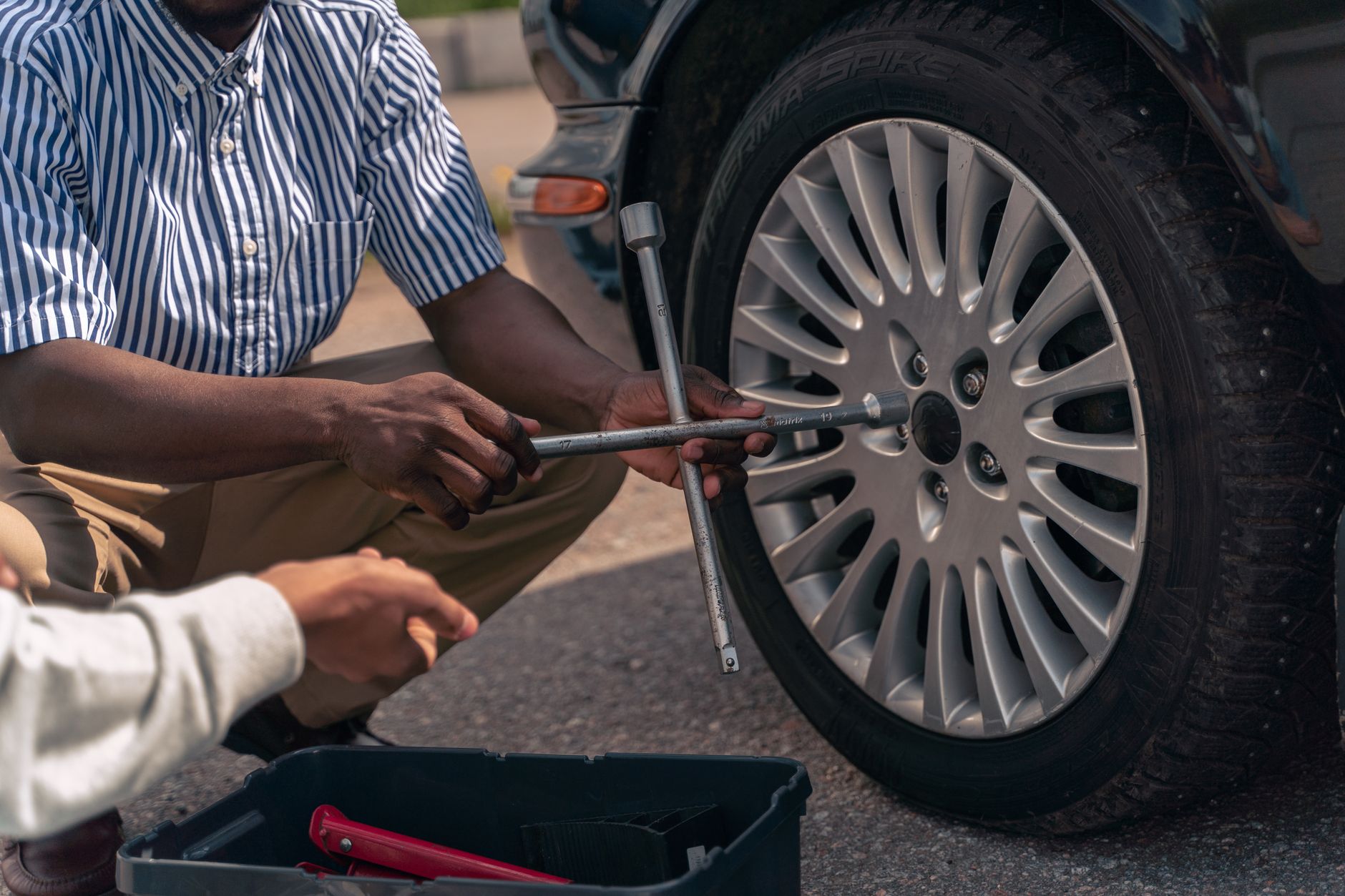
If you're in a genuinely safe location—well off the road, on level ground, far from moving traffic—you can swap on your spare. Work efficiently:
- Engage the parking brake and chock a tire on the opposite corner if possible.
- Loosen the lug nuts before jacking the car up—they're much harder to break free once the wheel is off the ground.
- Jack the vehicle at the manufacturer's designated lift point, never on body panels or suspension components.
- Swap the wheel, hand-tighten the lugs in a star pattern, lower the car, then torque the lugs fully.
If you're running a temporary "donut" spare, remember it's rated for limited speed (usually 50 mph) and limited distance. Get to a tire shop promptly.
Why Most Blowouts Are Preventable
Here's the good news: the overwhelming majority of blowouts are avoidable. The number-one cause is under-inflation. A tire running low on air flexes excessively, builds up heat, and eventually the internal structure fails—often at highway speed on a hot day, exactly when you least want it. Other common causes include overloading the vehicle, ignoring worn or aging tires, and road hazards like potholes and debris.
The single most effective habit you can build is checking your tire pressure regularly—at least once a month and before any long trip. The trouble is that the gauges built into most gas station air pumps are wildly inaccurate, and the eyeball test doesn't work: a radial tire can lose a third of its pressure before it looks low. You need an accurate gauge you actually trust.
That's where a quality gauge earns its keep. The JACO ElitePro™ Digital Tire Pressure Gauge reads to professional accuracy, is built from solid brass and steel, and gives you a clear digital readout so there's no guesswork. Spending thirty seconds a month with one is the cheapest blowout insurance there is.

Build a Pre-Trip Tire Routine
Before any long drive, take five minutes to run through a simple checklist. It catches the problems that turn into roadside emergencies:
- Pressure: Check all four tires (and the spare) cold, using an accurate gauge. Match the PSI on the sticker inside your driver's door jamb—not the max number on the tire sidewall.
- Tread depth: Use the penny test. Insert a penny with Lincoln's head down; if you can see the top of his head, the tread is too worn.
- Condition: Look for cracks, bulges, embedded nails, or uneven wear that signals an alignment problem.
- Age: Tires older than six years should be inspected by a pro regardless of tread—rubber degrades with time even if the tire looks fine.
- Load: Don't exceed your vehicle's rated capacity, and add a few PSI (per your owner's manual) when hauling heavy loads.
For more on keeping your rolling stock in shape, see our guide to tire care and maintenance on the Gravel & Gears blog, and browse our full lineup of tire pressure gauges to find the right one for your vehicle.
The Bottom Line
A high-speed blowout is one of the scariest things that can happen behind the wheel—but it's survivable, and largely preventable. Remember the five-second rule: hold the wheel firm, stay off the brakes, and ease the car straight until it slows. Then get safely off the road, hazards on, and deal with the tire only when you're truly out of harm's way.
Better yet, stack the odds in your favor before you ever pull out of the driveway. Keep your tires properly inflated, inspect them regularly, and replace them before they age out. A few minutes of prevention with an accurate gauge beats five seconds of terror at 70 mph every single time. Drive safe out there.