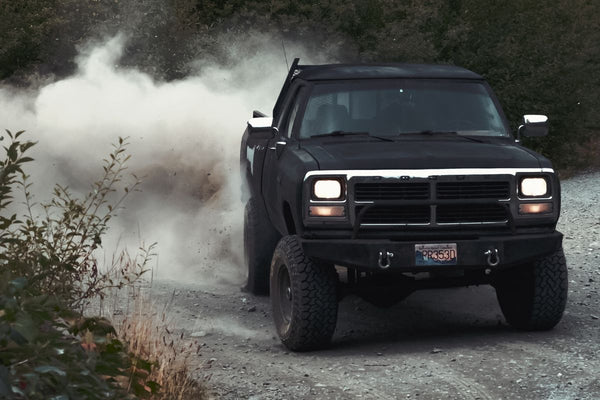


A good pressure washer is one of the highest-leverage tools in your garage. It cleans a sedan in fifteen minutes, blasts dried mud out of fender wells after a weekend trail run, and turns a green-tinged deck into something you actually want to stand on. The catch: most buying guides drown you in PSI numbers and totally skip the spec that actually matters for cleaning vehicles. This guide cuts the noise.
Here is what you actually need to know to buy a pressure washer that cleans your truck without stripping the clear coat, handles real off-road mud, and lasts more than two seasons.
PSI vs. GPM: The Spec Nobody Explains Correctly
Every pressure washer is advertised with two numbers, and people buy on the wrong one. Here is the breakdown:
- PSI (pounds per square inch) — how hard the water hits the surface. This is the force.
- GPM (gallons per minute) — how much water passes through per minute. This is the volume.
PSI is what marketing screams about. GPM is what actually does the cleaning. Force without volume just pushes dirt sideways; volume rinses it off. The cleaning power of a pressure washer is measured as Cleaning Units (CU) = PSI × GPM. A 2,000 PSI / 1.4 GPM unit (2,800 CU) will clean faster than a 3,000 PSI / 1.0 GPM unit (3,000 CU) for most flat surfaces because it rinses more efficiently.
For vehicles, target 1.4–2.0 GPM minimum. Below that, you'll spend forever rinsing and the wash will feel weak no matter how high the PSI claims.
The Vehicle Safety Zone: 1,500–1,900 PSI
Here's the part the boxes don't tell you: most paint and clear coat damage on cars happens between 2,500 and 3,000+ PSI, especially when the nozzle is held close or at a steep angle. Industry detailing guidance is to stay under 2,000 PSI when cleaning painted surfaces, with the nozzle at least 18 inches from the panel and angled at roughly 45 degrees.
That means you do not want a 3,500 PSI gas monster for your daily driver. It's overkill, it's loud, and it's a great way to chip paint around door edges, badge trim, and headlight seals.
- Cars, motorcycles, bicycles: 1,500–1,900 PSI, 1.4+ GPM, electric
- Trucks, SUVs, and off-road rigs: 1,800–2,200 PSI, 1.6+ GPM, electric or light-duty gas
- Driveways, fences, decks, siding: 2,500–3,200 PSI, 2.0+ GPM, gas preferred
- Commercial detailing, fleet, equipment: 3,000+ PSI / 3.0+ GPM, hot-water gas
Electric vs. Gas: Pick Based on Use, Not Power
Electric pressure washers used to be hobby toys. They aren't anymore. Modern electric units in the 1,800–2,200 PSI range will clean any passenger vehicle better than a gas unit because they are gentler, quieter, and you can use them in the garage without choking on exhaust.
Pick electric if: You're cleaning vehicles, gear, patios, and outdoor furniture a few times a month. You want to plug in and go. You hate two-stroke engines.
Pick gas if: You have a long driveway, do serious siding or concrete work, run it weekly for a side business, or your shop has no nearby outlets. Gas units in the 2,800–3,400 PSI range are workhorses, but they're loud, heavy, need oil changes, and have no business being pointed at a clear coat.
For 90% of JACO customers, an electric unit in the $200–$350 range is the right answer.
The Nozzle Tip Chart (Bookmark This)
Pressure washers come with color-coded quick-connect tips that change the spray angle. The wider the angle, the gentler the spray. This is the chart you should commit to memory:
- Red (0°): Pinpoint blast. Removes paint, etches concrete, destroys wood. Never use on a vehicle. Honestly, throw it in a drawer and forget it exists.
- Yellow (15°): Heavy-duty stripping — old paint, dried concrete, deep grime on driveways. Not for vehicles.
- Green (25°): General cleaning — driveways, decks, siding, dirty wheel wells. Your most-used tip for everything except the paint.
- White (40°): Soft, wide fan. Safe for vehicle body panels, painted surfaces, vinyl, screens, and motorcycles. This is your go-to for car washes.
- Black (65° "soap" tip): Low-pressure detergent application. Required when you want soap to actually come out of the wand.
If your unit didn't come with a 40° white tip, buy one. A $10 quick-connect tip is the difference between a safe wash and a chipped emblem.
Foam Cannons: Worth It?
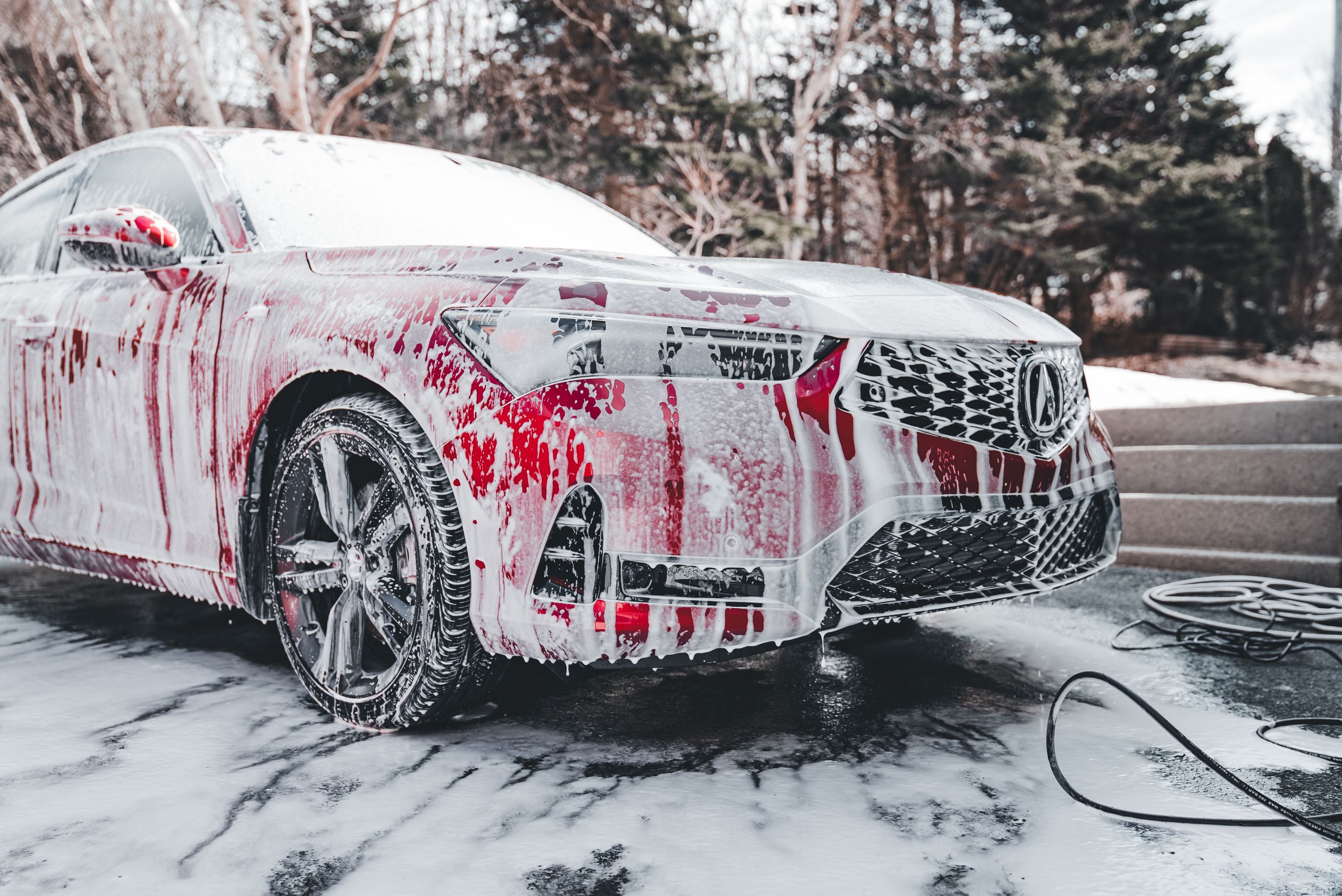
Yes. A foam cannon screws onto the wand and mixes your car soap with air to produce thick, shaving-cream-style foam that clings to the vehicle long enough to actually break down road grime. It also gives the wash mitt something to glide on — the goal is to lift dirt away from the paint, not grind it into it.
A decent foam cannon runs $25–$50, fits any standard quick-connect, and pairs with pH-neutral car wash soap. It is the single biggest jump in wash quality you can make under $100.
Cleaning Off-Road Vehicles: Mud, Salt, and the Stuff Under the Truck
Mud caked into a frame rail isn't just ugly — it traps salt and moisture against the metal and rusts everything from the inside out. After every serious trail day:
- Hit the wheel wells, underbody, and skid plates with the green (25°) tip from at least 18 inches away. Closer than that and you can damage rubber boots, exposed wiring, and CV axle seals.
- Rinse out the radiator and AC condenser by spraying through the grille at a soft angle — do not hammer the fins straight on or you'll bend them and tank cooling performance.
- Skip the engine bay unless you really know what you're doing. Modern engines have a lot of exposed connectors that won't appreciate 2,000 PSI.
- After washing mud out of beadlocks or aired-down tires, top them back up before you hit the highway.
That last point is where a quick post-wash tire check pays off. If you aired down for the trail and then power-washed the rig at home, your tires need to be reset to street pressure before you drive on pavement.

Hot Water vs. Cold Water
Hot-water pressure washers exist, they cost $1,500+, and they're built for commercial use — restaurant grease, oil-field equipment, industrial fleets. For homeowner use, cold water is fine. Don't be tempted by the spec sheet.
Budget Tiers: What You Actually Get
- $100–$150 (entry electric): 1,500–1,800 PSI, 1.0–1.2 GPM. Fine for occasional patio cleanup and bicycles. Underwhelming for vehicles. Plastic fittings break in year two.
- $200–$350 (the sweet spot): 1,800–2,200 PSI, 1.4–1.8 GPM, brass fittings, foam cannon and 4–5 quick-connect tips included. This is the right answer for almost everyone reading this. Brands worth a look: Sun Joe SPX series, Ryobi 2,300 PSI brushless, Greenworks Pro, Worx Hydroshot for portable.
- $400–$700 (premium / light commercial): 2,200–3,200 PSI, 2.0–2.5 GPM, real metal pump, longer hoses, induction motors. Worth it if you'll use it weekly or run a side detail business.
Storage and Maintenance (Where Most Units Die)
Pressure washers don't die from use. They die from neglect. Before storing:
- Run the unit for 30 seconds with the trigger pulled to clear water from the pump.
- Disconnect the garden hose and the high-pressure hose; let both drain fully.
- Store indoors, off concrete, away from freezing temperatures. Frozen water inside the pump cracks aluminum heads.
- For gas units: stabilize the fuel before any storage longer than a month, and change the pump oil annually.
- Coil the high-pressure hose loosely — kinks become permanent and split under load.
Quick Buying Checklist
- 1,500–2,000 PSI if vehicles are your priority
- 1.4 GPM or higher (this is more important than PSI)
- Electric, unless you genuinely need gas
- At least four quick-connect tips, including the white 40° tip
- Foam cannon included or budgeted as a $25 add-on
- Brass connections, not all-plastic
- 25-foot high-pressure hose minimum
The Bottom Line
The pressure washer that cleans your truck the best isn't the most powerful one on the shelf. It's the one with enough GPM to rinse efficiently, a safe PSI range for paint, and the right nozzle tips for the job. Spend $250 on the right electric unit, add a foam cannon, and you'll out-clean someone with a $700 gas monster every weekend.
Wash, rinse, dry, top off your tires, and go enjoy the rig.