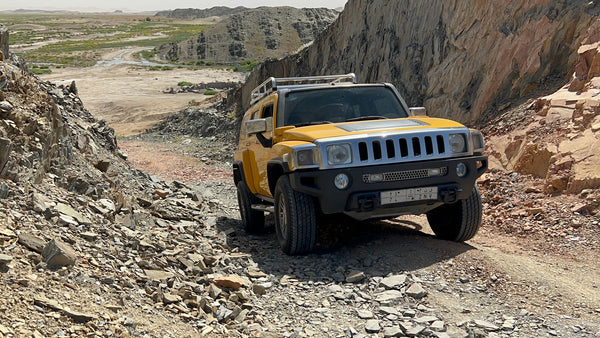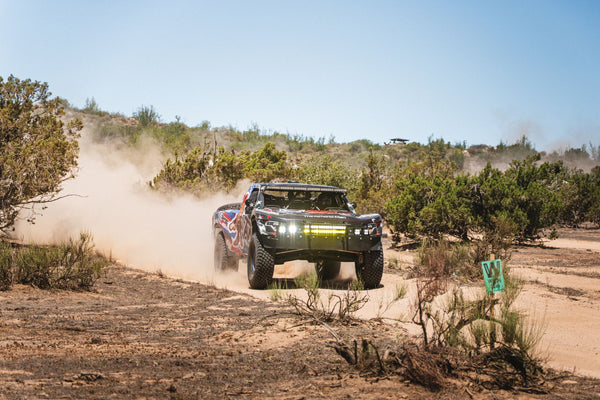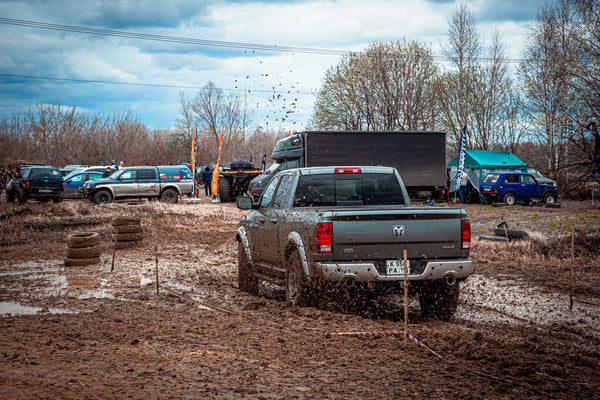


If you've ever watched experienced off-roaders pull over at a trailhead and kneel beside their tires with a gauge in hand, you've witnessed one of the most fundamental—and most overlooked—techniques in off-road driving: airing down. Reducing your tire pressure before hitting the trail can be the difference between cruising over obstacles with confidence and getting stuck in the first sand wash you encounter.
Whether you're new to off-roading or finally ready to understand the science behind this common practice, this guide covers everything you need to know about airing down: when to do it, why it works, how low to go, and how to air back up safely when you're done.
What Does "Airing Down" Mean?
Airing down simply means intentionally lowering your tire pressure below the manufacturer's recommended street PSI. Most vehicles run between 30–35 PSI on pavement, but off-road conditions often call for pressures as low as 15–20 PSI—sometimes even lower for extreme terrain like deep sand.
The concept is straightforward: a softer tire deforms more, creating a larger contact patch with the ground. That bigger footprint means more grip, a smoother ride, and less chance of your tires spinning uselessly on loose or uneven surfaces.
Why Airing Down Works: The Science of Traction

Think of it like snowshoes versus boots. Boots concentrate your weight on a small area, so you sink. Snowshoes spread that same weight across a much larger surface, letting you float on top. Airing down does the same thing for your tires.
Here's what happens when you reduce pressure:
- Larger contact patch: The tire flattens against the ground, distributing your vehicle's weight over a wider area. This is critical on sand, mud, and snow where you'd otherwise dig in.
- Better conformity: A softer tire wraps around rocks and roots instead of bouncing off them, maintaining contact and traction where a rigid tire would skip and slide.
- Smoother ride: Lower pressure acts as a natural suspension, absorbing impacts from rough terrain that would otherwise rattle your teeth (and your vehicle's components).
- Reduced trail damage: Softer tires are gentler on the trail surface, which matters for trail preservation and responsible off-roading.
When Should You Air Down?
Not every off-road situation requires airing down. Here's a practical guide:
Definitely air down for:
- Sand (beaches, dunes, desert washes)
- Rocky trails with loose surfaces
- Mud and wet clay
- Snow-covered trails
- Extended gravel or washboard roads
You can probably skip airing down for:
- Well-maintained dirt roads
- Short gravel stretches
- Hard-packed desert terrain
- Any situation where you'll be back on pavement quickly
The general rule: if the terrain is loose, uneven, or soft, airing down will help. If it's firm and relatively smooth, your street pressure is fine.
How Low Should You Go? PSI Guidelines by Terrain
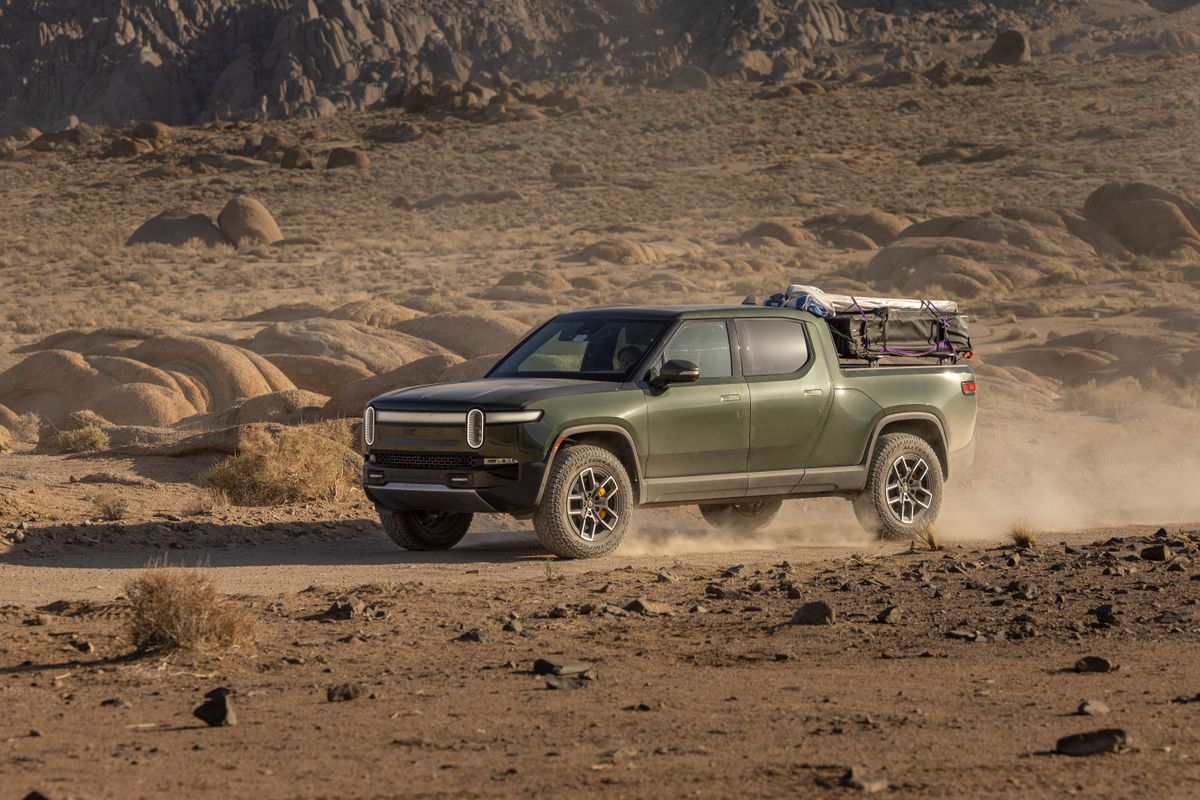
There's no single magic number—your ideal pressure depends on your vehicle weight, tire size, and the terrain you're tackling. But here are solid starting points:
| Terrain Type | Recommended PSI Range | Notes |
|---|---|---|
| Gravel/Washboard | 25–30 PSI | Slight reduction for comfort and traction |
| Rocky Trails | 18–25 PSI | Helps tires conform to rocks; watch for sidewall damage |
| Mud | 18–22 PSI | Wider footprint helps float; too low risks bead unseating |
| Sand | 12–18 PSI | Go lower for softer sand; critical for beach/dune driving |
| Snow | 20–25 PSI | Similar to mud; improves flotation |
Important caveats:
- Heavier vehicles (full-size trucks, loaded overlanding rigs) should stay on the higher end of these ranges
- Beadlock wheels allow you to go lower without risking the tire popping off the rim
- If you don't have beadlocks, don't go below 15 PSI unless you know your tire/wheel combination can handle it
- Always start conservative and adjust—you can always let more air out, but you need a compressor to add it back on the trail
How to Air Down: Step-by-Step
Airing down is simple, but doing it right saves time and ensures consistency across all four tires.
What you'll need:
- A reliable tire pressure gauge (digital gauges like the JACO ElitePro Digital Tire Pressure Gauge give precise readings that matter when you're dialing in specific PSI targets)
- A valve core removal tool or tire deflator (optional but speeds up the process)
- A portable air compressor for airing back up afterward
Steps:
- Check your current pressure before you start. Know your baseline.
- Decide on your target PSI based on the terrain guidelines above.
- Press the valve stem to release air. A small stick or the back of a gauge works, but dedicated deflators are faster and let you set a target pressure that auto-stops.
- Check pressure frequently as you deflate. It's easy to overshoot.
- Match all four tires. Uneven pressure causes unpredictable handling. Take the time to get them consistent.
- Drive slowly for the first few minutes to seat the tires and make sure nothing feels off.
The Critical Step Everyone Forgets: Airing Back Up

Here's where many beginners get caught: you air down at the trailhead, have a great day on the trail, then drive home on the highway at 15 PSI. This is dangerous and will destroy your tires.
Driving on pavement with low tire pressure causes:
- Excessive heat buildup (the #1 cause of tire blowouts)
- Accelerated and uneven tire wear
- Poor handling and longer braking distances
- Increased fuel consumption
- Potential tire or rim damage
Always air back up before hitting pavement. A portable 12V air compressor is an essential piece of off-road gear—not optional. Budget models work, but look for one rated for your tire size that can handle repeated inflation cycles. A compressor that takes 10+ minutes per tire will test your patience after a long day on the trail.
Common Airing Down Mistakes to Avoid
Even experienced off-roaders make these errors:
- Going too low without beadlocks: Below 12-15 PSI, tires can unseat from the rim during sharp turns. If you pop a bead on the trail, you'll need a ratchet strap trick or a CO2 tank to reseat it.
- Not carrying a compressor: Relying on a gas station miles from the trail is a gamble. Always carry your own inflation solution.
- Inconsistent pressure across tires: If one tire is at 18 PSI and another at 25, your vehicle will handle unpredictably. Take the extra two minutes to match them.
- Forgetting to air back up: Set a reminder, tie a ribbon on your steering wheel, whatever works. Just don't drive home aired down.
- Using an inaccurate gauge: Cheap stick gauges can be off by 3-5 PSI. When you're running at 18 PSI, that's a 20%+ error. Invest in a quality digital gauge you can trust.
Essential Gear for Airing Down
You don't need much, but having the right tools makes the process faster and safer:
- Digital tire pressure gauge: Accuracy matters at low pressures. The JACO ElitePro reads in 0.5 PSI increments, which is exactly the precision you want for off-road pressure adjustments.
- Tire deflators: Thread-on deflators let you set a target PSI and walk away. They deflate all four tires simultaneously.
- Portable air compressor: 12V compressors that plug into your vehicle's power outlet or connect directly to the battery. Look for at least 150 PSI capability and a decent CFM rating.
- Valve core tool: Removing the valve core lets air out much faster—useful for deep sand runs where you need to drop to very low pressures quickly.
Wrapping Up: Start Conservative, Learn Your Rig
Airing down is one of those skills that seems intimidating until you do it once. Start on the conservative side—drop 5-8 PSI from your street pressure on your first outing and see how it feels. As you gain experience, you'll develop an intuitive sense for how much to drop based on the terrain ahead.
The most important things to remember: carry a reliable gauge, bring a compressor, and always air back up before you hit pavement. Do those three things, and you'll be tackling trails with more confidence and fewer problems from day one.
Ready to gear up for your next trail adventure? Check out our full collection of tire pressure gauges and off-road accessories at JACO.