
The first time someone tells you to drop your tire pressure from 35 PSI to 15 PSI before hitting the trail, it sounds borderline insane. Won't the tires come off the rims? Won't you ruin them? Won't the truck handle like a jellyfish?
No, no, and only on the pavement ride home—which is exactly why this works. Airing down is the single highest-impact, lowest-cost upgrade you can make before any off-road run. It costs nothing, takes five minutes, and transforms how your vehicle handles dirt, sand, rocks, mud, and snow. This guide walks you through the why, the when, and the exact PSI targets so you can stop guessing and start wheeling.
Why Airing Down Actually Works
A tire at street pressure is a relatively small, hard contact patch. That's perfect for asphalt—low rolling resistance, sharp steering, good fuel economy. The moment you leave pavement, those same qualities become liabilities. A hard, narrow tire bounces off rocks, skitters across sand, and digs trenches in soft ground.
When you drop the pressure, three things happen at once:
- The contact patch grows. The tire flattens and lengthens, sometimes nearly doubling the rubber touching the ground. More rubber means more grip.
- The tire conforms to terrain. A softer sidewall wraps around rocks, roots, and ruts instead of skipping over them. That conforming action gives you traction in places a hard tire just slips.
- The ride smooths out. Your tires become part of the suspension. Small impacts get absorbed by the sidewall instead of jolting through the frame and your spine.
That's it. No magic, no marketing. Just physics. The tradeoff is heat buildup, slower speeds, and squishy steering, which is why you air back up before hitting blacktop.
When to Air Down (And When Not To)
The short answer: any time the surface is softer, looser, or sharper than asphalt. The longer answer breaks down by terrain.
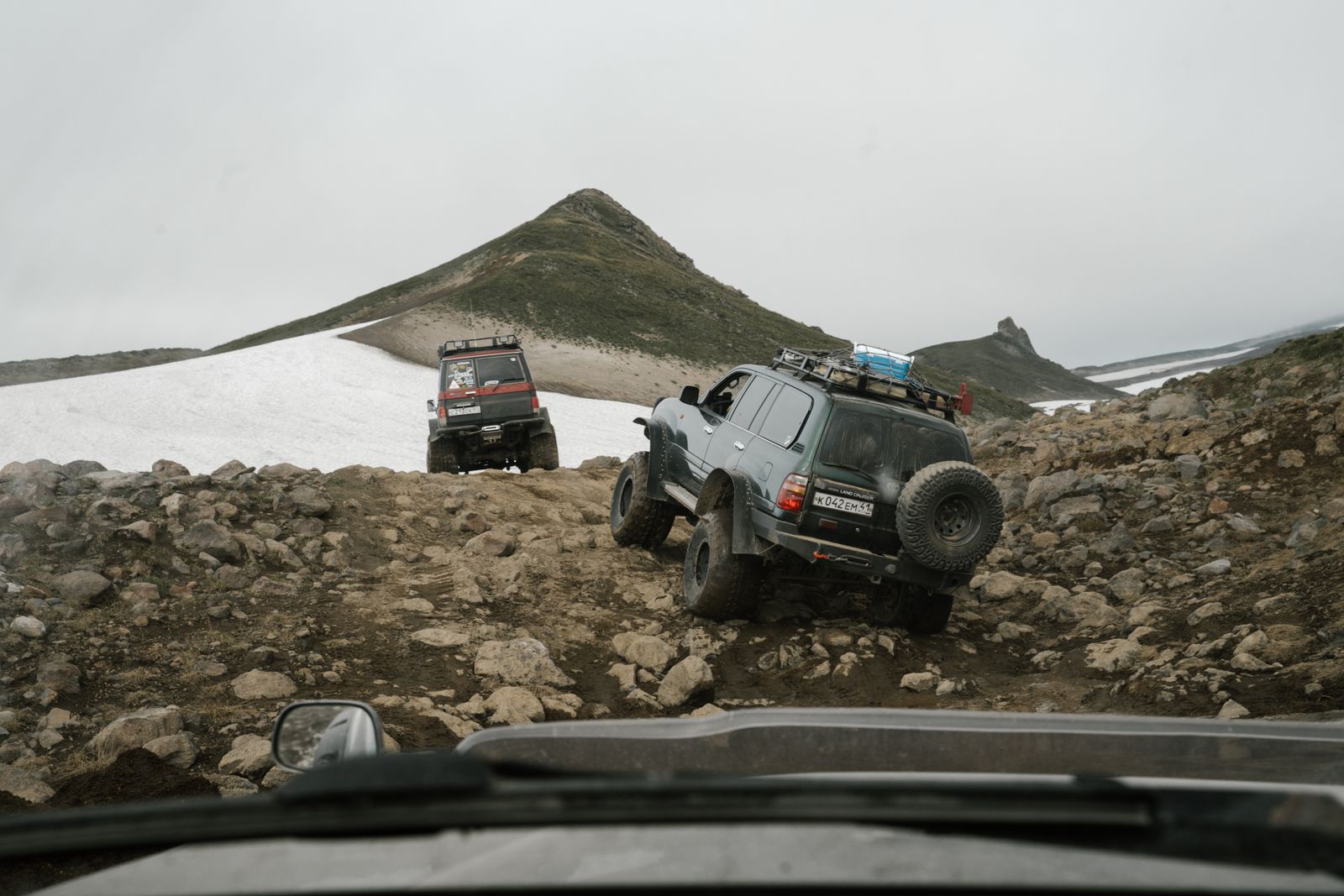
Air Down For:
- Sand — the highest-stakes scenario. The wrong pressure here will bury you to the axles before lunch.
- Mud and clay — a wider footprint floats over goop instead of sinking into it.
- Rocks — softer tires grip uneven surfaces and reduce sidewall punctures by flexing instead of tearing.
- Snow — same logic as sand: float, don't sink. Especially useful on unplowed forest roads.
- Washboard dirt — even a modest air-down (5-8 PSI off street pressure) dramatically smooths out that teeth-rattling corrugation.
Stay Aired Up For:
- Highway and paved roads — always. Heat kills tires fast at low PSI on pavement.
- High-speed dirt roads — if you're maintaining 45+ mph on graded gravel, stay closer to street pressure. Heat is the enemy.
- Heavily loaded rigs — overlanding builds with full water, fuel, and gear should air down less aggressively. The extra weight pushes the sidewall harder.
How Low Should You Go? PSI Targets by Terrain
These numbers assume a typical half-ton truck or mid-size SUV running 32-37" all-terrain or mud-terrain tires at a street pressure of 32-38 PSI. Lighter vehicles can go lower; heavier rigs need to stay higher. Always adjust to your specific build and load.
- Light dirt and graded forest roads: 22-26 PSI. Just enough air-down to smooth the ride without affecting handling much.
- Rocks and technical trails: 15-20 PSI. The sweet spot for most rock crawling—plenty of grip, still firm enough to climb without bead concerns.
- Mud: 15-18 PSI. Wide footprint to float; not so low you risk debeading in deep ruts.
- Sand: 12-15 PSI for most vehicles; some sand drivers go as low as 8-10 PSI with beadlocks. Below 15 PSI without beadlocks is doable but requires careful, gentle driving.
- Snow: 18-22 PSI. Slightly less aggressive than sand—you want some sidewall stiffness for steering response on slick surfaces.
The rule of thumb most experienced wheelers use: drop to half your street pressure for trails, half-of-half for sand. It's not exact, but it gets you in the ballpark while you learn your rig.

Mechanics: How to Actually Do It
You have three options, ranked worst to best:
1. The Penny Trick (Don't.)
Pressing a coin or stick into the valve core to release air. It works in a survival sense. It's also slow, imprecise, and a great way to bury a small object in the dirt while your tire whistles out. Use it once, then upgrade.
2. A Pressure Gauge + Valve Core Release
Better. Use a quality gauge, press the valve core, release air in bursts, recheck. Repeat across all four tires. Takes 10-15 minutes if you're focused. Acceptable for occasional trail runs.
3. A Dedicated Deflator
The right answer. Tools like our Lightning™ RX4 Digital Deflator screw onto the valve stem, hold themselves in place, vent air rapidly, and show you the exact PSI as it drops. You set the target pressure, walk away, and the gauge reads in real time. Four tires done in under five minutes with no kneeling, no fumbling, and no "wait, was that 18 or 28?" guessing.
Automatic deflators that release air to a preset PSI exist too and are great for groups (set, attach, walk to the next tire). For solo wheeling, a single digital deflator is usually plenty.
Beadlocks: Do You Need Them?
Probably not yet. Beadlock wheels mechanically clamp the tire bead to the rim, letting you run extremely low PSI (often single digits) without the tire spinning on the wheel or popping off entirely. They're standard equipment for serious rock crawlers and Ultra4 racers.
For a daily-driven 4x4 doing weekend trails? You can safely run down to about 12-15 PSI on standard wheels with decent tires and careful driving. Below that, the risk of debeading—where the tire seal breaks during a hard turn or off-camber move—gets real. If you find yourself wanting to go lower more than occasionally, that's when beadlocks become worth the investment.
Airing Back Up: The Step Nobody Talks About
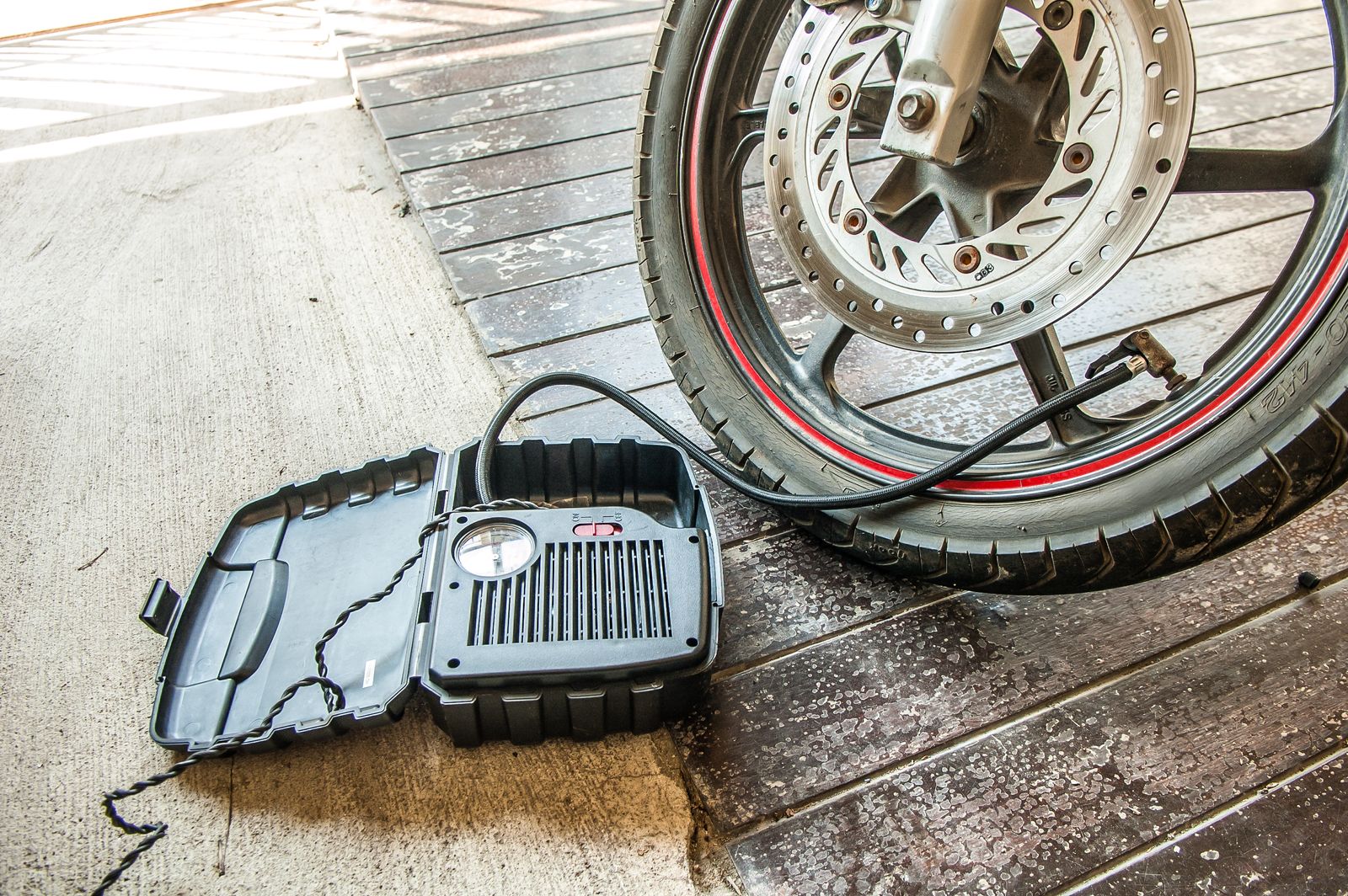
Here's the part that catches new wheelers off guard: airing down takes five minutes. Airing back up—if you're using a cheap pancake compressor or a gas-station pump—can take an hour. After a long day on the trail, that hour at the trailhead is brutal.
A proper portable 12V air compressor is the second purchase every off-roader makes after a deflator. Look for at least 2.5 CFM (cubic feet per minute) at 30 PSI; 3+ CFM is much better if you run larger tires. Direct-to-battery clamps are vastly better than cigarette-lighter plugs, which can't deliver enough current for serious inflators.
Why does the air-up matter so much? Because driving any meaningful distance on pavement at trail pressure cooks your tires. Sidewall flex creates heat. Heat destroys the rubber, weakens the carcass, and can cause blowouts on the highway home. Always air up before hitting pavement, every single time.

Common Mistakes (Don't Make These)
- Driving on pavement at trail PSI. Even a few miles will heat-cycle your tires badly. Air up at the trailhead.
- Sharp turns at very low PSI. Hard cornering can roll the tire off the bead. Keep movements smooth.
- Forgetting to check pressure mid-day. Hot tires read higher than cold tires. Recheck after a few hours if you're not sure.
- Ignoring the load. A truck with three buddies, a cooler, and a roof tent needs higher PSI than the empty truck did at the trailhead this morning.
- One PSI for all four corners. Heavier ends (engine, gear in the bed) may benefit from slightly higher pressure than lighter ends. Once you're dialed in, a few PSI of stagger can help.
The Bottom Line
Airing down is the simplest, cheapest, biggest performance gain in off-roading. The basic rule—half your street pressure for most trails, even lower for sand—will serve you well for years. Pair a quality deflator with a real portable compressor, and you've got the two tools that make every trail run smoother, safer, and more fun.
The only mistake you can really make is not doing it at all.
New to off-road gear? Browse our full lineup of off-road tools and accessories built for trail days that don't end at the trailhead.
Photos: Denys Gromov, Soumith Soman, ArtHouse Studio, Srattha Nualsate on Pexels.