
Sand is the friendliest-looking off-road surface and one of the most punishing if you don't respect it. There are no rocks to break and no mud to hose off — just a soft, shifting carpet that will happily swallow a 6,000-pound truck up to its frame rails the moment momentum dies. Whether you're heading to the Glamis dunes, a Carolina beach, or a tucked-away wash in the Southwest, the rules are the same: air down further than you think, drive smoother than you think, and have a recovery plan before you ever drop into the soft stuff.
This is the no-fluff sand driving guide we wish we'd had on our first run. We'll cover proper tire pressure for sand, how to read the surface and pick a line, how to recover when you inevitably bog down, and the small mistakes that turn a fun afternoon into a tow-truck call.
Why Sand Behaves Differently Than Mud or Rocks
Mud is sticky. Rocks are unforgiving. Sand is just weight-sensitive. The grains don't bind together, so the only thing keeping you on top is the size of your tire's contact patch. A 35-inch tire at 35 PSI rolls on a thin, narrow footprint that cuts straight down through dry sand like a butter knife. Drop that same tire to 15 PSI and the sidewall flexes outward, the contact patch nearly doubles in length, and suddenly you're floating instead of digging.
That's the whole game. Sand driving is not about horsepower or lockers — it's about floating your weight across as much surface area as possible while keeping the wheels turning at a smooth, steady speed. Get either part wrong and the sand wins.
Air Down: The Single Biggest Move You'll Make

For trail driving, most folks air down to around 20–22 PSI. Sand needs lower. A lot lower.
- Firm, packed sand or wet beach: 18–22 PSI is usually enough.
- Loose, dry sand and dunes: 15–18 PSI is the sweet spot for most stock and lightly modified rigs.
- Deep, soft sugar sand or a heavily loaded overland build: 12–15 PSI, and watch for sidewall roll if you're cornering hard.
- Beadlock wheels only: Below 10 PSI is dune-runner territory and only safe with beadlocks. Don't go there on standard wheels — you'll de-bead a tire and your day is over.
The fastest, most accurate way to drop pressure on all four corners is a quick-connect deflator with a built-in gauge. Eyeballing it or guessing with a stick gauge wastes daylight and gets you uneven pressures, which makes the truck pull and dig.

One more thing about airing down: do it before you enter the soft stuff, not after. Pulling onto a beach or into a wash at full pressure to "see how it feels" is how rookies plant their truck thirty feet from the parking lot. Lower the pressure at the trailhead.
Reading the Sand: How to Pick a Line
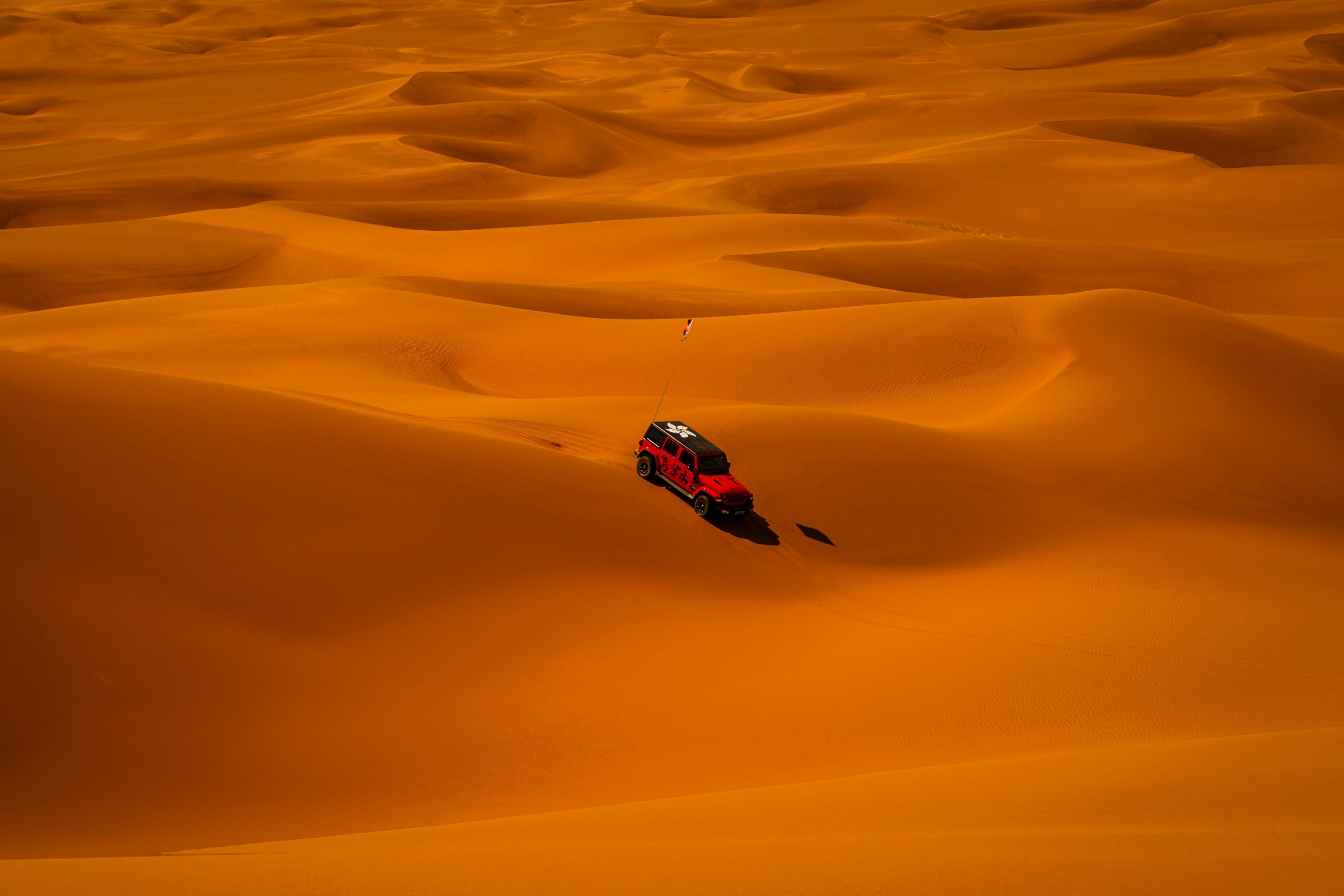
Sand is not uniform. Even within twenty feet, you'll find packed crust, soft sugar, wind-rippled patches that grip well, and bowls that are basically traps. Reading the surface before you commit is the second skill that separates clean runs from full recoveries.
A few cues to look for:
- Color: Darker sand is usually wetter or more compact. Light, bone-dry, almost-white sand is typically the loosest.
- Existing tracks: Fresh tracks from a similar-weight vehicle are gold. They've already pre-compacted a path for you. Old, drifted-over tracks lie — the sand has resettled and softened.
- Ripples: Small, even wind ripples mean firm-ish surface. A smooth, glassy patch with no texture is a soft pocket. Treat it like ice.
- Slope direction: The windward (gentle) face of a dune is firmer. The leeward (steep) face is loose and unpredictable — that's where avalanches and high-side rollovers happen.
Crests and the One Rule You Cannot Break
Never crest a dune at speed without knowing what's on the other side. Sand crests can be knife-sharp ridges with a 30- to 40-foot vertical drop on the back side. People die doing this. Approach every unknown crest at a walking pace, get out and scout if you have to, and only go over once you've confirmed it's a smooth transition and not a cliff.
Momentum vs. Speed: Drive Smooth, Not Fast
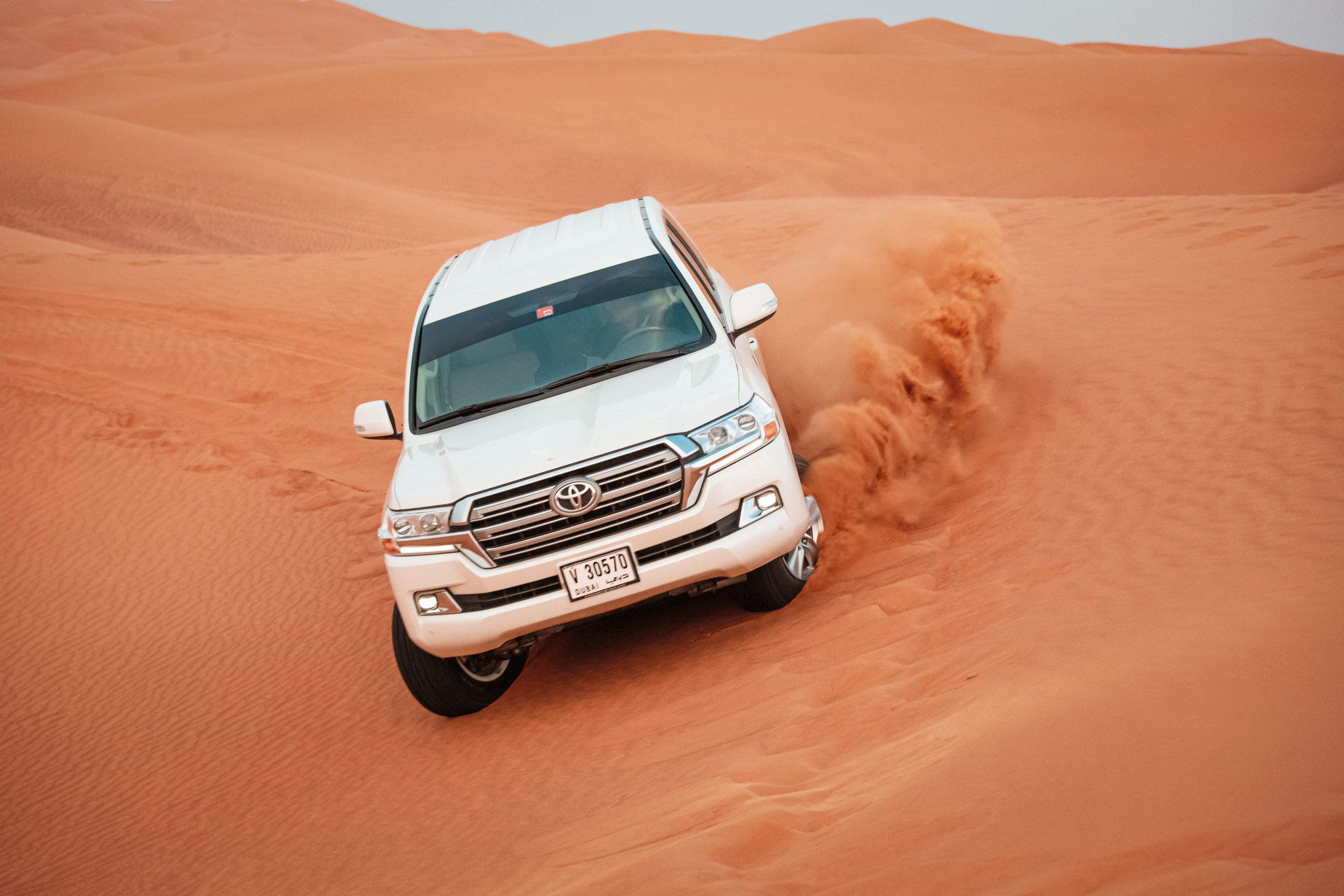
The biggest myth in sand driving is "send it." Speed without smoothness gets you stuck just as fast as crawling does. What you actually want is steady momentum — enough wheel speed to keep the tires lightly skating across the top of the sand, never enough to bury yourself when you hit a soft patch.
- Throttle: Modulate gradually. Sudden jabs spin the tires, which excavates a hole instantly.
- Steering: Big, gentle inputs. Sharp steering pushes a wedge of sand in front of the tire and slows the truck immediately.
- Gear: Most rigs do best in 4-High with the transmission held in a lower gear (2nd or 3rd) so you can stay in the meat of the powerband without shifting under load.
- Climbing dunes: Carry momentum from well before the base. Don't ease into the climb — commit early, then taper throttle as you near the crest so you don't launch over the top.
- Descending dunes: Straight down the fall line. Never traverse a steep face at an angle — that's the fastest way to roll a vehicle on its side.
You're Stuck. Now What?
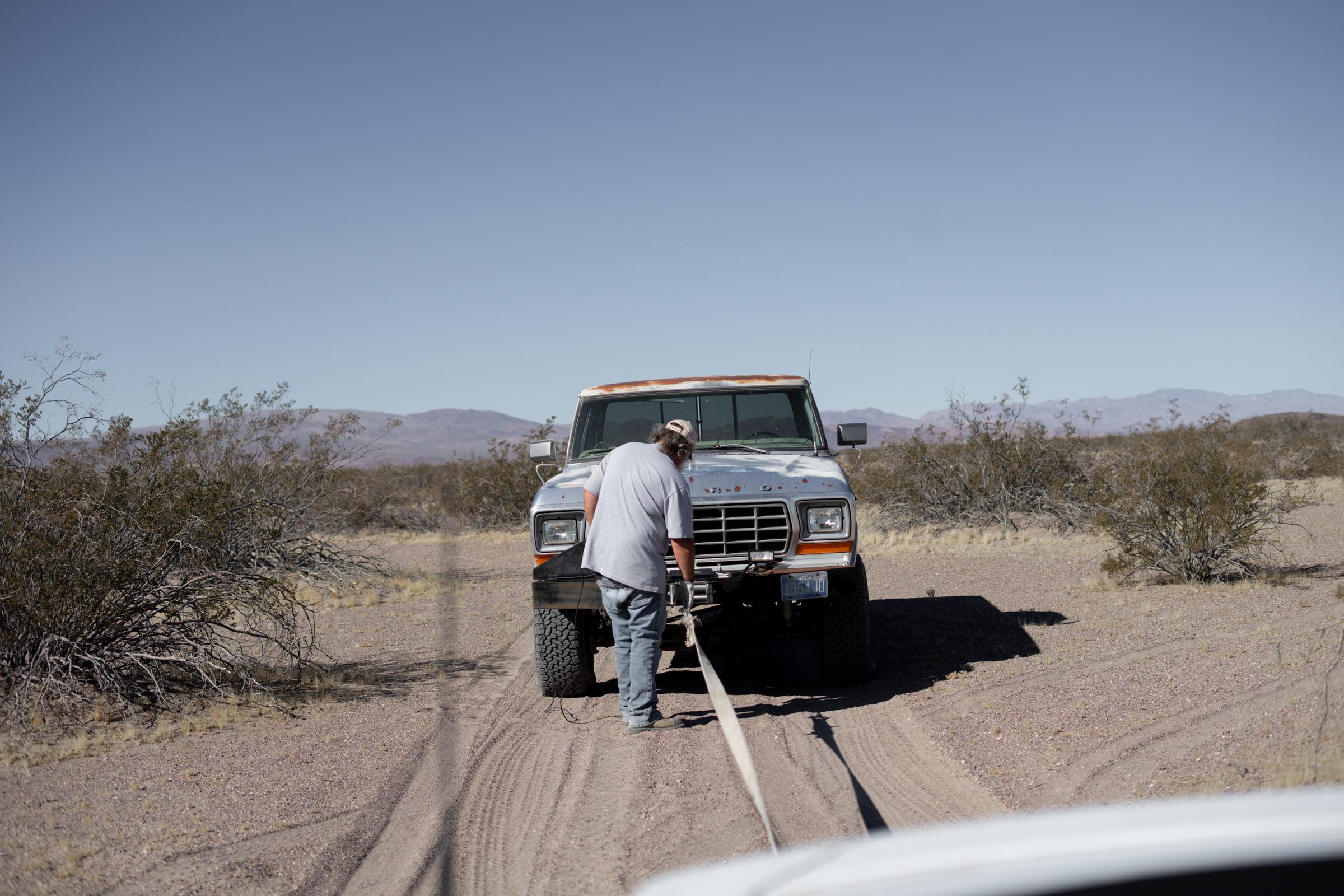
Everyone gets stuck eventually. The mistake isn't bogging down — it's how you respond in the first ten seconds.
Step 1: Stop Spinning
The instant the tires start spinning without forward motion, get off the throttle. Every extra second of wheelspin digs you deeper, melts the sand around the tires, and turns a 30-second push-out into a 30-minute shovel job. Spinning is the enemy.
Step 2: Drop More Pressure
If you went in at 18 and you're stuck, drop to 12. If you're already at 12 and not on beadlocks, you're at the practical limit — but a few PSI lower can absolutely free a buried tire. Don't be precious about your "trail PSI" when you're parked in soft sand. You can air back up later.
Step 3: Dig and Clear
Get the shovel out. Dig out in front of all four tires for at least three to four feet, sloping the ramp gently up toward firm ground. Clear away any sand piled against the body, frame, or differentials — anything pressing on the underbody is acting as an anchor. This is grunt work and it's almost always the difference between getting out and waiting for help.
Step 4: Use Recovery Boards
Wedge traction boards (MaxTrax, ActionTrax, etc.) firmly under the tires that have the most weight on them — usually the rear on a stuck climb, the front on a stuck descent. Push the lip of the board hard up against the tire so the first quarter rotation grabs teeth, not air. Then drive out at idle, no throttle, no spin. The board only works if the tire bites it instead of skipping over it.
Step 5: Strap or Winch (Last Resort)
If you have a competent buddy rig with sand-appropriate tires and pressure, a kinetic recovery rope is your friend. Hook to rated recovery points only — never tie to a hitch ball, bumper bracket, or random tab. If you're alone and have a winch, find an anchor (another vehicle, a buried spare tire, a sand anchor like a Pull-Pal) because there are no trees or rocks in dune country.
Airing Back Up: Don't Skip This Step
Driving aired-down tires on hard pavement at speed is the fastest way to ruin a set of expensive tires and de-bead a wheel. Once you're back on packed dirt or paved road:
- Below 25 mph until you air up. Heat builds fast in a flexed sidewall, and at highway speed you can shred a tire in under a mile.
- Air up to your normal trail or street pressure (usually 32–35 PSI for most light trucks and SUVs) before you point the truck home.
- Use a real compressor, not the gas-station pencil pump. A 3.0+ CFM portable compressor will get all four tires back up in 10–15 minutes. A consumer plug-in unit will take 45 minutes and cook itself in the process.
This is also why we always recommend running airing-down and airing-up gear as a matched set. The deflator gets you in fast; the compressor gets you home safe.
For more on tire pressure across different terrain, see our deeper dive on airing down tires for off-roading and our full lineup of 4x4 off-road accessories, including air down tire deflators and recovery straps.
The Sand Driving Pre-Run Checklist
Before every sand run, run through this:
- Air down to your target PSI (15–18 for most setups)
- Confirm you have a working compressor for the way home
- Shovel and traction boards in the truck — not buried under camping gear
- Rated recovery points front and rear, plus a kinetic strap or rope
- Plenty of water, sun protection, and at least one buddy vehicle for serious dune trips
- Cell signal check or satellite communicator if you're heading deep
Sand rewards preparation more than any other terrain. The drivers who never get stuck aren't lucky — they aired down further, drove smoother, and packed the gear they hoped they wouldn't need. Do the same and your first dune run becomes the start of a lot more of them.