
You're standing at the tailgate with a bed full of gear and a fistful of straps, cords, and a tangled net. Which one actually keeps your load from becoming a highway hazard? It's not a trick question — and getting it wrong is more common (and more dangerous) than most drivers realize. The AAA Foundation has linked road debris to hundreds of thousands of crashes, and a huge share traces back to loads that were never secured with the right tool for the job.
Cargo nets, ratchet straps, and bungee cords each have a place. The problem is that people reach for whatever's closest instead of matching the tie-down to the load. This guide breaks down exactly when to use each one, how to read a working load limit, and where bungee cords cross the line from "handy" to "hazardous."
Start With the Load, Not the Tool
Every good securement decision starts with one question: what happens if this shifts or comes loose at 65 mph? The answer sorts almost any load into one of three categories.
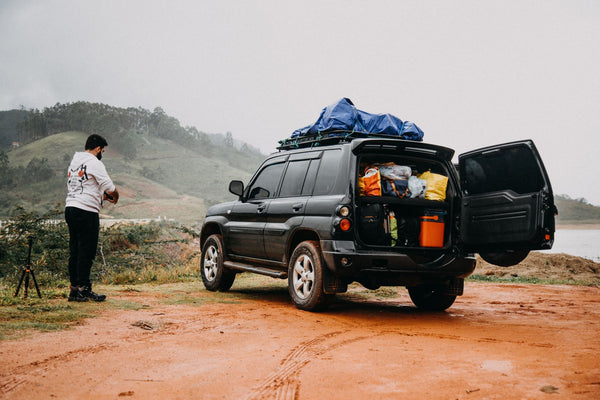
- Light, frequent-access items — loose bags, groceries, camp gear, or coolers rattling around an SUV cargo area. These won't kill anyone if they slide, but they'll spill and annoy you constantly. Containment matters more than clamping force.
- Medium-weight items needing position control — toolboxes, camping totes, sports equipment, or bins in a truck bed. These need to stay put, but they aren't going to rip an anchor point out of the floor.
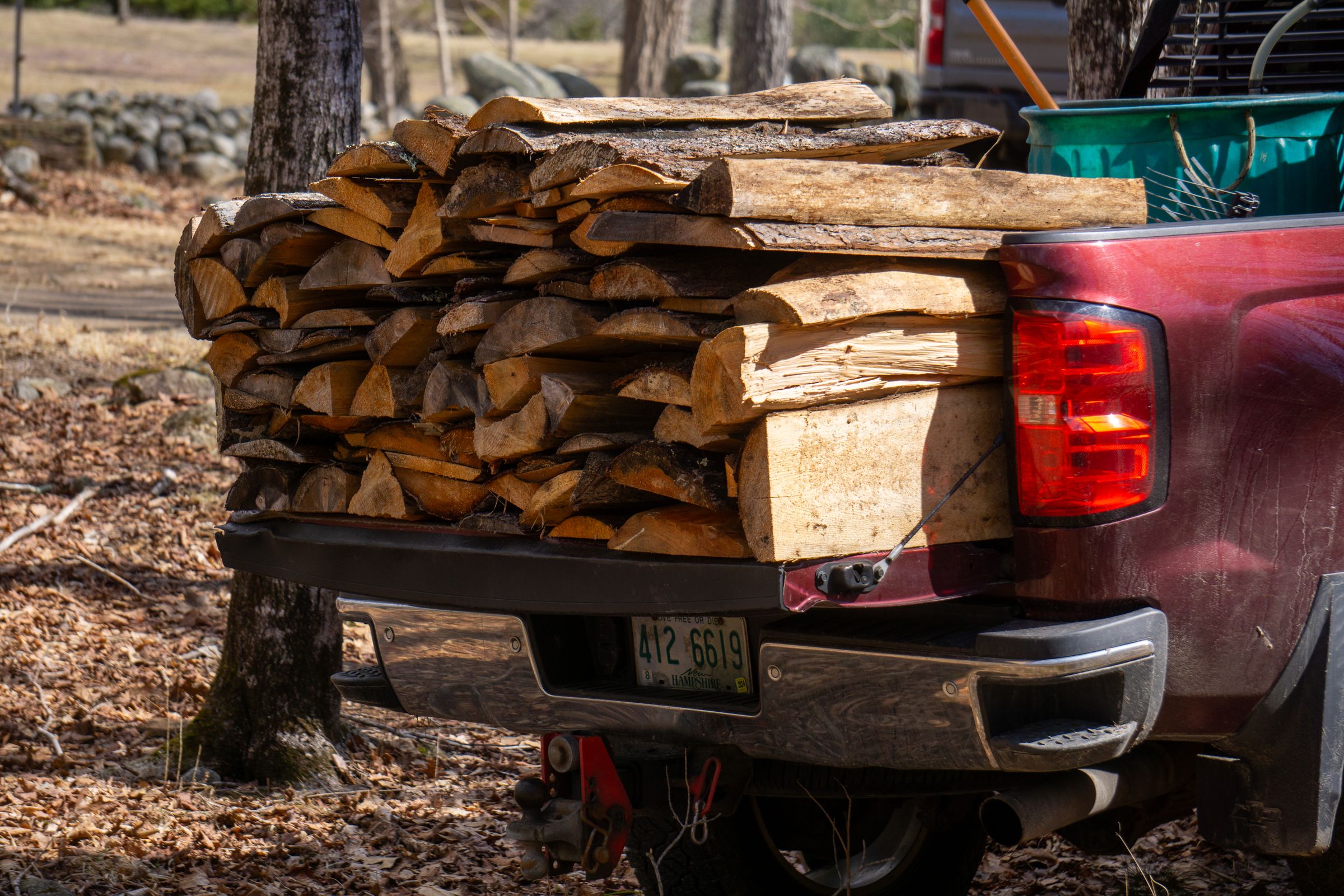
- Heavy loads requiring a positive lock — furniture, appliances, motorcycles, ATVs, and building materials. Here, failure is catastrophic. Nothing but a rated ratchet strap belongs on the job.
Once you know which bucket you're in, the right tool becomes obvious.
Cargo Nets: Containment for the Loose Stuff
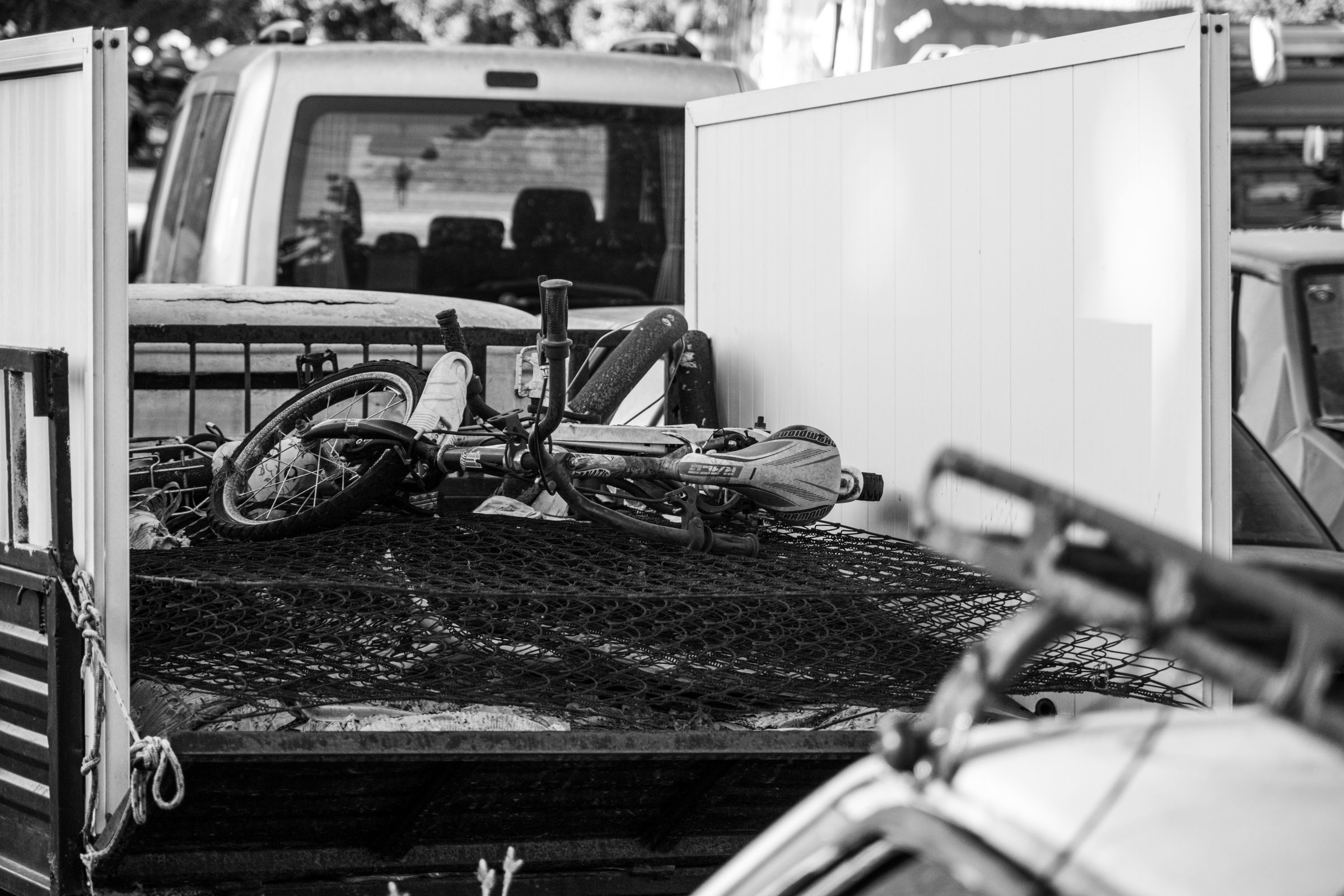
An elastic cargo net is the unsung hero of everyday hauling. When you've got a jumble of light, oddly shaped items — grocery bags, a duffel, folding chairs, a soccer ball's worth of clutter — a net contains all of it at once without cinching down twenty individual straps.
Nets shine because they're forgiving and fast. You stretch, hook, and go. That's a real advantage for items you access constantly, like a dog crate or a cooler you're opening at every rest stop. There are three broad types worth knowing:
- SUV/trunk cargo nets — hook into interior anchor points to keep groceries and gear from sliding on turns.
- Truck bed nets — stretch across the full bed to contain a load beneath, or corral loose items against the cab.
- Motorcycle/small nets — tight mesh for helmets, bags, and small gear.
Two things matter when buying: measure your space first (a net that's too big billows and a net that's too small won't reach), and check the mesh size. Fine mesh holds small items; wide mesh lets them squeeze out. What a net will not do is lock down anything heavy. It's containment, not restraint.
Ratchet Straps: The Only Real Answer for Heavy Loads
When the load can hurt someone, you need a ratchet strap with a rated working load limit. This is where most securement mistakes happen — not because people don't own straps, but because they don't understand the numbers printed on the label.
WLL vs. Break Strength: Know the Difference
Every quality strap lists two figures. Break strength is the force that snaps the webbing. Working Load Limit (WLL) is the maximum you should ever actually apply — and it's roughly one-third of the break strength for a built-in safety margin. Always work from the WLL, never the break strength.
A practical rule: a single strap's WLL should be at least double the weight of what it's holding, and you should distribute a heavy load across multiple straps rather than trusting one. Rough guidelines by width:
- 1-inch straps — roughly 800–1,000 lb WLL. Great for motorcycles, kayaks, and general bed cargo.
- 2-inch straps — roughly 1,600–3,300 lb WLL. The workhorse for most heavy loads.
- 4-inch straps — 5,000+ lb WLL. Reserved for vehicles and heavy machinery.
For everyday hauling — bikes, totes, a load of gear headed to the campsite — a set of quality 1-inch straps covers the vast majority of jobs. A four-pack lives easily behind the seat and pulls its weight for years.

Stepping Up to the Heavy Stuff
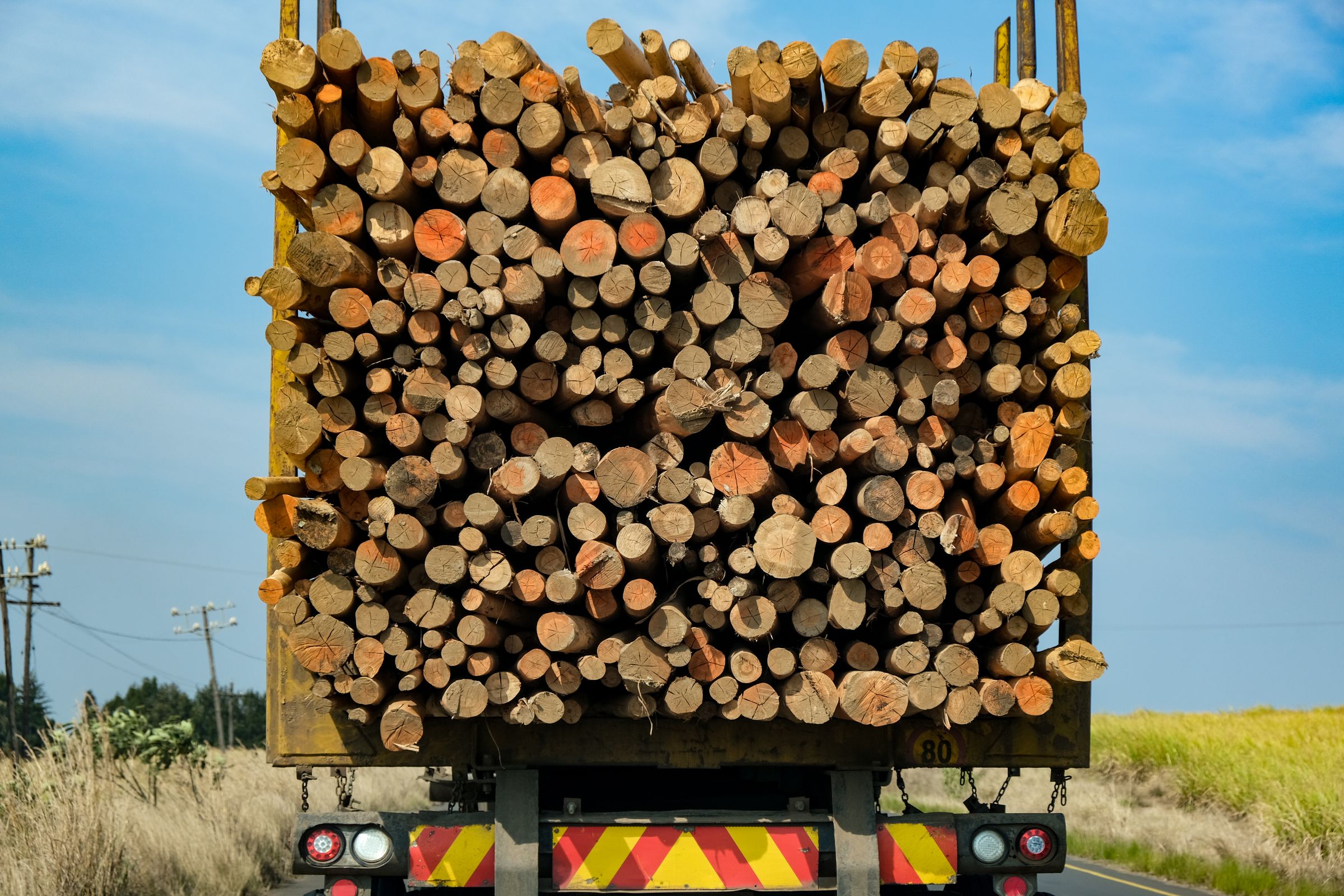
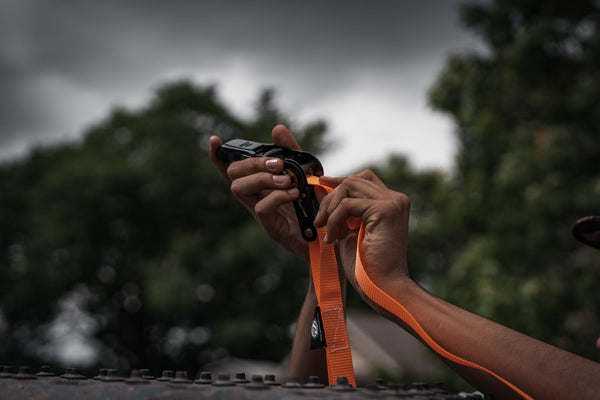
Once you're moving a motorcycle, an ATV, a full furniture set, or a fridge, step up to 1.6-inch or 2-inch straps with soft loops. Soft loops protect painted surfaces and handlebars from the metal hooks, and the wider webbing carries the higher working load these items demand. A single strap wrapped over a bike's triple clamp and cinched to two forward anchor points does more than four bungees ever could — and it won't let go over a pothole.

Bungee Cords: Handy, But Know the Line
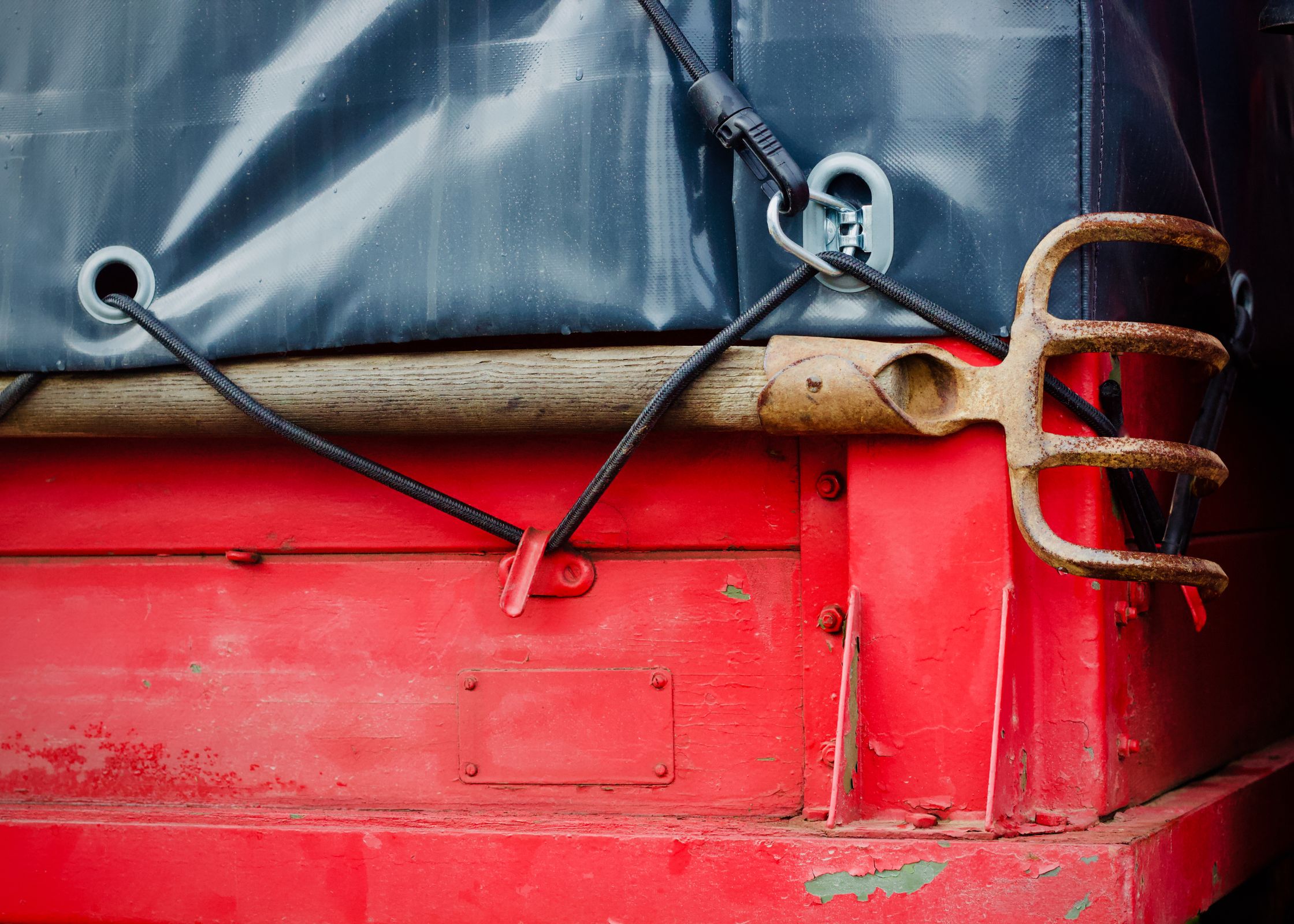
Let's be clear: bungee cords have a job. Holding a tarp taut, keeping a trunk lid from bouncing, wrangling a light cover — that's their lane. The trouble starts when people treat elastic cord as a securement device for anything with real mass.
Here's why that's dangerous. Bungee cords have no rated working load limit. The rubber core degrades invisibly from UV exposure and repeated stretching, so a cord that looks fine can snap without warning. When it does, the hook becomes a projectile aimed back at whoever's standing nearby — eye injuries from failed bungees send people to the ER every year.
The rule of thumb: never trust a bungee cord with more than about 15–20 lbs on a public road. Strapping a ladder, lumber, or a piece of furniture to a roof or bed with bungees isn't just risky — in many states it's illegal, because it fails the standard that a load must be secured against shifting or falling. Use bungees for tension and coverage. Use straps for security.
Anchor Points: The Weak Link Most People Ignore
The strongest strap in the world is useless if it's clipped to a flimsy anchor. Truck bed D-rings are typically rated somewhere between 1,000 and 3,000 lbs — check yours, because that number caps your entire setup. For genuinely heavy loads, run straps to the frame rails or dedicated bed anchors rather than accessory hooks.
Inspect your anchor points once a year. Look for rust, cracked welds, or bent hooks, and never load a tie-down point past its rating. A strap rated for 3,000 lbs on a D-ring rated for 1,000 lbs is still a 1,000 lb system.
The Tarp-and-Strap Combo for Debris
Hauling anything that can shed — yard waste, gravel, loose debris, a load of mulch — means the law (and common courtesy) requires you to keep it from blowing out. A tarp secured with straps is the standard fix. Overlap the tarp generously past the load, then run straps across it at intervals to stop it from billowing and lifting at highway speed. A flapping tarp corner does 70 mph too, and it'll tear free if it's not tensioned down.
Match the Tool, Every Time
The whole system comes down to a simple hierarchy. Reach for a cargo net when you're containing loose, light items you'll access often. Reach for a ratchet strap — sized to the load's weight via its WLL — whenever failure would be dangerous. Reserve bungee cords for tarps and light tension work, never for securing mass on the road.
Keep a range of tie-downs on hand and you'll always have the right one: a net for the grocery run, a four-pack of 1-inch straps for weekend gear, and a set of heavy-duty straps with soft loops for the day you're moving a bike or a couch. Buy quality once, check your gear before every trip, and nothing you're hauling will ever end up in someone's windshield. Browse the full JACO ratchet strap collection to build a kit that covers every load.