
You're cruising down the highway when a little amber symbol flickers to life on your dash. Your stomach drops. Is it something you can ignore until the weekend, or is it the kind of warning that means "pull over right now before you turn a $50 fix into a $5,000 repair"? Dashboard warning lights are your vehicle's way of talking to you — and learning their language is one of the most valuable skills any driver can have.
The average modern vehicle has dozens of possible warning symbols, and manufacturers don't always make them intuitive. This guide breaks down the most common dashboard warning lights, what each one actually means, and exactly what you should do when one appears. Bookmark it, because sooner or later, one of these will light up on your drive.
First, Understand the Color Code
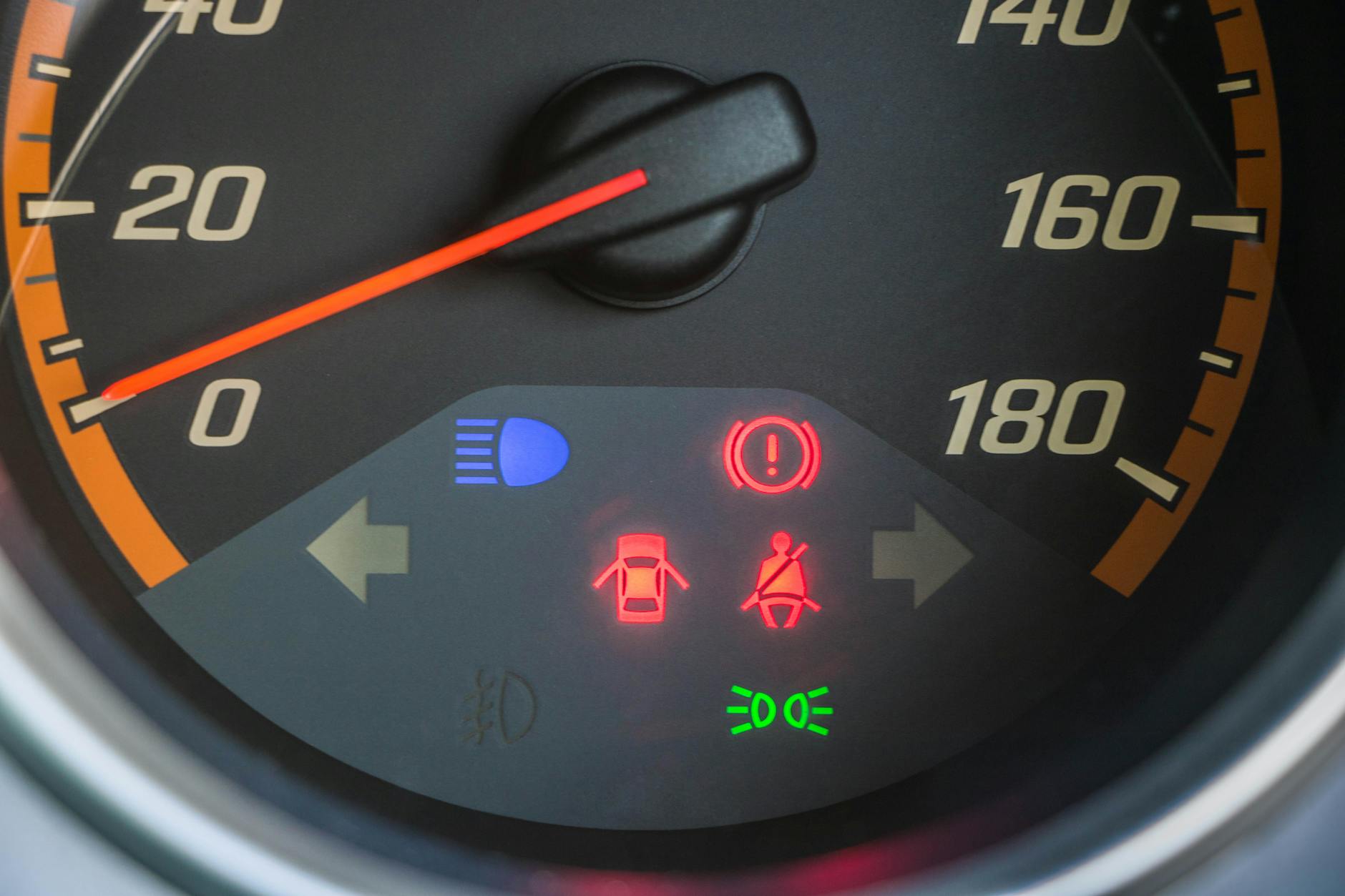
Before we dig into individual symbols, know that dashboard warning lights follow a traffic-light logic. The color tells you how urgent the situation is:
- Red: Stop. A red light means a serious problem that could cause injury, leave you stranded, or damage your vehicle. Pull over safely as soon as you can.
- Yellow/Amber: Caution. Something needs attention soon, but you usually have time to get home or to a shop. Don't ignore it.
- Green/Blue: Information. These simply tell you a system is active — headlights on, cruise control engaged, high beams lit. No action needed.
When any light appears, your first move is the same: note the color. A red light demands a different response than an amber one, and that single detail can save you a lot of grief.
Check Engine Light
The dreaded check engine light — usually an amber engine-block outline — is the most misunderstood symbol on your dash. It can mean anything from a loose gas cap to a failing catalytic converter. That's why it causes so much anxiety: the light itself doesn't tell you the severity.
Here's how to read it:
- Steady light: Something needs attention, but it's usually not an emergency. Common causes include a loose fuel cap, a worn oxygen sensor, or a failing spark plug. You can keep driving cautiously and get it checked soon.
- Flashing light: This is serious. A blinking check engine light typically signals an engine misfire that can quickly destroy your catalytic converter. Reduce speed, avoid hard acceleration, and get to a shop right away.
The fastest way to know what's going on is to plug in an inexpensive OBD2 scanner, which reads the trouble code your car has stored. Many auto parts stores will also scan it for free. Don't assume the worst — but don't ignore it either.
Tire Pressure Warning (TPMS)
That little symbol that looks like a horseshoe or cross-section of a tire with an exclamation point is your Tire Pressure Monitoring System (TPMS) light. It means one or more tires has dropped significantly below the recommended pressure — usually 25% or more.
Low tire pressure is more than an inconvenience. It hurts fuel economy, accelerates tread wear, lengthens your stopping distance, and dramatically raises the risk of a blowout. Cold mornings are a frequent trigger, since air pressure drops roughly 1 PSI for every 10°F decrease in temperature.
When the TPMS light comes on, check all four tires with a quality gauge and inflate them to the pressure listed on the sticker inside your driver's door jamb (not the max pressure printed on the tire sidewall). If the light stays on after you've corrected the pressure, you may have a slow leak or a faulty sensor worth investigating.
A trustworthy gauge is the single most useful tool for handling this warning, and a cheap stick gauge won't cut it when accuracy matters.

Battery / Charging System Light

The battery-shaped symbol doesn't necessarily mean your battery is dead — it usually means your charging system isn't working properly. Your alternator is responsible for keeping the battery charged while you drive, and this light often points to a failing alternator, a loose or corroded connection, or a worn serpentine belt.
If this red light comes on while driving, your car is running on battery power alone, and you have limited time before it dies completely. Turn off non-essential accessories like the radio, A/C, and heated seats to conserve power, and drive straight to a shop or safe location. Don't shut the engine off unless you're certain you can get it restarted — you may not be able to.
Regular battery testing and keeping your terminals clean can prevent most surprise failures. A little preventive maintenance goes a long way here.
Oil Pressure Warning
The symbol resembling an old-fashioned oil can with a drip is one of the most urgent lights on your dash. A red oil pressure light means your engine may not be getting enough lubrication — and running an engine without proper oil pressure can destroy it in minutes.
If this light appears, pull over safely and shut off the engine as soon as possible. Check your oil level with the dipstick once the engine has cooled slightly. Low oil is the most common cause, and topping it off may solve the problem. But if the level is fine and the light stays on, do not keep driving — you could be facing an oil pump failure or a serious internal issue. Have it towed if necessary. The cost of a tow is nothing compared to a new engine.
Coolant Temperature Warning

A thermometer symbol sitting in wavy lines (representing liquid) is your engine temperature warning. When it glows red, your engine is overheating — and an overheated engine can warp cylinder heads, blow head gaskets, and cause catastrophic damage fast.
If you see this light climb into the red:
- Turn off the A/C and turn the heater on full blast — this pulls heat away from the engine.
- Pull over as soon as it's safe and shut off the engine.
- Let it cool for at least 30 minutes before opening the hood. Never open a hot radiator cap — scalding coolant can spray out under pressure.
- Check your coolant level once cool, and top off if needed.
Common causes include low coolant, a failing water pump, a stuck thermostat, or a leaking radiator. If overheating recurs, get it diagnosed before your next long drive.
Brake System Warning
A red circle with an exclamation point (or the word BRAKE) can mean a few things: your parking brake is engaged, your brake fluid is low, or there's a fault in the braking system. First, confirm your parking brake is fully released — it's the most common and easiest fix.
If the light stays on with the parking brake off, check your brake fluid reservoir. Low fluid can indicate worn brake pads or a leak in the system. Because your brakes are non-negotiable for safety, treat a persistent brake warning as urgent. If you also notice a spongy pedal or reduced stopping power, pull over and call for help rather than risk driving.
ABS Light
The letters "ABS" in a circle indicate an issue with your Anti-lock Braking System. Importantly, your regular brakes still work when this light is on — you just lose the anti-lock function that prevents wheel lockup during hard or emergency stops.
This is an amber-level concern: safe to drive to a shop, but don't put it off, especially heading into wet or winter weather when ABS matters most. Common culprits are a faulty wheel speed sensor or low brake fluid. Note that if both the ABS and the red brake light are on together, treat it as a more serious combined braking fault.
Don't Guess — Diagnose
The worst thing you can do with any warning light is guess and hope. A $20 OBD2 scanner, a reliable tire pressure gauge, and a few minutes with your owner's manual will resolve most dashboard mysteries before they become expensive. Keep a basic diagnostic kit in your garage, and you'll handle the majority of warnings with confidence instead of panic.
For more practical maintenance know-how, check out our guide on the JACO blog, and browse our full lineup of precision tire gauges and inflation tools to keep your vehicle running right.
Warning lights aren't there to scare you — they're there to protect you. Learn to read them, respond appropriately based on the color code, and you'll keep small problems from snowballing into roadside disasters. The next time a symbol lights up, you'll know exactly what to do.