

When the first cold snap rolls in, your tires feel it before you do. For every 10°F drop in temperature, tire pressure falls roughly 1 to 2 PSI — which means the tires that were perfectly inflated in the September heat can be dangerously low by the time you're scraping frost off your windshield in October. Fall is the sweet spot for getting your tires squared away: warm enough to work in the driveway, but close enough to winter that the prep actually matters.
This guide walks through a practical fall tire prep checklist — pressure, tread, rotation, and cold-weather readiness — so you head into the cold months with confidence instead of a slow leak and a dashboard warning light.
Why Fall Is the Best Time to Prep Your Tires
Summer heat masks a lot of tire problems. Warm air expands, keeping pressure readings high even when a tire is technically underinflated for the conditions. As temperatures fall, that cushion disappears fast. Underinflated tires wear unevenly, hurt your fuel economy, and lengthen your stopping distance right when roads start getting slick.
Getting ahead of it in fall means you're not doing tire maintenance in freezing temperatures or, worse, on the shoulder of a highway. A 20-minute checkup on a mild autumn afternoon beats a roadside change in a November sleet storm every time.
1. Check (and Correct) Your Tire Pressure
This is the single most important fall tire task. Cold weather pulls pressure down, and low pressure is the root cause of most tire failures, blowouts, and premature wear.
- Check when tires are cold. Measure first thing in the morning or after the vehicle has sat for at least three hours. Driving heats the tires and inflates the reading.
- Find your target PSI. Use the number on the sticker inside the driver's door jamb — not the "max PSI" stamped on the tire sidewall.
- Don't trust the TPMS light alone. Most systems don't warn you until pressure is already 25% low. By then you've been driving underinflated for weeks.
A quality digital gauge takes the guesswork out of it. Accurate to a fraction of a PSI, it lets you dial each tire to the exact spec instead of eyeballing a dashboard sensor that only speaks up in an emergency.

2. Top Off With a Reliable Inflator

Finding low pressure is only half the job — you need to fix it. Gas station air pumps are notoriously inaccurate and often out of service, so keeping your own inflator on hand means you can top off in the driveway the moment temperatures drop.
Look for an inflator with a built-in, accurate gauge and an auto-shutoff feature so you can set your target PSI and walk away. A digital inflator does the checking and the filling in one tool, which is exactly what you want when you're prepping all four tires (plus the spare) in one session.

3. Inspect Your Tread Depth

Wet leaves, early frost, and cold rain all demand more from your tread than dry summer pavement. Worn tires can't channel water and slush away, which means longer stopping distances and a higher risk of hydroplaning.
Run the classic penny test: insert a penny into the tread groove with Lincoln's head pointing down. If you can see the top of his head, your tread is at or below 2/32" and it's time to replace the tire. For cold and wet conditions, many experts recommend replacing at 4/32" for a safer margin. Check across the width of each tire — uneven wear on one edge points to an alignment or inflation problem worth addressing before winter.
4. Rotate Your Tires
Fall is a natural checkpoint for a tire rotation, especially if you've racked up summer road-trip miles. Rotating — typically every 5,000 to 7,500 miles — evens out wear so all four tires age together and grip consistently in slick conditions.
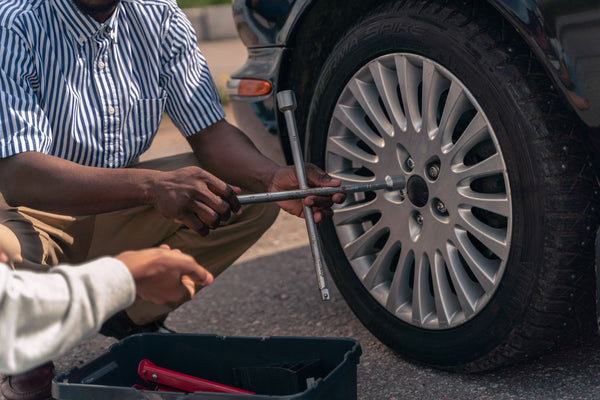
If you're rotating at home, this is the perfect moment to combine tasks: pull each wheel, inspect the inner sidewall for damage, check the brakes while you're in there, and re-torque the lug nuts to spec. Knock it all out in one session and you're set for the season.
5. Look for Damage, Dry Rot, and Aging
Cold weather makes rubber stiffer and more brittle, so small cracks and weak spots become bigger liabilities. While your tires are clean and cool, give each one a close look for:
- Sidewall cracks or dry rot — fine spiderweb cracking means the rubber is degrading.
- Bulges or blisters — a sign of internal damage; replace immediately.
- Embedded objects — nails, screws, or glass that could cause a slow leak.
- Age — check the DOT date code; tires over six years old should be inspected closely regardless of tread.
6. Don't Forget the Spare
The one tire nobody checks is the one you'll need most on a cold night. Spare tires lose pressure just like the rest — and a flat spare is useless. Add it to your fall checklist: verify pressure, confirm the tread is usable, and make sure your jack and lug wrench are actually in the vehicle and functional.
7. Consider Winter Tires If You Live Where It's Cold

All-season tires lose grip once temperatures consistently drop below about 45°F — the rubber compound hardens and traction suffers even on dry roads. If you regularly drive through real winters, dedicated winter tires make a genuine difference in braking and cornering on cold, snowy, or icy surfaces.
Fall is the time to make the swap, before the first storm hits and shops get booked solid. Whether you run winter tires or stick with all-seasons, keep your gauge and inflator handy — cold-weather pressure management matters even more once the snow flies.
Your Fall Tire Prep Checklist
- Check pressure cold and set to door-jamb spec
- Top off low tires with an accurate inflator
- Measure tread depth (penny test)
- Rotate tires and re-torque lug nuts
- Inspect for cracks, bulges, and embedded objects
- Check the spare — pressure and tread
- Swap to winter tires if you face real winters
Spend one mild afternoon this fall running through the list and you'll roll into winter with tires you can trust. The right tools make it painless — a reliable gauge, a dependable inflator, and a few minutes of attention now save you from cold, expensive surprises later. Browse the full lineup of JACO tire pressure gauges and inflators to build your cold-weather kit.