
Gravel and washboard roads punish vehicles that are driven like they're still on pavement. The loose surface steals traction, the corrugated ripples hammer your suspension, and flying rocks chip paint and crack windshields. But drive them right and thousands of miles of forest roads, ranch access routes, and backcountry campsites open up without beating your truck to pieces. Here's how to drive on gravel roads and washboard the smart way — from tire pressure to speed strategy to the techniques that actually protect your vehicle.
Why Gravel and Washboard Roads Are So Hard on Vehicles
On pavement, your tires grip a solid, predictable surface. On gravel, that surface is thousands of loose stones that roll and shift under load. Traction drops, braking distances stretch, and the rear end steps out more easily — especially in corners.
Washboard is a different beast. Those regular, teeth-rattling ripples form as traffic and weather work the road surface into corrugations. At the wrong speed, your tires skip across the tops of the ridges instead of following the road, which means your suspension is doing all the work and your tires are barely in contact with the ground. That's a recipe for lost control, loosened bolts, and premature wear on shocks, struts, and bushings.
Air Down: The Single Biggest Improvement You Can Make
The most effective thing you can do on gravel and washboard is lower your tire pressure. Dropping from highway pressure (often 35–40 PSI) into the low-to-mid 20s enlarges the tire's contact patch, lets the sidewall flex, and turns each tire into a shock absorber. The ride smooths out dramatically, traction improves, and your suspension stops taking the full beating of every ripple.
How far you air down depends on your vehicle, load, and tire type, but common starting points are:
- Light SUV / crossover: 22–26 PSI for maintained gravel
- Half-ton truck (unloaded): 20–25 PSI for rough washboard
- Loaded or towing: Stay higher — drop only a few PSI, never below the load's safe minimum
The catch: airing down only works if you can measure and reset pressure accurately. Guessing leads to running dangerously low (risking a rolled bead or sidewall damage) or barely dropping at all. A precise low-range gauge is essential here — a standard 100 PSI gauge is far less accurate down in the 20s where it matters most.

Find the Right Speed — Especially on Washboard
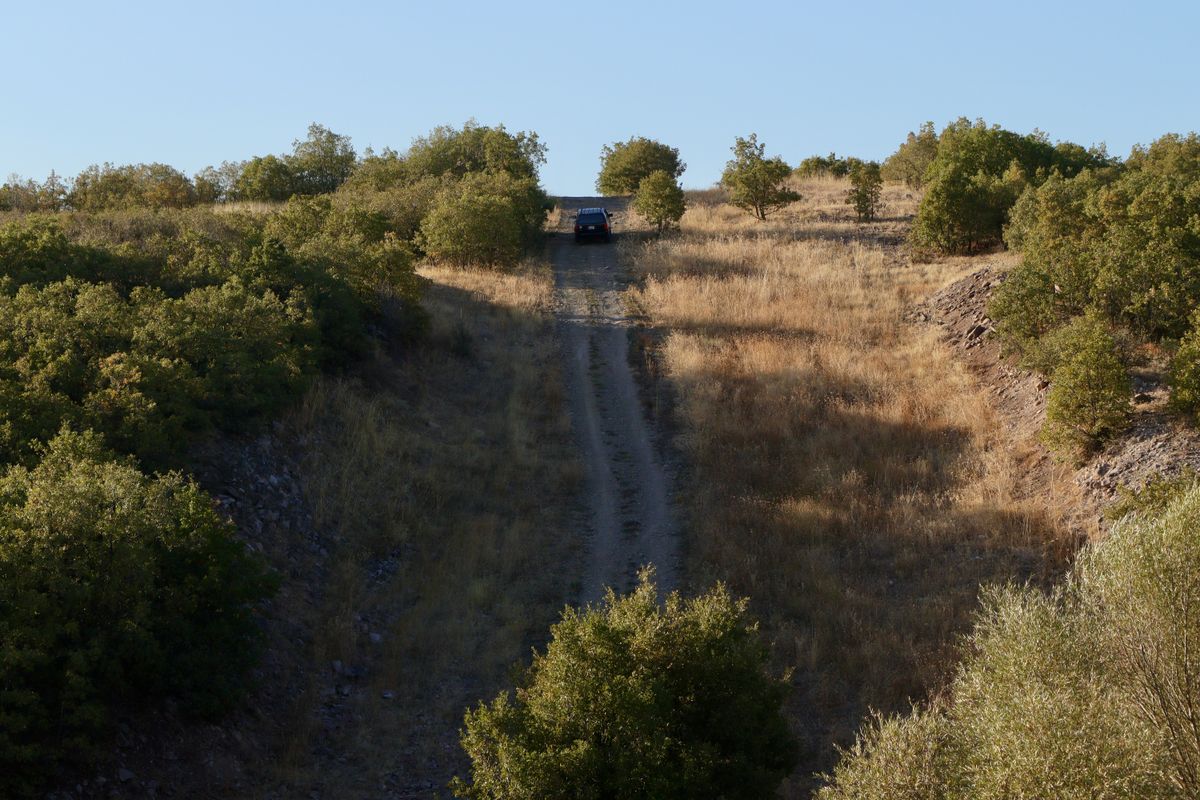
There's a persistent myth that you should "float" over washboard by driving fast. It's partly true and mostly dangerous. There is a speed at which the ride smooths because your tires ride the tops of the ripples — but at that speed you have dramatically reduced traction, longer stopping distances, and almost no margin for a surprise pothole, animal, or oncoming vehicle.
The smarter approach:
- Slow down first. Start conservative and let the road tell you what it can handle. Most gravel roads are safest at 25–40 mph, and rough washboard often demands less.
- Avoid the middle "skip" zone. If the vibration is teeth-rattling, you're usually in the worst band. Slow down noticeably rather than speeding up to escape it.
- Never carry speed into blind corners or crests. Loose gravel plus limited sightlines plus reduced braking is how people end up in the ditch.
Steering, Braking, and Throttle Technique
Smoothness is everything on a loose surface. Abrupt inputs break traction; gradual inputs keep you planted.
- Steer gently. Make slow, deliberate steering corrections. Yanking the wheel on gravel invites a slide.
- Brake early and light. Give yourself far more stopping distance than on pavement. Threshold-brake smoothly rather than stomping the pedal, which can lock wheels and kill steering control even with ABS.
- Ease into the throttle. Spinning the tires digs in and throws rocks. Feed power in progressively, especially climbing hills or pulling out of corners.
- Look far ahead. Read the road 100+ feet out so you can set up for corners, spot washouts, and adjust speed early rather than reacting late.
Protect Your Paint, Glass, and Undercarriage
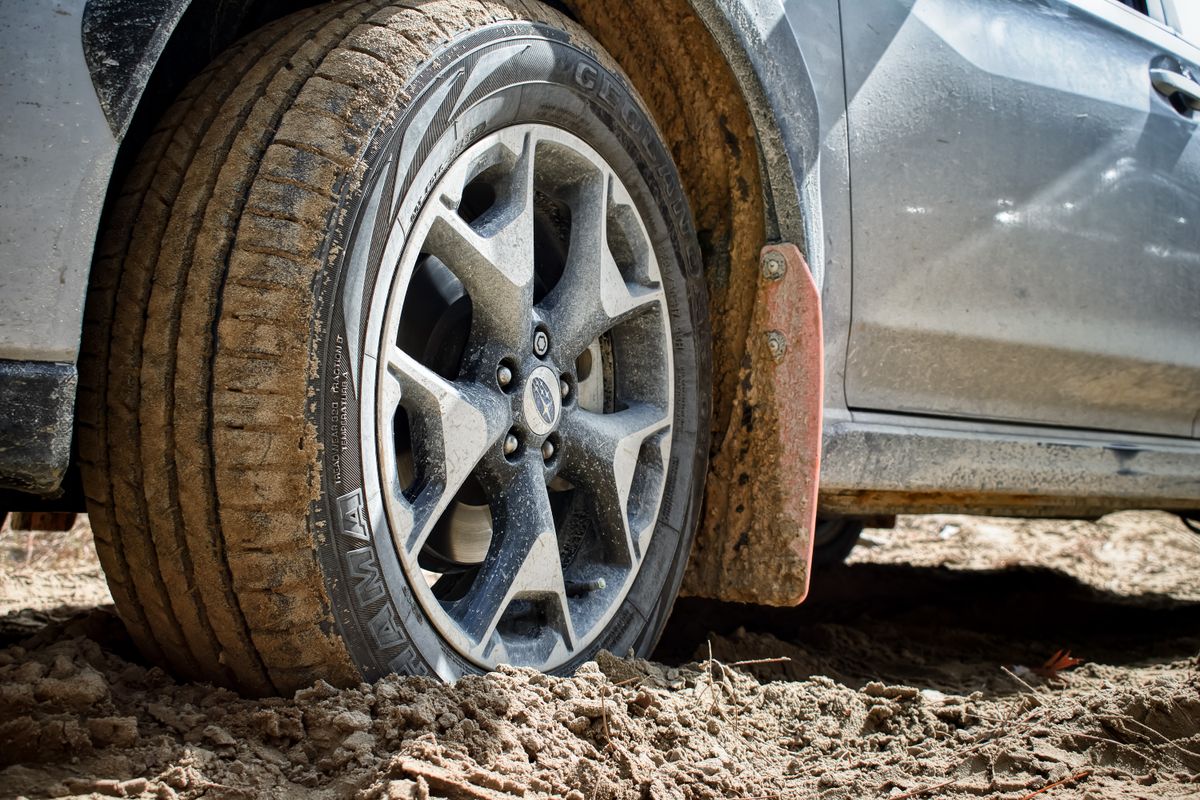
Flying gravel is the number-one cause of chipped paint and cracked windshields on these roads. A few habits go a long way:
- Increase your following distance massively. Rocks thrown by the vehicle ahead are the biggest threat to your windshield. Hang back 5–10 seconds, more if it's dusty.
- Slow down when meeting oncoming traffic. Both vehicles slowing reduces the chance of a rock strike and cuts the dust cloud for everyone.
- Mind your undercarriage on center ridges. On two-track and rutted roads, straddle carefully so you don't drag exhaust, skid plates, or low-hanging components on a high center hump.
- Mud flaps help. They cut down on the rocks your own tires throw at your rear quarter panels and anyone behind you.
Air Back Up Before You Hit Pavement
Airing down is only half the job. Running low highway-speed pressure on pavement builds heat, hurts handling, and can damage tires. Before you get back on the blacktop, air your tires back to their normal on-road pressure. A portable compressor makes this a two-minute task at the trailhead instead of a white-knuckle limp to the nearest gas station.

Pack for the Unexpected
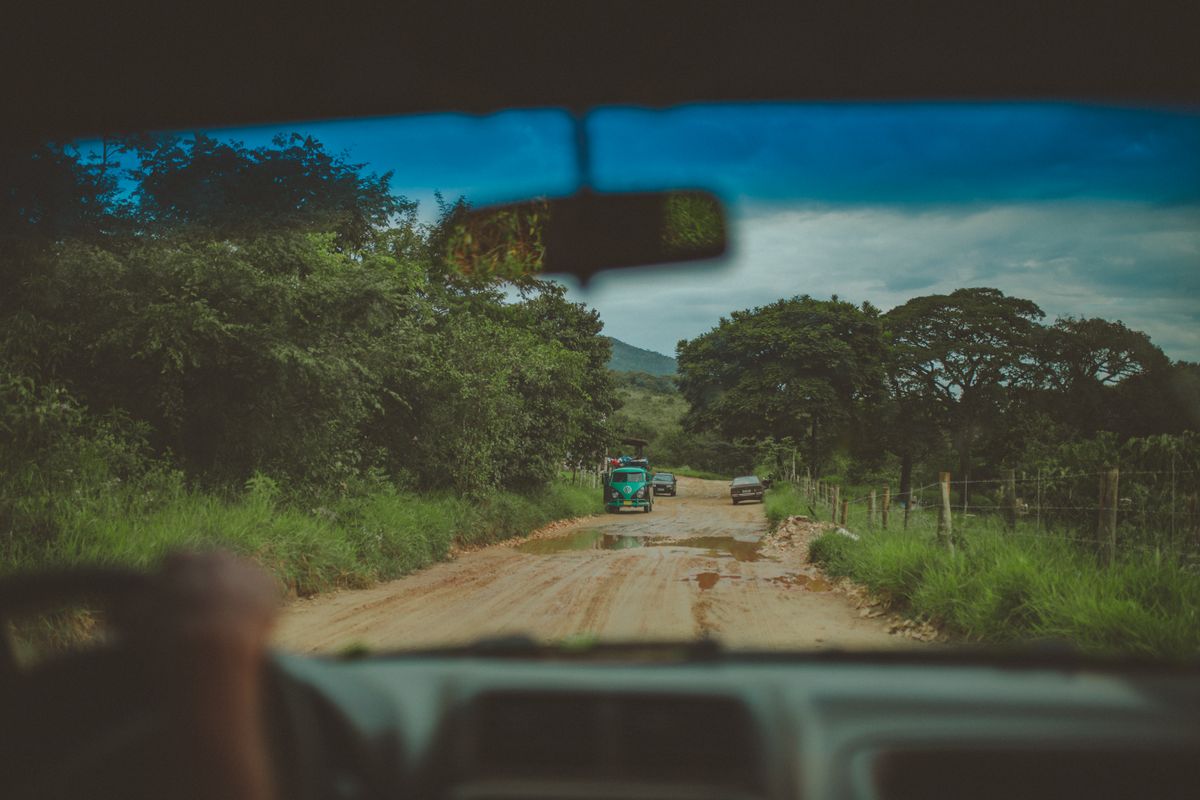
Gravel roads are often far from cell service and help. A little preparation turns a potential ordeal into a minor delay:
- A full-size spare and the tools to change it. Punctures are far more common on sharp gravel than on pavement.
- A reliable tire pressure gauge and a way to inflate. For airing down, airing up, and topping off a slow leak.
- A tire plug kit. Many gravel-road punctures are pluggable on the spot without removing the wheel.
- Water, layers, and a paper map. Backcountry roads don't care about your phone battery.
Browse JACO's full lineup of tire pressure gauges, inflators, and off-road tools to build a kit that keeps you rolling.
The Bottom Line
Driving on gravel and washboard roads well comes down to a handful of fundamentals: air down for traction and a smoother ride, find a controlled speed instead of trying to "float" it, keep every input smooth, hang back to save your windshield, and air back up before pavement. Do those five things and you'll cover rough roads faster, safer, and with a lot less wear on your vehicle — opening up the kind of places most drivers never reach.