

A flat tire never happens at a convenient time. It's the merge onto the highway, the two-lane road two hours from the nearest town, or the trailhead parking lot at dusk. What separates a 15-minute delay from a stranded evening is whether you understand your options before the pressure warning light comes on. The good news: most punctures are fixable on the spot with a few inexpensive tools and a little know-how.
This guide breaks down the three tools that get you moving again after a flat — plugs, patches, and CO2 inflators — when to use each, and what belongs in your glovebox before your next trip.
First, Know What Kind of Flat You Have
Not every flat is a candidate for a roadside fix. Before you reach for any tool, take ten seconds to size up the damage. It determines whether you repair, swap to the spare, or call for a tow.
- Tread punctures — a nail, screw, or bolt in the flat, ribbed part of the tire that contacts the road. These are the classic repairable flat.
- Sidewall damage — a cut, gash, or puncture in the flexible outer wall of the tire. This is not safely repairable. The sidewall flexes constantly and any plug or patch there will fail. Swap to the spare.
- Blowouts and large gashes — anything bigger than about 1/4 inch is beyond a roadside plug. Time for the spare or a tow.
- Valve stem leaks — sometimes the "flat" is just a leaking valve, which is a quick fix with a valve tool.
If the puncture is in the tread and smaller than 1/4 inch, you're in business. Keep the object in place until you're ready to work — pulling it early just lets the last of your air out.
Tire Plugs: The Fastest Roadside Fix

A tire plug is a sticky, rope-like strip of rubber you push into the puncture from the outside. It's the go-to for roadside repairs because you don't have to remove the tire from the wheel — the whole job takes about five minutes. Here's the sequence:
- Find and mark the puncture. Pull the nail or screw with pliers and note the hole.
- Ream the hole. Work the T-handle rasp (spiral probe) in and out a few times to clean and roughen the channel so the plug bonds.
- Thread the plug. Feed a repair cord through the eye of the insertion tool, coat it with the lube from your kit, and push it into the hole until about a half-inch sticks out.
- Pull out and trim. Yank the tool straight out — the plug stays behind — then trim the excess flush with the tread.
- Re-inflate and check. Air it up and spray or dab soapy water over the plug to confirm no bubbles.
A properly installed plug is good for thousands of miles, though tire pros still recommend a permanent patch-plug combo when you can get to a shop. For anyone who drives beyond cell range — road trips, overlanding, rural commutes — a plug kit is the single most useful thing you can carry.

Tire Patches: The Permanent Repair
A patch is a flat piece of rubber bonded to the inside of the tire over the puncture. Unlike a plug, applying a patch requires dismounting the tire from the wheel, cleaning and buffing the inner liner, and applying vulcanizing cement — not a roadside job for most people.
So why bother? Because a patch seals the puncture from the inside where air pressure pushes it tighter, and it protects the steel belts from moisture that a bare plug channel can let in. The gold standard is a combination patch-plug: the plug fills the puncture channel and the patch seals the inner liner. This is what a reputable tire shop installs, and it's why a plug should be treated as a "get home" fix rather than a forever fix.
The practical takeaway: plug it on the road, then have a shop inspect it and install a proper patch-plug within a few hundred miles. If the puncture is near the shoulder (within about an inch of the sidewall), skip the repair entirely — that area flexes too much to hold.
CO2 Inflators and Air: Getting Pressure Back
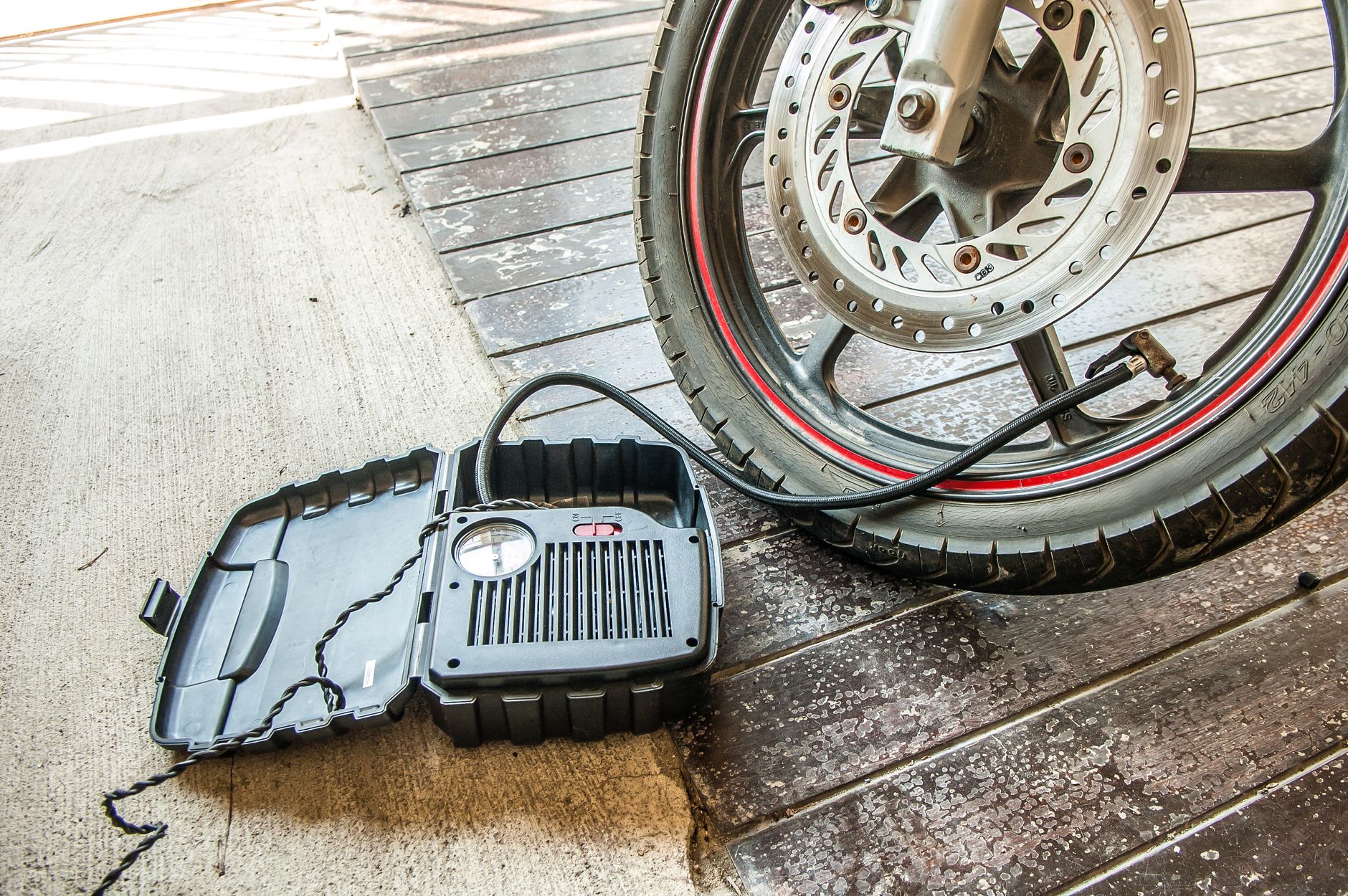
Repairing the puncture is only half the job — a plugged tire is still flat until you put air back in. You have three options, each with trade-offs:
- CO2 cartridges — small, disposable canisters that inflate a tire in seconds. They're compact and require no power, which makes them popular for cyclists and minimalist glovebox kits. The downside: one cartridge often isn't enough for a full-size car or truck tire, and CO2 seeps out faster than regular air, so it's strictly a limp-home solution.
- 12V portable compressors — plug into your vehicle and inflate as much as you need. Slower than CO2 but unlimited air, accurate, and reusable for years. The best all-around choice for cars, trucks, and off-road rigs.
- Cordless battery inflators — the newest option, offering compressor-level capability with no cords and no engine required. Ideal if you want to air up a tire in a parking lot without popping the hood.
For most drivers, a reliable inflator is more valuable than CO2 because it does double duty: emergency repairs and routine top-offs to keep your tires at their proper pressure. Correct pressure improves fuel economy, handling, and tread life — and it's the number one thing that prevents flats in the first place. Keep a good tire pressure gauge alongside your inflator so you're not guessing.

Plug vs. Patch vs. CO2: Quick Reference
- Plug — Best for: fast roadside tread-puncture repair without removing the tire. Limitation: considered a temporary/get-home fix.
- Patch (or patch-plug) — Best for: a permanent, shop-quality seal. Limitation: requires dismounting the tire; not a roadside job.
- CO2 inflator — Best for: ultra-compact, no-power inflation, especially bikes. Limitation: limited air per cartridge, pressure bleeds off faster.
- 12V / cordless compressor — Best for: unlimited, accurate inflation and routine maintenance. Limitation: slower than CO2, needs power or a charged battery.
What to Keep in Your Vehicle
You don't need a trunk full of gear — just the right few items. A complete roadside flat-repair setup fits in a small bag:
- A tire plug kit with repair cords, reamer, and insertion tool
- A reliable air source — a 12V or cordless compressor (or CO2 for bikes)
- An accurate tire pressure gauge to set the correct PSI
- A pair of gloves and a small flashlight or headlamp
- Your properly inflated spare and the jack/lug wrench that came with the car
If you tow, wheel off-road, or take long road trips, a heavy-duty compressor like the TrailPro™ Portable Air Compressor earns its space fast — it can air a full set of tires back up after a day of low-pressure trail running. For a deeper look at picking the right air source, see our guide on preventing tire blowouts.
The Bottom Line
A flat tire is only an emergency if you're unprepared for it. Understand the three tools — plug it fast on the road, patch it properly at the shop, and carry a real air source to get pressure back — and a puncture becomes a minor detour instead of a ruined day. Toss a plug kit and an inflator in your vehicle this week, and check your tire pressure before your next long drive. Future you will be glad you did.