
Hunting season doesn't wait for you to get your rig sorted. When opening day lands, the last thing you want is a dead battery at the trailhead, a flat two miles from the nearest gravel road, or a truck buried to the axles on a rain-soaked two-track. Prepping your truck or SUV for hunting season is about one thing: making sure the vehicle is the most reliable tool you own, not the weak link in your plan.
Whether you're chasing elk in the high country, sitting a treestand off a logging road, or running a UTV out of a base camp, this checklist covers the truck prep that actually matters. We'll walk through tires, airing down, recovery gear, field organization, and the pre-season maintenance that keeps you from becoming the guy waiting on a tow instead of glassing at first light.
Start With Tires: Your Most Important Piece of Hunting Gear
Nothing determines whether you make it to your spot more than what's mounted on your wheels. Late-season hunts mean mud, early snow, frost-heaved ruts, and greasy clay that turns a summer-friendly road into a skating rink. If your tires are worn or wrong for the terrain, everything else is academic.
Here's how to think about your rubber before the season:
- All-terrain (A/T) vs. mud-terrain (M/T): A/T tires are the do-everything choice for most hunters — quiet on the highway, capable on gravel and moderate mud. Go M/T only if you routinely run deep mud or aggressive rock; they wear faster and howl on pavement.
- Check tread depth: Anything under 5/32" is marginal for slick fall conditions. Snow and mud need biting edges to work.
- Siping matters: Siped tires grip better on frost, wet rock, and packed snow. If you hunt in the shoulder-season cold, it's worth asking about.
- Carry a real spare: A properly inflated, full-size spare — not a donut — belongs on every backcountry rig. Check its pressure now; spares are notorious for going flat while ignored.
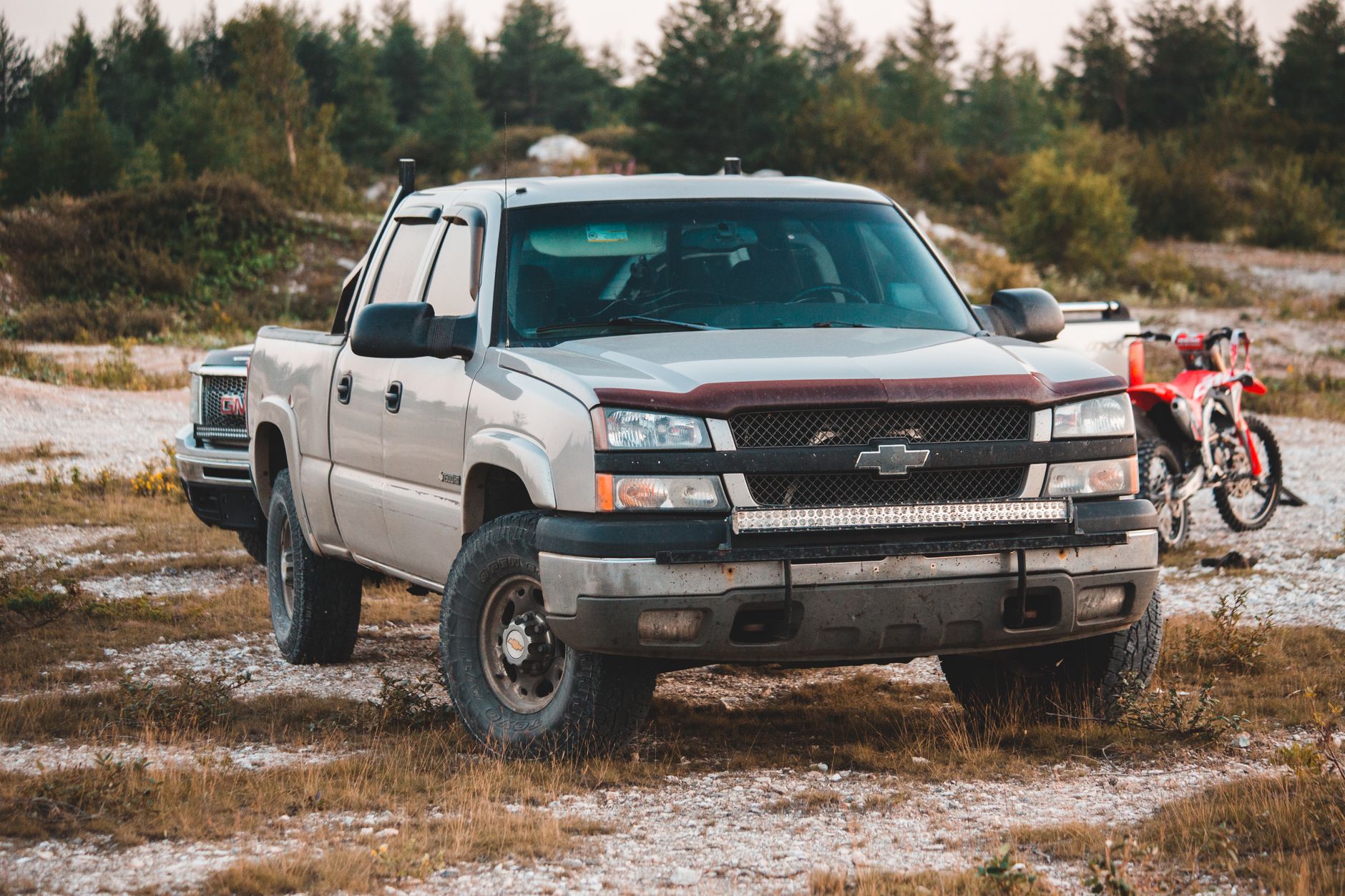
Air Down for the Terrain — and Air Back Up After
One of the cheapest performance upgrades for hunting-season driving costs nothing: dropping your tire pressure. Airing down increases your tire's contact patch, which dramatically improves traction on sand, mud, snow, and loose two-track. It also softens the ride so your gear (and your spine) survives washboard forest roads.
General guidance for a half-ton truck or midsize SUV:
- Slick gravel/glassing roads: Drop to roughly 25–28 PSI for a smoother ride and better grip.
- Mud and soft two-track: 18–22 PSI helps you float instead of dig.
- Deep sand: As low as 15 PSI, but only if you can air back up before pavement.
The catch: never drive highway speeds on aired-down tires — you risk overheating and unseating the bead. That means you need a fast way down and a reliable way back up. A dedicated deflator makes airing down all four tires a two-minute job instead of a knuckle-busting guessing game with a valve stem cap.

Just as important is getting back to street pressure before you hit the highway home. A capable portable compressor is non-negotiable backcountry equipment — it re-inflates your tires, tops off a slow leak, and can even air up a buddy's rig or a UTV. Look for something that runs off your battery and reaches at least 100 PSI so it works on trucks, not just cars.

Pack the Right Recovery Gear (and Know How to Use It)
Solo hunters are especially exposed: if you get stuck alone, miles from cell service, your recovery kit is your ticket out. Even if you never plan to leave the gravel, a single rain shower can turn a firm road into a trap. Build a kit and — more importantly — practice with it before you need it in the dark and the cold.
A dependable hunting-season recovery kit includes:
- Recovery strap or kinetic rope: Rated well above your vehicle's weight, with proper rated shackles or soft shackles.
- Traction boards: The single best tool for a solo self-recovery in mud, snow, or sand. Wedge them under the tires and drive out.
- A sturdy jack and base plate: A hi-lift or bottle jack with a wide board so it doesn't sink into soft ground.
- Folding shovel: For digging out tires and clearing a path.
- Gloves, a tarp, and a tow point that's actually rated — factory tie-downs are not recovery points.
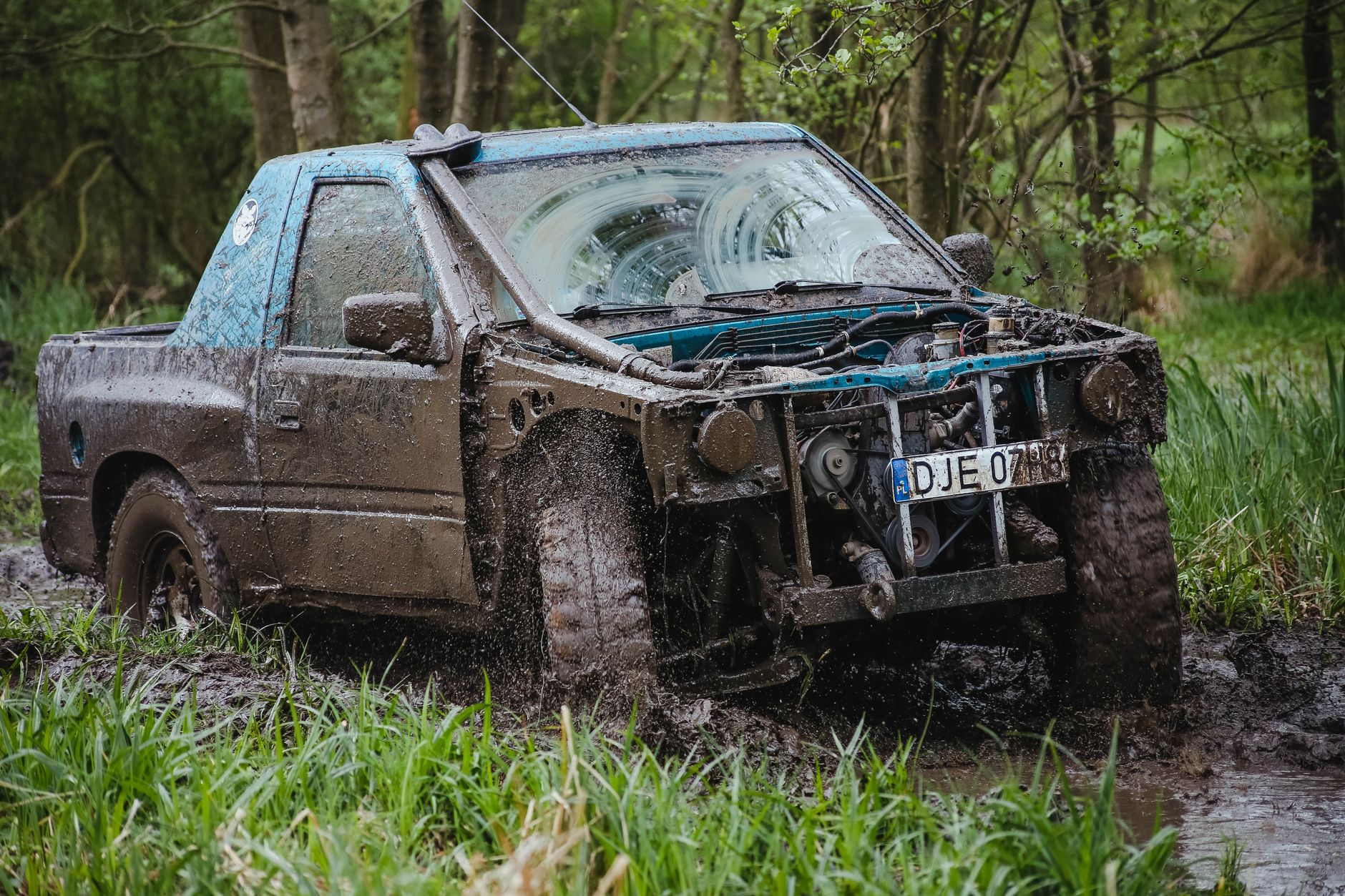
If you want a deeper walkthrough, our guide on solo vehicle self-recovery covers how to get unstuck when there's no one around to pull you out.
Pre-Season Maintenance: Catch Failures Before They Strand You
Cold temperatures expose weak components. A battery that started fine all summer can die on the first frosty morning. Run through this maintenance list a week or two before your first trip — not the night before:
- Battery: Test it (many auto parts stores do it free). Anything under ~12.4V resting or showing weak cold-cranking amps should be replaced now, not on the mountain.
- Fluids: Check oil, coolant (and its freeze rating), brake fluid, and washer fluid rated for cold temps. Top off or change as needed.
- Brakes: Inspect pads and rotors. Steep, loaded descents on forest roads are hard on brakes — you want margin.
- Lights: Test headlights, brake lights, and any aux lighting. Fall hunts mean driving in the dark on both ends of the day.
- Belts and hoses: Look for cracks or soft spots that cold weather will finish off.
- Fuel: Keep the tank above half in the backcountry — it's your buffer if plans change.
Organize the Cab and Bed for Fast, Quiet Access
A prepared truck isn't just mechanically ready — it's organized so you can find what you need without dumping the whole bed on the ground at 5 a.m. Rattling, sliding gear also spooks game and buries the one tool you need under everything else.
- Use bins or drawers: Separate recovery gear, tools, and hunting equipment so each has a home.
- Secure everything: Ratchet straps or cargo nets keep heavy gear from becoming a projectile on rough roads.
- Keep a "grab bag": Headlamp, gloves, knife, first-aid, and fire starter in one place you can reach in the dark.
- Weatherproof what matters: Optics, ammo, and electronics belong in sealed cases.
Navigation, Communication, and the "What If" Kit
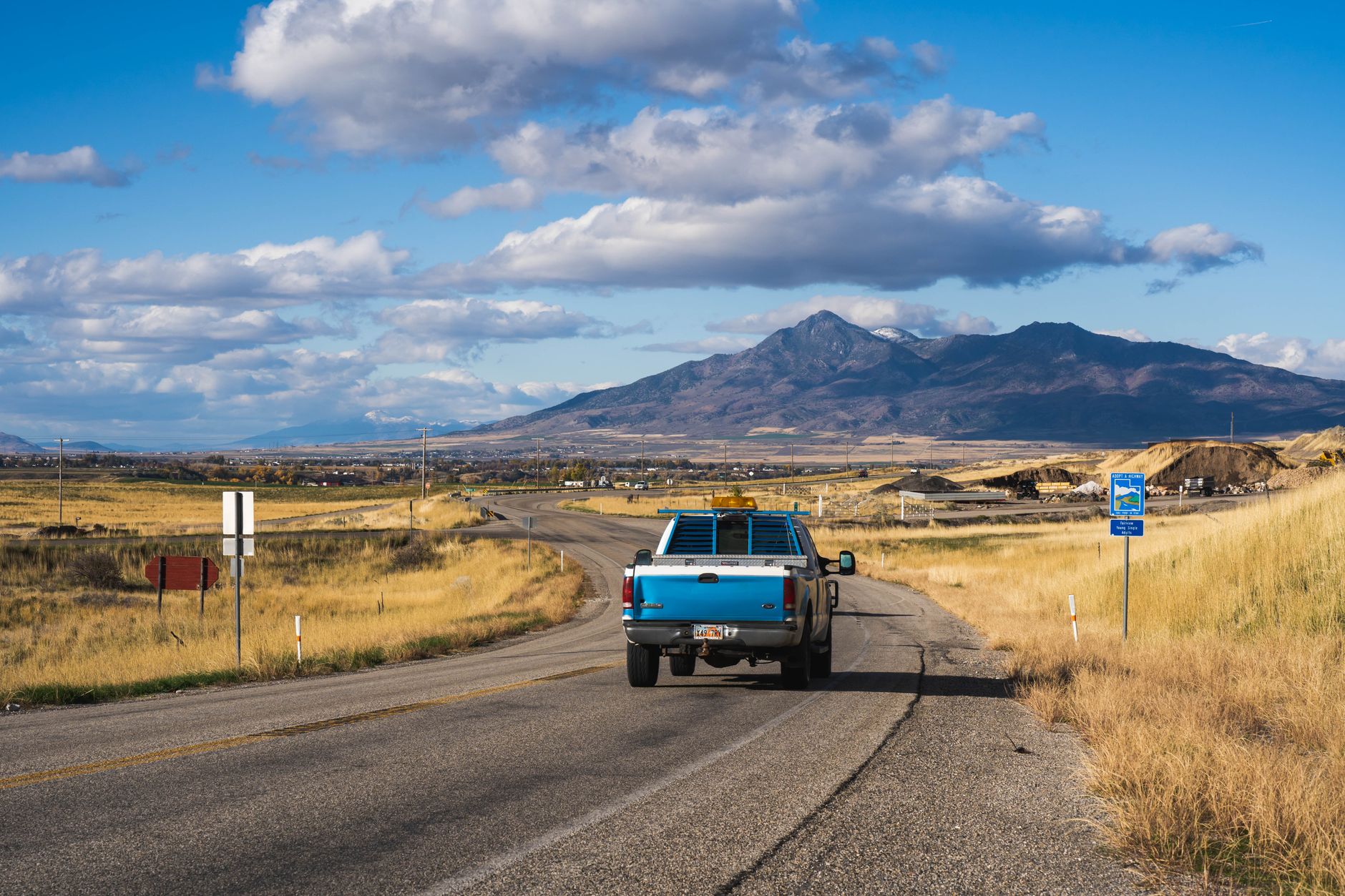
Cell service disappears fast once you leave the highway. Don't rely on your phone as your only lifeline:
- Offline maps: Download onX Hunt or Gaia maps for your unit before you lose signal.
- Backup communication: A satellite messenger (like a Garmin inReach) or a GMRS radio for group hunts.
- Emergency kit: Blankets, water, extra food, a first-aid kit, and enough layers to spend an unplanned night out.
- Tell someone your plan: Share your route and return time with a person back home. It's the cheapest safety device you own.
Final Walk-Around Before You Roll Out
The morning you leave, do a quick five-minute walk-around: tire pressures set, spare present, fluids topped, lights working, recovery gear loaded, gas full, and someone knows where you're headed. It's a small ritual that prevents the biggest headaches.
Prepping your truck for hunting season isn't about buying every gadget — it's about making the vehicle dependable so you can focus on the hunt. Get the tires right, carry the tools to air down and back up, pack real recovery gear, and knock out maintenance before the cold sets in. Do that, and your rig becomes the thing you never have to think about. For more on dialing in your traction off-pavement, check out our beginner's guide to airing down.
Season's coming. Get the truck ready, and go make it a good one.