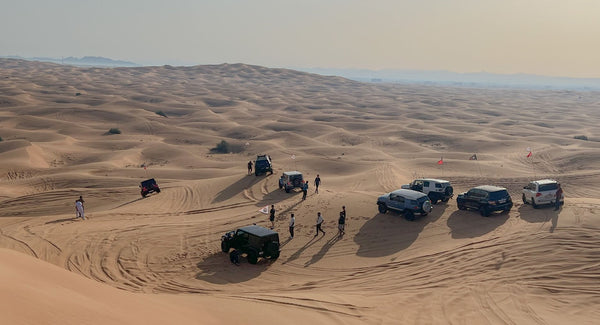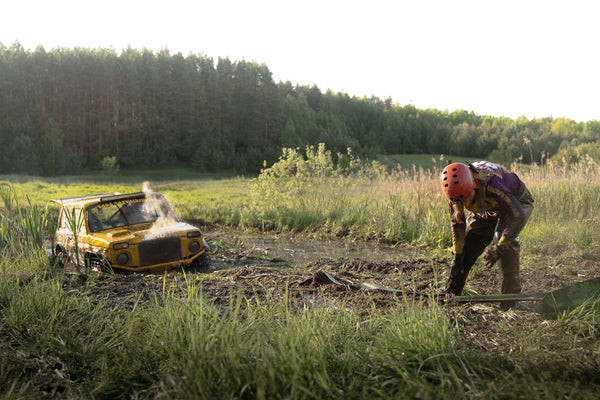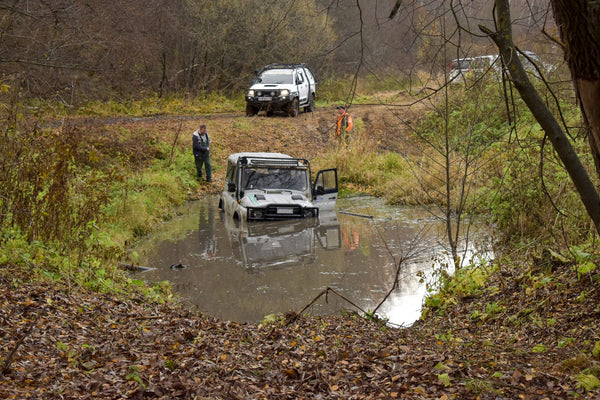


Off-roading has exploded in popularity over the last decade, and that's a good thing — more people discovering public lands, more rigs on the trail, more shared stoke. But it comes with a catch: trails only stay open when the people using them respect the land, the rules, and each other. Most of what keeps the off-road community rolling isn't written on any sign. It's trail etiquette — the unwritten code every wheeler is expected to know.
Whether you're airing down for your first fire road or you've been crawling rocks for years, a quick refresher never hurts. Here are the unwritten rules of the trail that keep everyone safe, keep the land open, and keep you from being that guy at the trailhead.
1. Yield the Right of Way (And Know Who Has It)
The single most important rule on any narrow trail is knowing who yields to whom. The general convention: the vehicle traveling uphill has the right of way. Backing downhill is far safer and more controlled than trying to reverse up a grade, so the descending rig should find a wide spot and pull over.
That said, common sense wins. If the uphill driver is right next to a pullout and you're staring down a hundred yards of off-camber ledge, wave them through and take the easy out. A friendly hand signal and a little patience prevent 90% of trail standoffs.

2. Stay the Trail — Always
“Tread Lightly” isn't just a slogan; it's the reason we still have places to wheel. Widening a trail to avoid a mud hole, cutting a switchback, or blazing your own line across a meadow does lasting damage — and it's exactly the kind of thing land managers point to when they close trails for good.
The rule is simple: go through the obstacle, not around it. If a puddle looks too deep or a rock garden looks too gnarly, that's a sign to build your skills or turn around, not to carve a new path. Staying between the lines protects the terrain and the future of the sport.
3. Air Down — and Air Back Up — Like a Pro
Airing down your tires at the trailhead improves traction, smooths the ride, and reduces trail damage by spreading your contact patch. It's one of the easiest upgrades to how your rig performs off-road. The etiquette piece? Don't block the trailhead while you do it. Pull off to the side so others can stage, and have your gear dialed so you're not fumbling for ten minutes at the choke point.
A quality deflator makes this quick and precise. A tool like the Lightning™ RX4 Digital Tire Deflator lets you drop all four tires to an exact PSI in a fraction of the time of old-school valve-cap tools — so you're off the staging area fast.

When you're back on pavement, air up before you hit highway speeds — underinflated tires overheat and wear fast. A portable compressor like the TrailPro™ Heavy Duty Portable Air Compressor gets all four back to street pressure in minutes, right at the trail exit.
4. Pack It In, Pack It Out
This one shouldn't need saying, but here we are: whatever you bring to the trail leaves with you. That includes micro-trash like bottle caps, cigarette butts, and busted zip ties. Bonus points — and serious trail karma — for picking up litter someone else left behind. Toss a trash bag in your rig and treat it as standard kit.

5. Control Your Dust and Your Speed
Ripping through a dusty section right behind another group blinds them and coats their camp in grit. Back off, give space, and slow down near campsites, trailheads, and anyone on foot, horseback, or bikes. On multi-use trails you'll share the dirt with hikers and equestrians — horses spook easily, so slow to a crawl, cut your engine noise if you can, and let riders pass.
6. Come Prepared — and Be Ready to Help
Self-sufficiency is a core value of the off-road community. Nobody wants to be the person who shows up with no recovery gear, no air, and no plan, expecting the group to bail them out. Carry the basics: recovery boards or a strap, a way to air up, basic tools, first aid, and more water and food than you think you need.
The flip side of self-reliance is that when someone does get stuck, you stop and help. It's the code. A proper recovery strap is the cornerstone of any trail kit — and having a rated one on hand means you can help a fellow wheeler safely instead of improvising with a tow rope that could snap.

7. Keep Groups Tight and Communicate
If you're rolling in a convoy, keep the vehicle behind you in sight. At every turn or fork, wait for the rig behind you to catch up and confirm the direction — that way nobody gets separated or lost. A cheap set of GMRS radios transforms group runs, letting you call out obstacles, oncoming traffic, and “spotter left, driver” without hand-waving guesswork.
8. Respect Wildlife, Closures, and Private Land
Trail signs and gates exist for a reason. A closed trail might be protecting a nesting area, recovering from erosion, or crossing private property. Blowing past a closure is the fastest way to lose access for everyone — and it makes the whole community look bad. Check current conditions before you go, keep your distance from wildlife, and never assume a two-track means it's open to the public.
The Bottom Line
Trail etiquette boils down to one idea: leave the trail, the land, and the community better than you found them. Yield when you should, stay on the path, pack out your trash, come prepared, and lend a hand when someone needs one. Follow the unwritten rules and you'll not only keep the trails open — you'll be the kind of wheeler everyone's glad to see at the trailhead.
Gear up right, mind the code, and we'll see you out there. Explore JACO's full lineup of off-road and recovery gear to build a trail kit you can count on.