

Spring is here, the water is warming up, and weekend paddle trips are calling your name. But before you can dip your blade into a glassy lake or a whitewater river, you have to get your kayak or canoe there in one piece — and keep everyone on the road safe while you do it.
Improperly secured boats cause thousands of road hazards every year. Kayaks and canoes are bulky, wind-catching, and surprisingly easy to lose at highway speeds if your tie-down game is weak. The good news? Transporting your boat safely is straightforward once you know the fundamentals.
This guide covers everything: choosing the right rack system, proper strap placement, the bow-and-stern line technique, and the mistakes that send kayaks tumbling down the interstate.
Choose the Right Roof Rack System for Your Boat
Not all roof racks are created equal, and the right setup depends on your vehicle, your boat, and how often you plan to haul it.
Crossbar systems are the most common starting point. If your vehicle has factory roof rails, aftermarket crossbars from Thule, Yakima, or Rhino-Rack bolt right on. Look for bars rated to at least 150 pounds — most kayaks weigh between 35 and 75 pounds, but you need margin for dynamic forces at speed.
J-cradles hold your kayak on its side at an angle, saving roof space and reducing wind drag. They are ideal if you want to carry two kayaks or leave room for a cargo box. Saddle-style carriers cradle the hull flat, distributing weight more evenly — better for wider recreational kayaks and canoes.
Foam block kits are the budget option. They work in a pinch for short, low-speed trips, but they lack the security of a proper rack system. If you paddle regularly, invest in real crossbars and carriers.

How to Load a Kayak or Canoe Solo
Loading a 50-pound kayak onto a roof by yourself sounds daunting, but the right technique makes it manageable.
The rear-load method: Stand at the back of your vehicle with the kayak perpendicular to the car. Lift the bow onto the rear crossbar, then walk to the stern and push the kayak forward until it is centered on both bars. This leverages the crossbar as a pivot point so you never have to lift the full weight overhead.
For canoes: The classic portage-to-roof technique works well. Flip the canoe overhead in portage position, walk to your vehicle, and lower the far gunwale onto the far crossbar first, then roll the canoe upright onto both bars.
Roller accessories mount to your rear crossbar and let you slide the boat forward without scratching your roof. Worth every penny if you load and unload frequently.
Pro tip: Always lay down a towel or non-slip mat on your crossbars before loading. It protects both the hull and your vehicle finish.
The Four-Point Strap Method (The Right Way)
Here is where most people cut corners — and where boats end up on the highway. A properly secured kayak or canoe uses four points of contact at minimum:
- Two cam straps or ratchet straps over the hull — one at each crossbar, looped around the bar and over the widest part of the boat. These are your primary hold-down points.
- One bow line — tied from the front carry handle or toggle to a secure anchor point under your hood or on your front bumper.
- One stern line — tied from the rear carry handle to a hitch receiver, tow hook, or rear bumper anchor.
The bow and stern lines are non-negotiable for highway driving. They prevent the boat from shifting forward under hard braking or lifting in crosswinds. Skip them on a two-mile drive to the lake if you want, but never on the highway.
Choosing the Right Straps (And Why It Matters)
Not all straps are equal, and using the wrong ones is a recipe for a bad day.
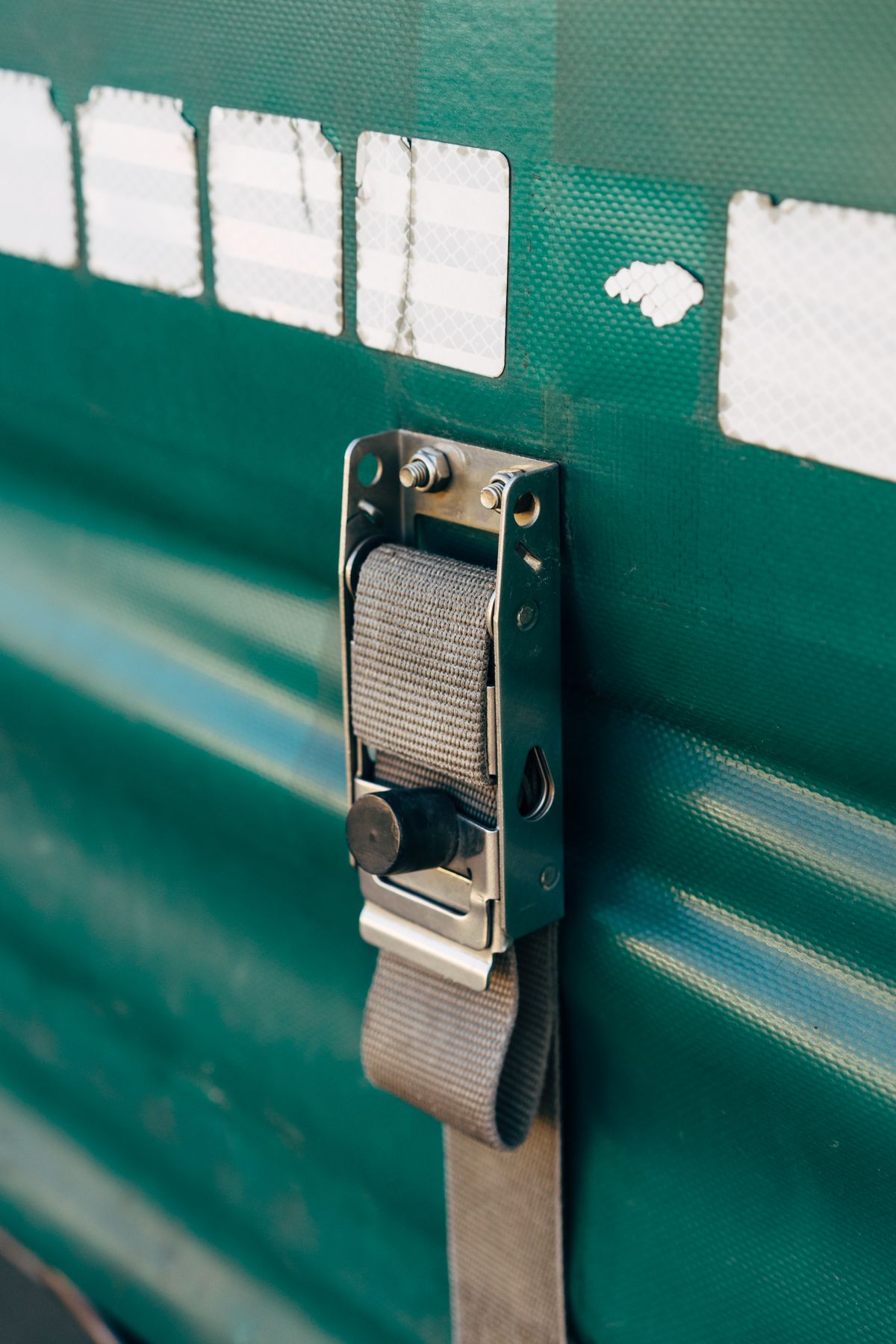
Cam buckle straps are the traditional choice for kayaks. They provide steady tension without the risk of over-tightening and crushing a composite hull. For most recreational kayaks, 1-inch cam straps rated to 500+ pounds are sufficient.
Ratchet straps offer more mechanical advantage and higher break strength — ideal for heavier canoes, tandem kayaks, or multiple boats stacked together. The key is controlled tension: tighten until the boat is snug and immobile, but not so much that you deform the hull. Quality ratchet straps with soft loops are the sweet spot — the soft loops protect your boat's finish and carry handles from metal-on-contact damage.
Avoid bungee cords entirely. They stretch under load and have zero holding power at highway speeds. Bungees are for holding a tarp down, not a 60-pound boat.
Rope works for bow and stern lines — use non-stretch nylon or polyester in a trucker's hitch for adjustable tension. Avoid polypropylene (it degrades in UV) and never use cotton (it stretches when wet and weakens over time).

Step-by-Step: Securing Your Kayak for Highway Driving
Follow this sequence every time and it becomes second nature:
- Position the kayak cockpit-down (for sit-in kayaks) to prevent wind from catching the cockpit like a sail. Sit-on-top kayaks go right-side-up. Canoes go upside-down.
- Center the boat on your crossbars so equal weight hangs over each side.
- Run your first strap over the hull at the front crossbar. Loop under the bar on both sides, bring the ends up and over the boat, and tighten with the cam buckle or ratchet. The strap should cross the widest point of the hull.
- Repeat at the rear crossbar.
- Give the boat a firm shake — side to side, front to back. If it moves more than half an inch, tighten your straps.
- Attach bow and stern lines. Angle them at roughly 45 degrees from the boat to the bumper anchor. Too vertical and they do nothing; too horizontal and they only prevent lateral shift.
- Twist your straps. Seriously — put two or three twists in any flat strap that runs along your roof. This stops the strap from vibrating in the wind and making that horrible humming noise at highway speed.
- Tuck excess strap so nothing flaps in the wind. Loose strap ends will whip your paint and annoy every driver behind you.
Canoe-Specific Tips
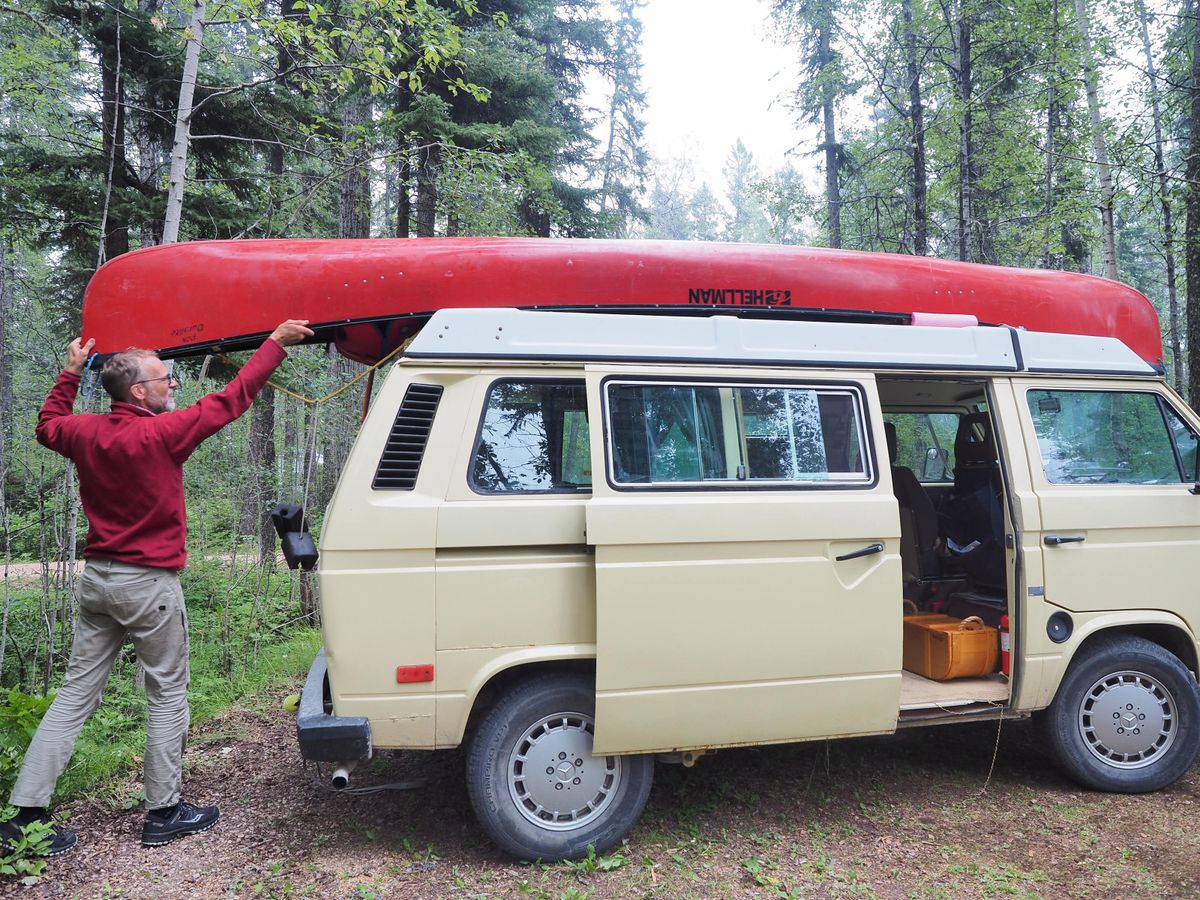
Canoes present unique challenges because of their size and wind profile:
- Always transport upside-down. A right-side-up canoe is a giant wind scoop that will lift off your roof or fill with rain.
- Use gunwale brackets if available — they grip the canoe's rails and prevent lateral sliding far better than flat straps alone.
- Longer canoes need wider crossbar spacing. If your bars are only 24 inches apart, a 16-foot canoe will flex and bounce. Aim for at least 36 inches of spread.
- Bow and stern lines are even more critical for canoes because of the longer overhang past your crossbars. Tie them tight.
Common Mistakes That End Badly
Every paddler makes these at least once. Learn from other people's mistakes instead:
- Strapping through the cockpit instead of over the hull. This feels secure but creates a pivot point. Wind catches the hull and rotates the boat around the strap. Always go over the outside of the hull.
- Forgetting to check straps during long drives. Straps stretch and settle. Stop every 100 miles (or any time you feel the car handle differently) and re-check tension.
- Over-tightening ratchet straps on composite boats. Fiberglass and carbon fiber kayaks can crack under excessive point pressure. Tighten until snug, then stop.
- Using a single strap. One strap at one crossbar is not enough. Period. Two straps minimum, plus bow and stern lines for highway speeds.
- Driving as if you don't have a boat on your roof. Reduce speed in crosswinds. Take turns wider. Give yourself extra stopping distance. Your center of gravity is higher than normal, and your vehicle will handle differently.
Paddle On

Getting your kayak or canoe to the water safely is the least glamorous part of paddling — but it is the most important. A few minutes of careful loading and strapping means you arrive at the put-in with your boat intact, your vehicle undamaged, and your stress levels at zero.
Invest in quality tie-down straps, learn the four-point method, always use bow and stern lines on the highway, and check your work before you drive. Do that, and every paddle trip starts the right way.
Explore JACO's full lineup of tie-down straps and outdoor gear to make your next adventure secure from driveway to shoreline.