

Ask ten experienced ATV riders what tire pressure they run, and you will get ten different answers. That is not because anyone is wrong — it is because the right pressure depends almost entirely on the terrain under your tires. The same quad that floats over a sand dune at 6 PSI will ride like a jackhammer over rock at that pressure, and the trail PSI that feels perfect in the woods will bury you in deep mud.
Dialing in ATV tire pressure by terrain is one of the cheapest, fastest ways to gain traction, comfort, and control. No new tires, no suspension upgrades — just a few minutes and an accurate gauge. Here is how to match your pressure to the ground you are riding.
Why Tire Pressure Matters So Much Off-Road
On pavement, tire pressure is mostly about fuel economy and even wear. Off-road, it changes the actual shape and behavior of the tire. Lowering pressure lengthens the contact patch — the footprint where rubber meets ground — so the tire grips more surface area and conforms around obstacles instead of bouncing off them.
Air down too far and you risk rolling a tire off the bead, pinching a sidewall, or spinning the tire on the rim. Run too high and you lose traction, ride harsh, and beat up your hands, your machine, and the trail. The sweet spot is narrow, and it moves with the terrain. That is exactly why a precise low-pressure reading matters — a couple of PSI is the difference between hooking up and getting stuck.

You Can't Dial It In Without an Accurate Low-Pressure Gauge
Here is the catch: most tire gauges are useless in the range that matters off-road. A standard 0–100 PSI gauge is simply not accurate down at 4, 6, or 8 PSI — the needle barely moves, and you are guessing. ATV and UTV riding lives in the single digits and low teens, so you need a gauge built specifically for low pressure.
A dedicated low-pressure gauge with a 0–15 PSI range gives you the resolution to actually see the difference between 5 and 7 PSI — which, off-road, is a meaningful change. Check pressure cold, before you ride, and again at the trailhead after the tires have been sitting.

Mud: Float, Don't Dig
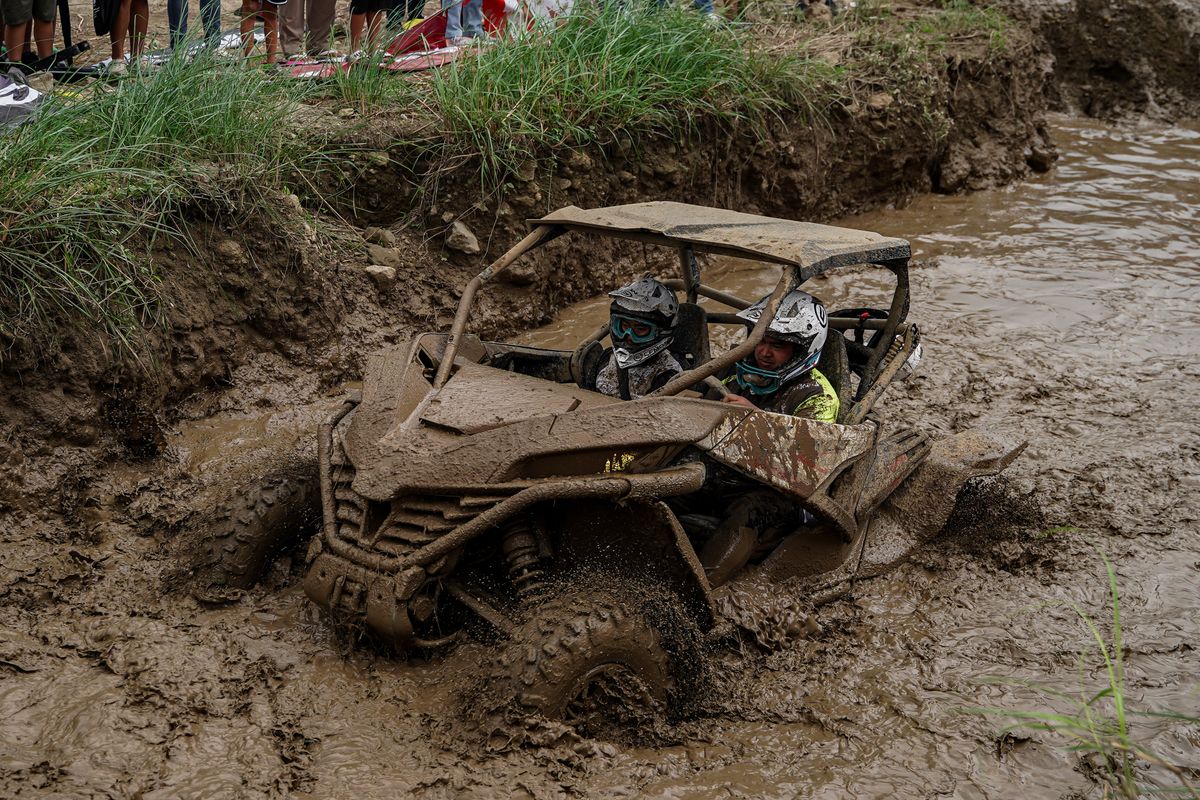
Mud is a balancing act. You want enough of a footprint to stay on top of soft ground, but you also need the tire lugs to bite, fling out mud, and self-clean. Going extremely low in deep mud can actually hurt you — the tire balloons, the lugs pack with mud, and you lose the paddle effect that pulls you through.
For most ATV mud riding, a moderate drop works best: think mid-range for your setup rather than rock-bottom. Keep enough pressure to let aggressive tread clear itself, and let the lugs — not the contact patch — do the work. If you are spinning and digging, the answer is usually momentum and tread, not dumping more air.
Sand: Air Down the Most
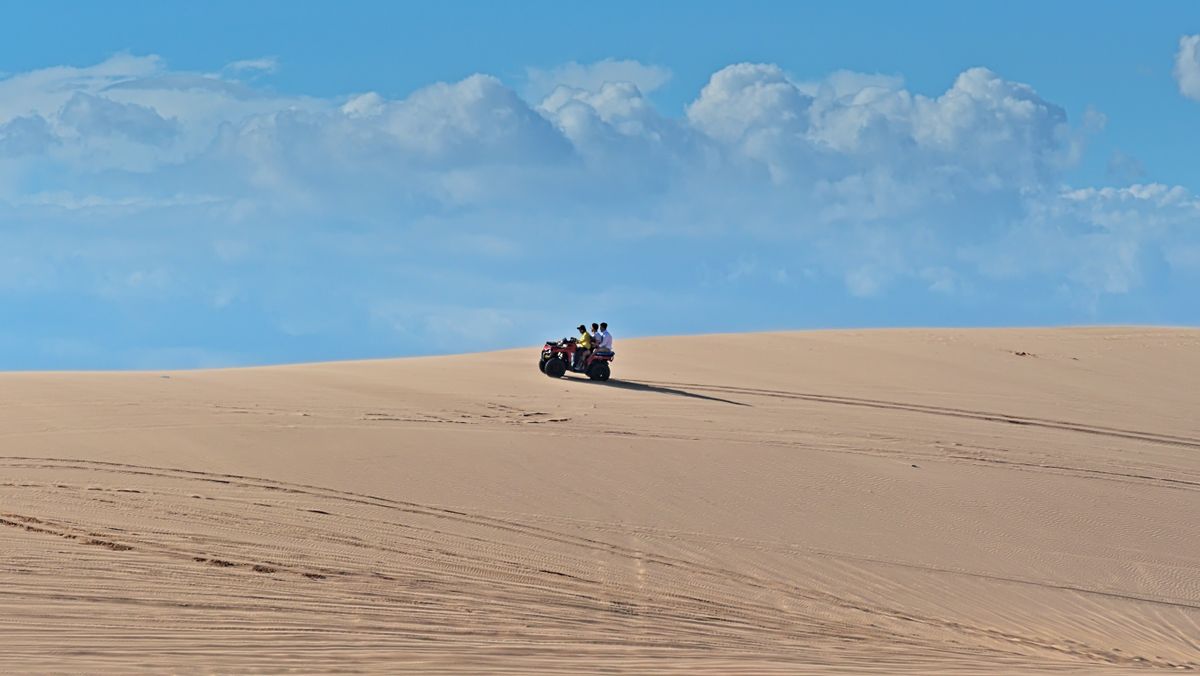
Sand is where airing down pays off the most. The goal is maximum flotation — you want the tire to spread out into a wide, long footprint that rides on top of the sand instead of plowing into it. This is the lowest-pressure terrain you will run.
Dunes and deep sand reward the softest pressures your setup will safely allow. The wider footprint also lets paddle tires and sand tires do their job. Just respect the limit: the lower you go, the higher the risk of de-beading in a hard turn, so do not chase the absolute bottom unless you are running beadlocks. Air back up before you hit any hardpack or pavement.
Rock and Hardpack: Conform Without Cutting
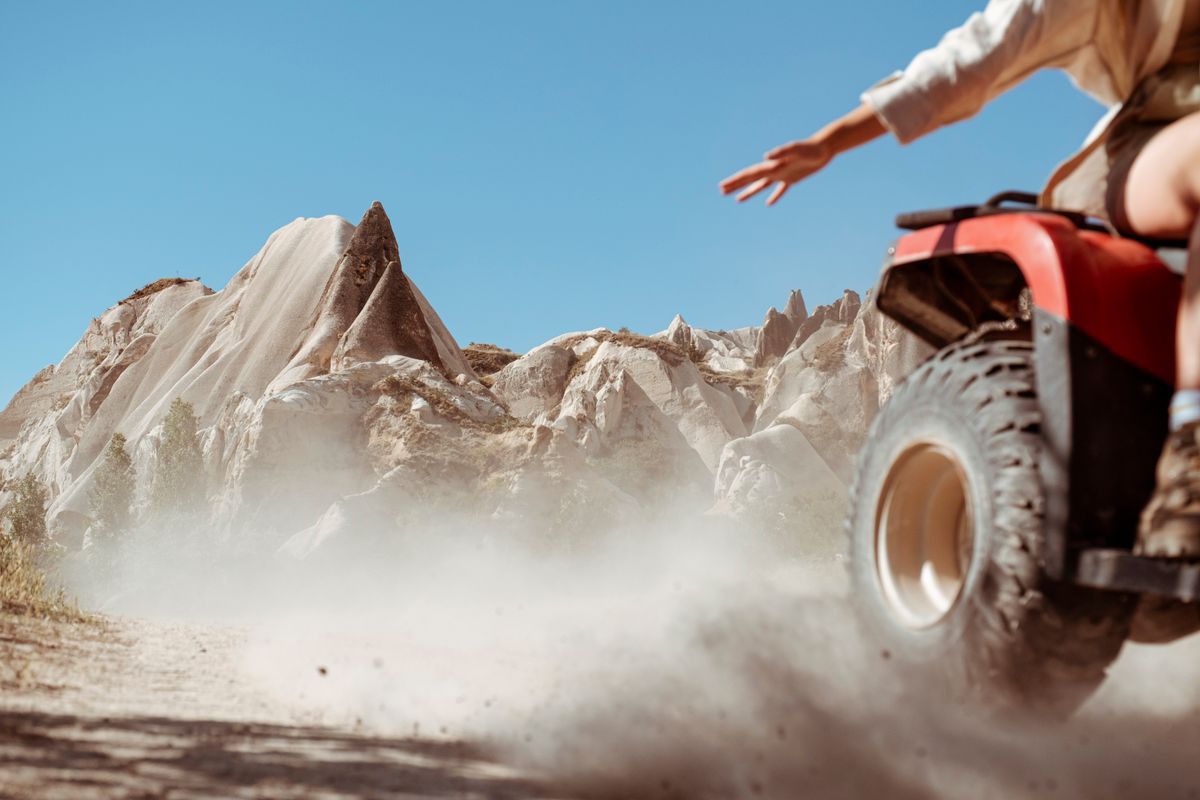
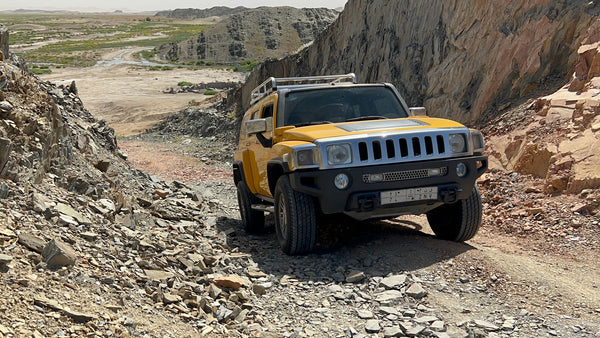
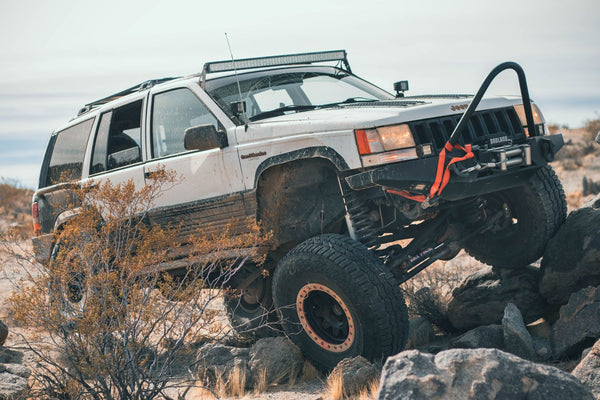
Rock crawling and rocky hardpack are about grip and protection. A lower pressure lets the tire wrap around rocks and ledges for traction, and it softens the ride over sharp, jagged surfaces. But there is a real hazard here — run too low on rock and you expose the sidewall and rim to pinch flats and rock cuts.
The right approach is a moderate air-down: low enough to gain bite and a compliant ride, high enough to protect the sidewall when you load it against a rock. This is also where beadlock wheels earn their keep, letting you run lower pressure on rock without rolling a bead.
Trail and Hard-Packed Dirt: The Everyday Setting
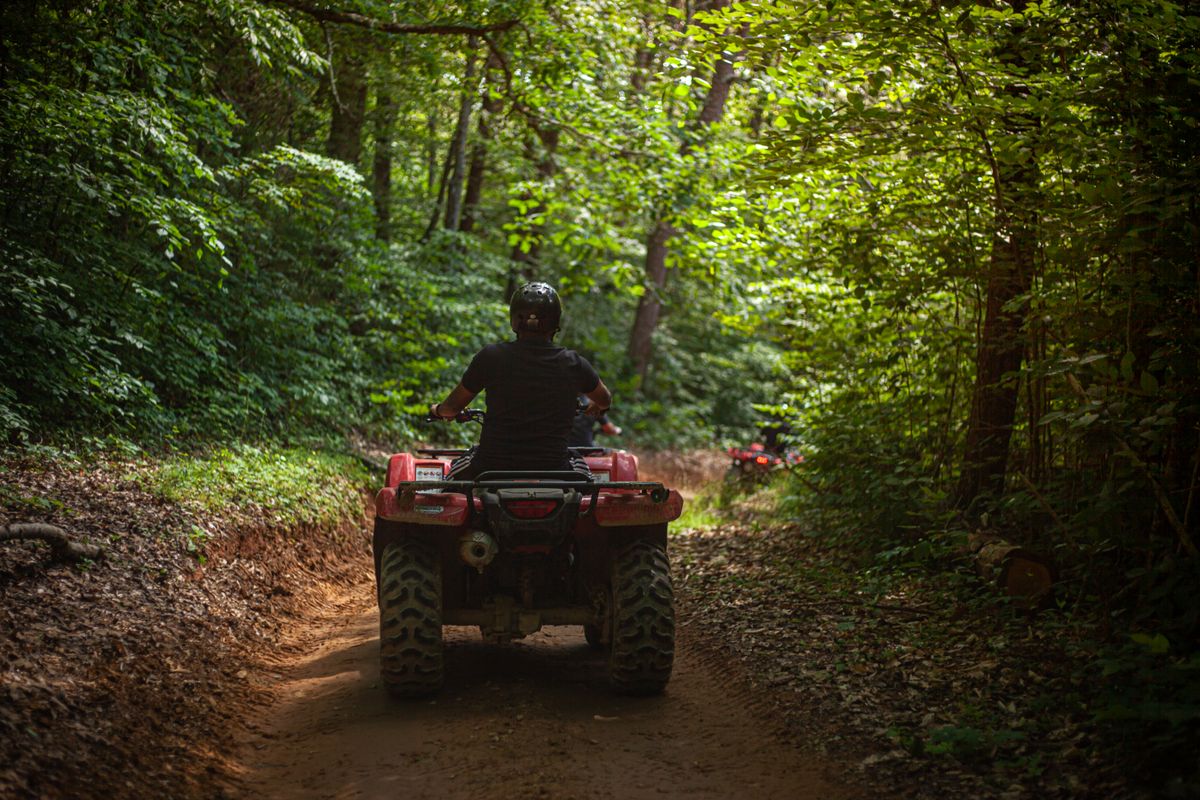
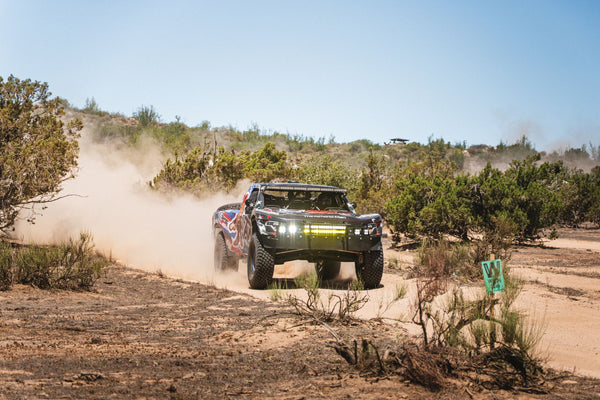
Most riders spend the bulk of their time on mixed trail and packed dirt, and this is your baseline. You want a comfortable, controlled ride with predictable steering and good tread life — not the extremes of sand or rock.
Trail pressure is generally your highest off-road setting, a moderate drop from street pressure that takes the harsh edge off without making the machine feel vague or squirmy. From this baseline, you air down further when you hit sand or technical rock, then air back up when you return to packed trail or load the machine in the truck.
Always Air Back Up

Airing down is only half the system. Running low pressure on the street or at speed builds heat, kills handling, and can de-bead a tire in a hard corner — so you need a fast, repeatable way to get back to safe pressure when the riding is done. A rapid deflator with a built-in gauge makes airing down quick and precise, and a portable compressor gets you back up at the trailhead.
The Lightning™ RX4 Digital Tire Deflator is built exactly for this rhythm: quick-connect onto the valve, dump air fast, and watch the digital gauge so you hit your target PSI on the first try — no guessing, no repeated check-and-bleed.

Quick Reference: Relative Pressure by Terrain
Exact numbers depend on your machine's weight, tire size, and rider preference — always start from your manufacturer's recommended pressure and adjust in small steps. As a general guide to how the terrains rank relative to each other:
- Sand: Lowest pressure — maximum flotation on dunes and deep sand.
- Rock / technical: Low-to-moderate — grip and conformity, with enough air to protect the sidewall.
- Mud: Moderate — enough footprint to float, enough tread bite to self-clean.
- Trail / hardpack: Highest off-road setting — your comfortable, controlled baseline.
- Street / transport: Back to full recommended pressure — always air up before pavement or speed.
The takeaway is simple: there is no single "correct" ATV tire pressure — there is the correct pressure for the terrain you are on right now. Carry an accurate low-pressure gauge, learn how your machine responds in small PSI increments, and make airing down (and back up) part of your routine. Your traction, your ride quality, and your hands will thank you.
Want to build out your air-down kit? Browse the full lineup of JACO tire gauges, deflators, and inflators and dial in every ride.