
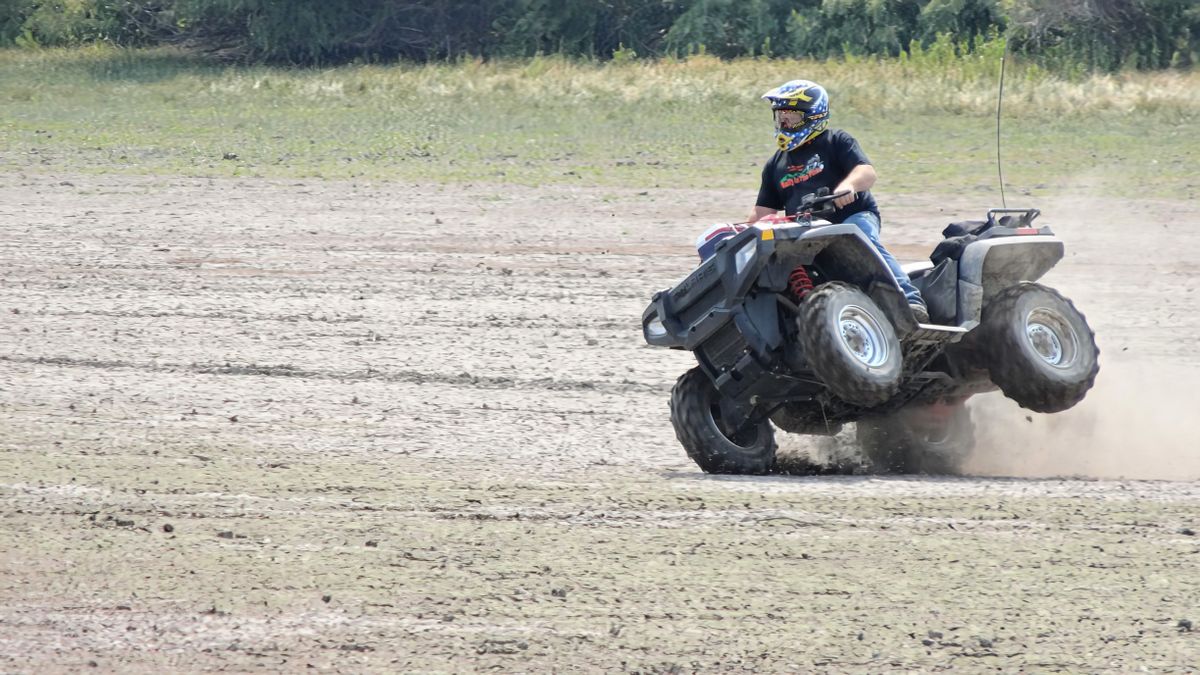
Every year, more than 100,000 ATV-related injuries send riders to the emergency room in the United States alone. The sobering reality? A significant percentage of those injuries could be prevented — or at least drastically reduced in severity — with the right safety gear. Whether you're hitting technical single-track, cruising forest service roads, or working your property, what you wear on your ATV matters as much as how you ride it.
This guide covers every essential piece of ATV safety gear, why each one matters, and how to choose gear that actually fits your riding style. No fluff, no scare tactics — just practical advice to keep you riding longer.
Your Helmet Is Non-Negotiable
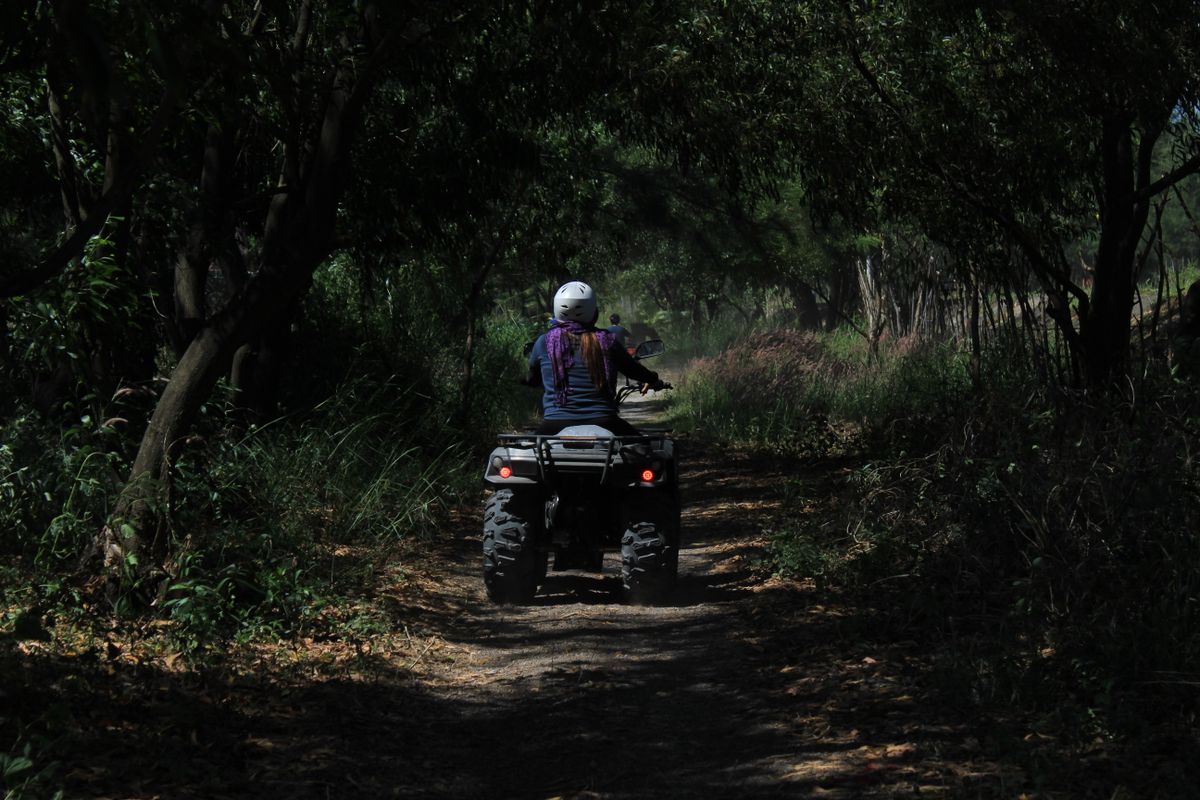
A DOT-certified helmet is the single most important piece of ATV safety gear you can own. Head injuries account for the majority of ATV fatalities, and a quality helmet reduces the risk of traumatic brain injury by roughly 69%, according to the Consumer Product Safety Commission.
For ATV riding, a full-face motocross-style helmet is the gold standard. Unlike open-face or half helmets, a full-face design protects your chin and jaw — areas that take the brunt of impact in a forward dismount. Look for these features:
- DOT and/or ECE 22.06 certification — non-negotiable baseline safety standards
- Lightweight shell — polycarbonate for budget helmets, fiberglass composite or carbon fiber for premium options
- Adequate ventilation — ATV riding is physical, and you'll overheat fast in a poorly ventilated helmet
- Removable, washable liner — trail dust and sweat accumulate quickly
- Proper fit — snug but not painful, with no rotation when you shake your head
Replace your helmet after any significant impact, or every 3–5 years regardless. The EPS foam degrades over time, reducing its ability to absorb energy.
Goggles: Protecting More Than Your Vision
Pair your helmet with dedicated off-road goggles — not sunglasses, not a helmet visor alone. ATV trails throw rocks, branches, mud, and insects at your face constantly. Quality goggles provide:
- Impact-resistant lenses (ANSI Z87.1 rated) that won't shatter on a direct hit
- Anti-fog coating — critical for early morning rides and varying temperatures
- Foam seal to block dust infiltration while allowing airflow
- Tear-off or roll-off systems for muddy conditions — peel away a layer mid-ride instead of stopping to clean
Tinted lenses work for bright conditions, but carry a clear lens as a backup for wooded trails or evening rides where visibility drops fast.
Upper Body Protection: Chest Protectors and Jerseys
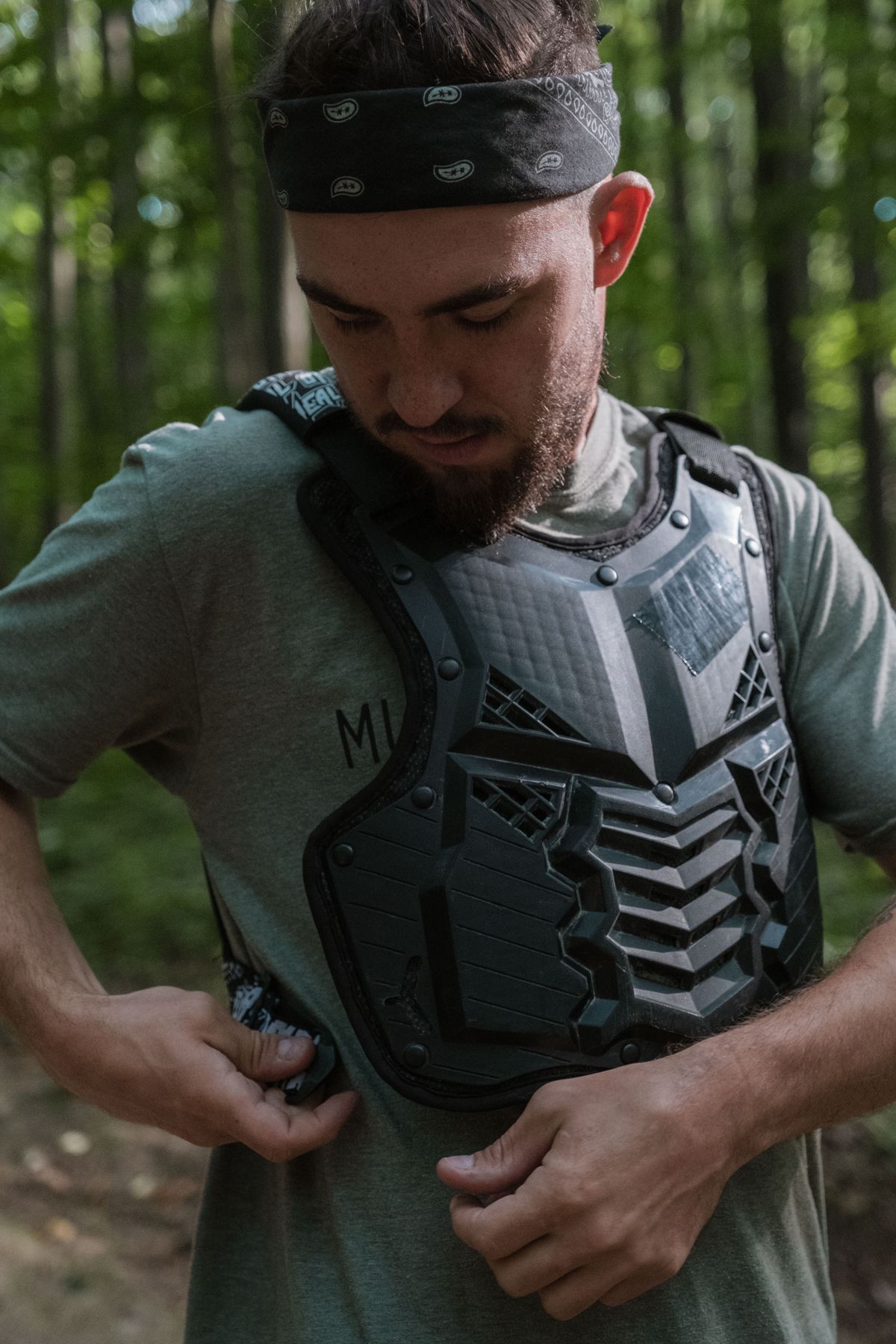
A roost guard or chest protector shields your torso from flying debris, branches, and impact during a spill. At a minimum, it covers your chest, back, and shoulders. Higher-end models integrate elbow guards and a kidney belt into one system.
For casual trail riding, a lightweight roost deflector is usually sufficient — it stops rocks and debris kicked up by other riders without restricting movement. For aggressive riding, technical terrain, or higher speeds, step up to a full chest protector with hard-shell armor and CE-rated impact foam.
Layer your chest protector over a moisture-wicking jersey designed for off-road riding. Cotton absorbs sweat and stays wet, leading to chafing and temperature regulation problems on longer rides. Synthetic or merino blends keep you dry and comfortable.
Gloves: Grip, Control, and Hand Protection
Your hands are the primary control interface with your ATV — throttle, brakes, steering. Quality off-road gloves serve triple duty: improving grip in wet or sweaty conditions, absorbing vibration on rough terrain, and protecting your knuckles and fingers from trail hazards.
Look for gloves with:
- Reinforced palms — Clarino or synthetic leather for durability and grip
- Knuckle protection — hard or padded knuckle guards for brush and branch impacts
- Pre-curved fingers — reduces hand fatigue by matching your natural grip position
- Breathable mesh backs — your hands generate serious heat during active riding
Gloves should fit like a second skin. Loose gloves compromise throttle sensitivity and brake modulation — both critical for safe riding.
Boots: Ankle Support and Foot Protection
Never ride an ATV in sneakers, sandals, or work boots. Purpose-built ATV or motocross boots provide the ankle support, shin protection, and sole grip that regular footwear simply can't match.
ATV boots protect against:
- Ankle rolls and sprains — the most common non-impact ATV injury
- Crush injuries — ATVs weigh 400–800 pounds, and rollovers happen
- Foot peg impacts — metal foot pegs plus rough terrain equals bruised feet without armor
- Trail debris — rocks, stumps, and branches that you'd never feel coming
Look for boots with a solid sole (stiff enough to resist bending over foot pegs), reinforced toe boxes, and above-the-ankle support. Break them in before your first real ride — stiff new boots can cause blisters that cut a great ride short.
Riding Pants: More Than Jeans
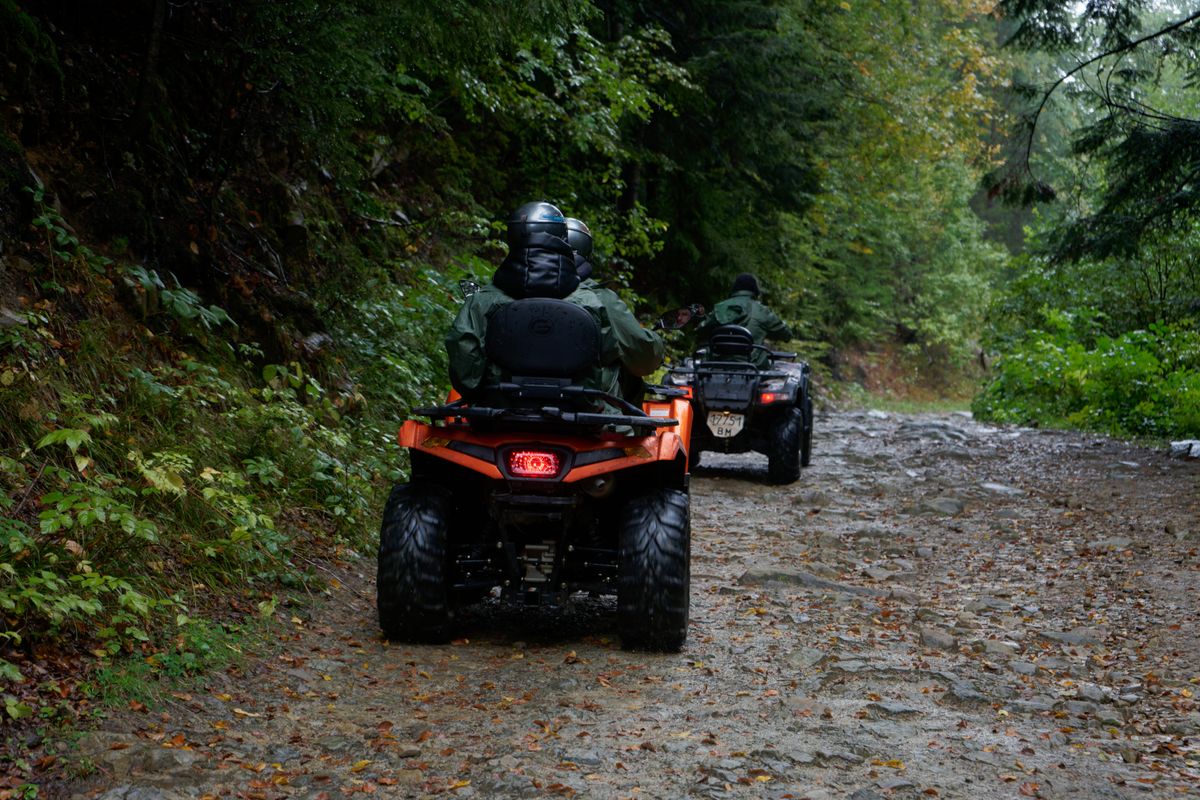
Jeans are better than shorts, but they're not riding gear. Dedicated off-road riding pants offer heat-resistant panels, knee and hip armor pockets, and reinforced seats and knees that survive contact with the machine and the trail.
At minimum, look for:
- CE-rated knee armor (built-in or compatible inserts)
- Ventilation panels for warm-weather riding
- Reinforced inner knee panels — constant contact with the tank/fender wears through regular fabric fast
- Comfortable fit over boots — pant legs should go over your boot shafts, not tuck in
If you're not ready to invest in full riding pants, wearing knee guards under jeans is a reasonable middle ground for lower-speed trail riding.
The Pre-Ride Safety Check You Shouldn't Skip
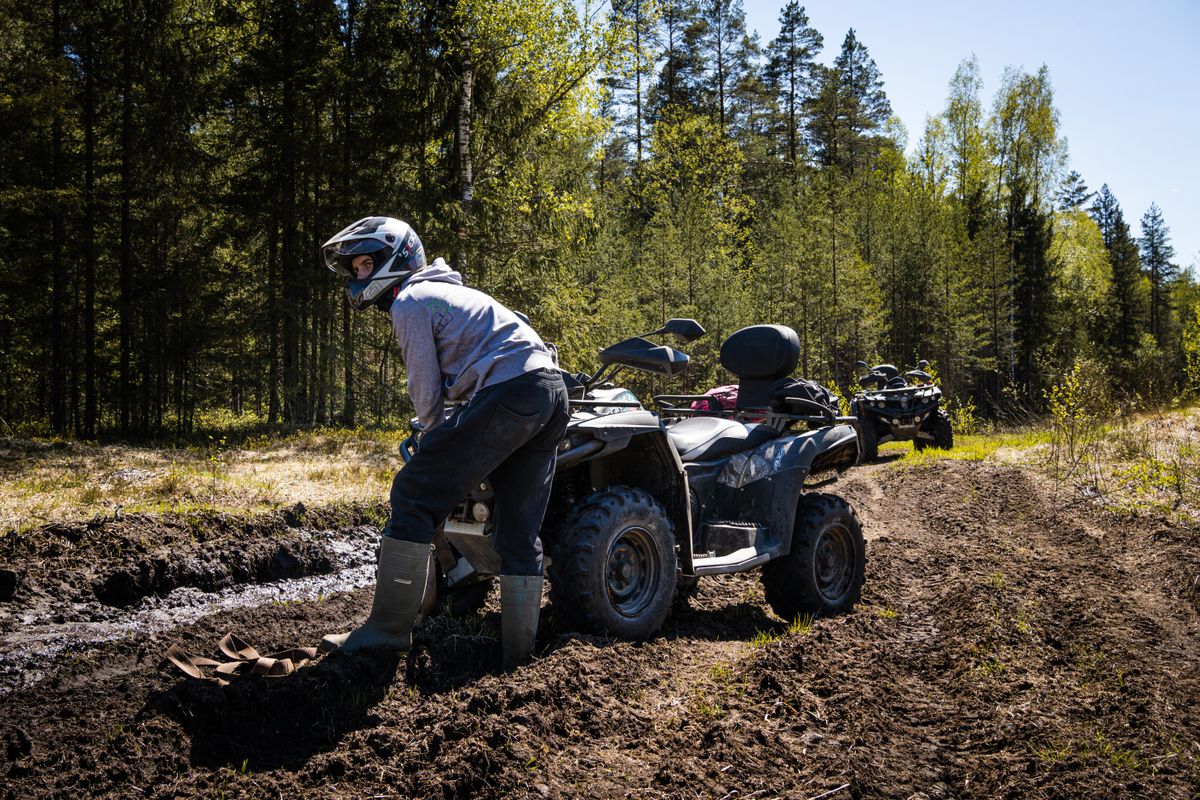

Gear is half the equation. The other half is making sure your machine is trail-ready before you twist the throttle. A two-minute pre-ride check can prevent breakdowns — or worse — miles from the trailhead.
Run through this checklist every ride:
- Tire pressure — ATV tires typically run 3–7 PSI depending on terrain. Use a reliable low-pressure gauge like the JACO ElitePro Digital Tire Pressure Gauge for accurate readings at low PSI ranges.
- Tire condition — check for cuts, embedded objects, or worn tread. Pack a JACO TRX-50 Tire Repair Kit for trailside puncture fixes.
- Controls — throttle snaps back freely, brakes engage firmly, steering moves smoothly
- Fluids — oil level, coolant, brake fluid
- Chain or drive belt — proper tension, no visible damage
- Lights and kill switch — test both before leaving
This pairs with wearing proper gear — you wouldn't ride a well-maintained ATV in flip-flops, and you shouldn't ride in full armor on a machine with bald tires and soft brakes. Both sides of the safety equation matter.
Building Your Gear Kit Without Breaking the Bank
The full gear setup — helmet, goggles, chest protector, gloves, boots, and riding pants — can feel expensive upfront. But compared to a single ER visit (the average ATV injury treatment costs over $12,000), it's one of the smartest investments you'll make as a rider.
If you need to prioritize, buy in this order:
- Helmet — this is first, always. Budget $100–250 for a solid DOT-certified motocross lid.
- Goggles — $30–60 gets you reliable eye protection with anti-fog.
- Gloves — $20–50 for quality off-road gloves that dramatically improve control.
- Boots — $80–200 for purpose-built off-road boots. This is where most riders under-invest.
- Chest protector — $50–150 for a roost guard; $100–300+ for full body armor.
- Riding pants — $60–200. Until then, knee guards under sturdy pants work.
Look for brand closeouts and prior-year models. Safety certifications don't expire with fashion seasons — a last-year model with DOT/ECE certification protects you just as well as this year's colorway.
Ride Smart, Ride Long
The best riders aren't the fastest ones — they're the ones who show up prepared and come home in one piece. Proper ATV safety gear doesn't slow you down or make the ride less fun. It removes the anxiety that comes from knowing one wrong move could mean a trip to the hospital instead of the next section of trail.
Gear up every ride. No exceptions. Your future self — still riding, still enjoying the trails — will thank you for it.
For more off-road safety tips, check out our guide on how to use a recovery strap safely.