
Memorial Day weekend is the unofficial start of overlanding season — and there is no better proving ground in the lower 48 than Utah and the Colorado Plateau. White Rim. Lockhart Basin. The Maze. Fins & Things. Burr Trail. These are the routes that turn a four-wheel-drive into a passport, and they are unforgiving of poor preparation.
Below: the iconic routes worth your week, the permit systems that quietly kill a lot of trips before they start, and the desert-specific prep that keeps your vehicle and your body running when temperatures hit 100°F and your last bar of cell service vanished an hour ago.
5 Iconic Utah Overlanding Routes
1. White Rim Road — Canyonlands National Park (Island in the Sky District)
The big one. A 100-mile loop carved into a sandstone bench 1,000 feet below the Island in the Sky mesa, with the Green and Colorado Rivers running another 1,000 feet below that. Two to three days at trail pace. Mostly graded dirt with a few rocky technical sections (Murphy Hogback, Hardscrabble Hill) that demand high-clearance 4WD and low range.
Permit required. Backcountry vehicle permits are released on recreation.gov exactly four months in advance at 8 AM MT and the popular spring/fall dates sell out in literal seconds. Day-use permits are slightly more attainable but still competitive. No permit = no entry. Rangers patrol.
2. Lockhart Basin — BLM (Between Moab and Needles)
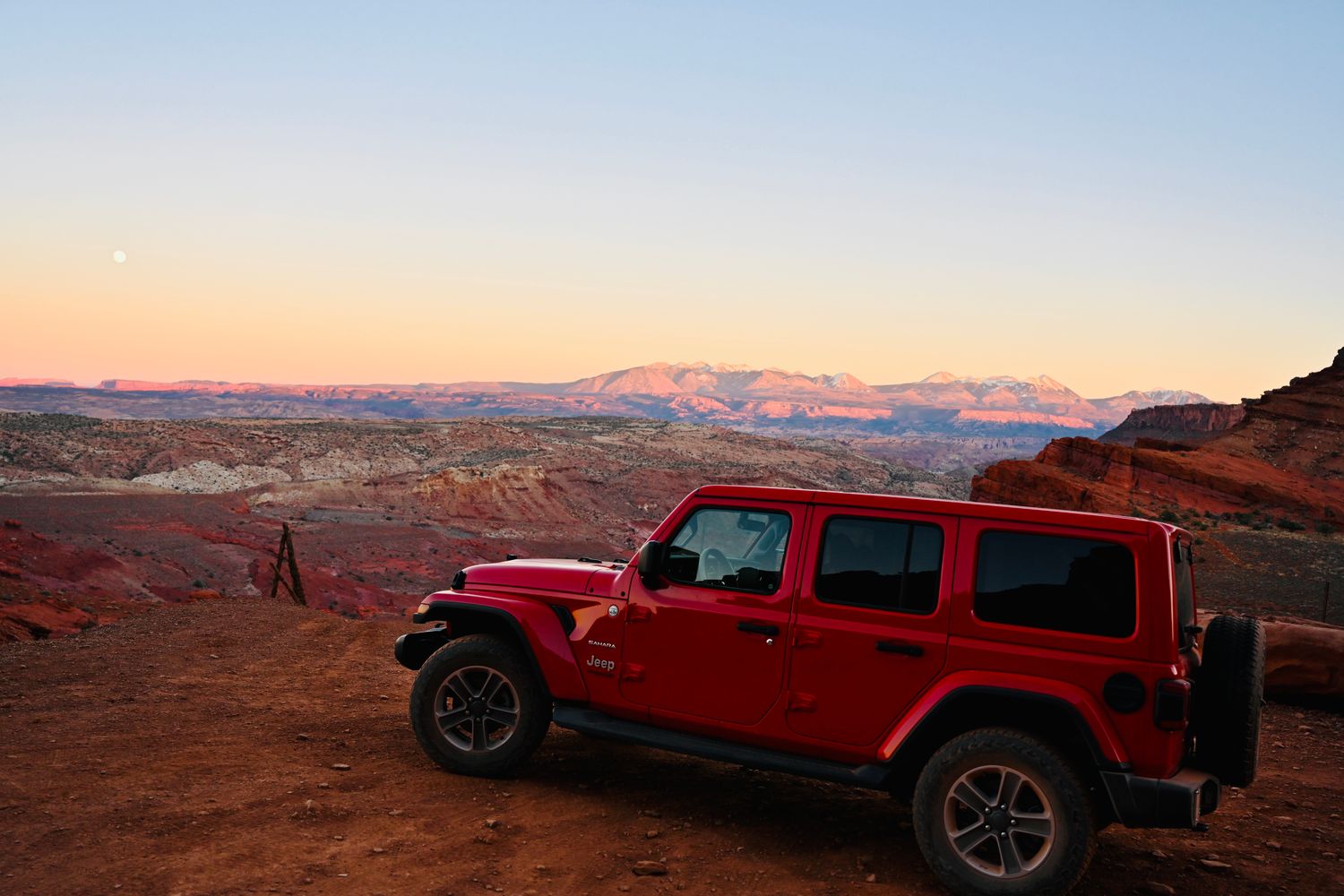
The White Rim's wilder, permit-free cousin. Roughly 60 miles of remote BLM road connecting the Needles Overlook area to the south end of Moab, running parallel to the Colorado River along the base of red sandstone cliffs. Two days minimum. Significantly more remote than White Rim — there is no entrance station, no ranger, no cell service. If you break down here you are self-rescuing.
3. The Maze — Canyonlands National Park
The most remote district of the most remote national park in the lower 48. The NPS publicly states that vehicle recovery from The Maze can cost $2,000–$5,000 and take days. They are not exaggerating. Flint Trail descends 800 feet of switchbacks down a sandstone cliff face. Backcountry permits required. Solo travel discouraged. Two-vehicle minimum recommended.
4. Fins & Things — Sand Flats Recreation Area, Moab
The short, sweet, technical playground. Nine miles of slickrock domes, bowls, and steep climbs marked by painted dinosaur tracks on the rock. No permit required — just a $5 day-use fee at the Sand Flats kiosk. Aired-down tires (15–18 PSI) are mandatory for grip on the sandstone. This is where you build skills before tackling longer routes.
5. Burr Trail — Grand Staircase-Escalante to Capitol Reef
The most underrated overlanding route in Utah. 68 miles connecting Boulder, UT to Bullfrog Marina, with a paved opening section that turns to dirt right before the dramatic Burr Trail switchbacks dropping into the Waterpocket Fold. Doable in a long day for capable 2WD vehicles in dry conditions — but the dirt section becomes impassable bentonite clay within an hour of any rain.
Understanding Utah Permit Systems
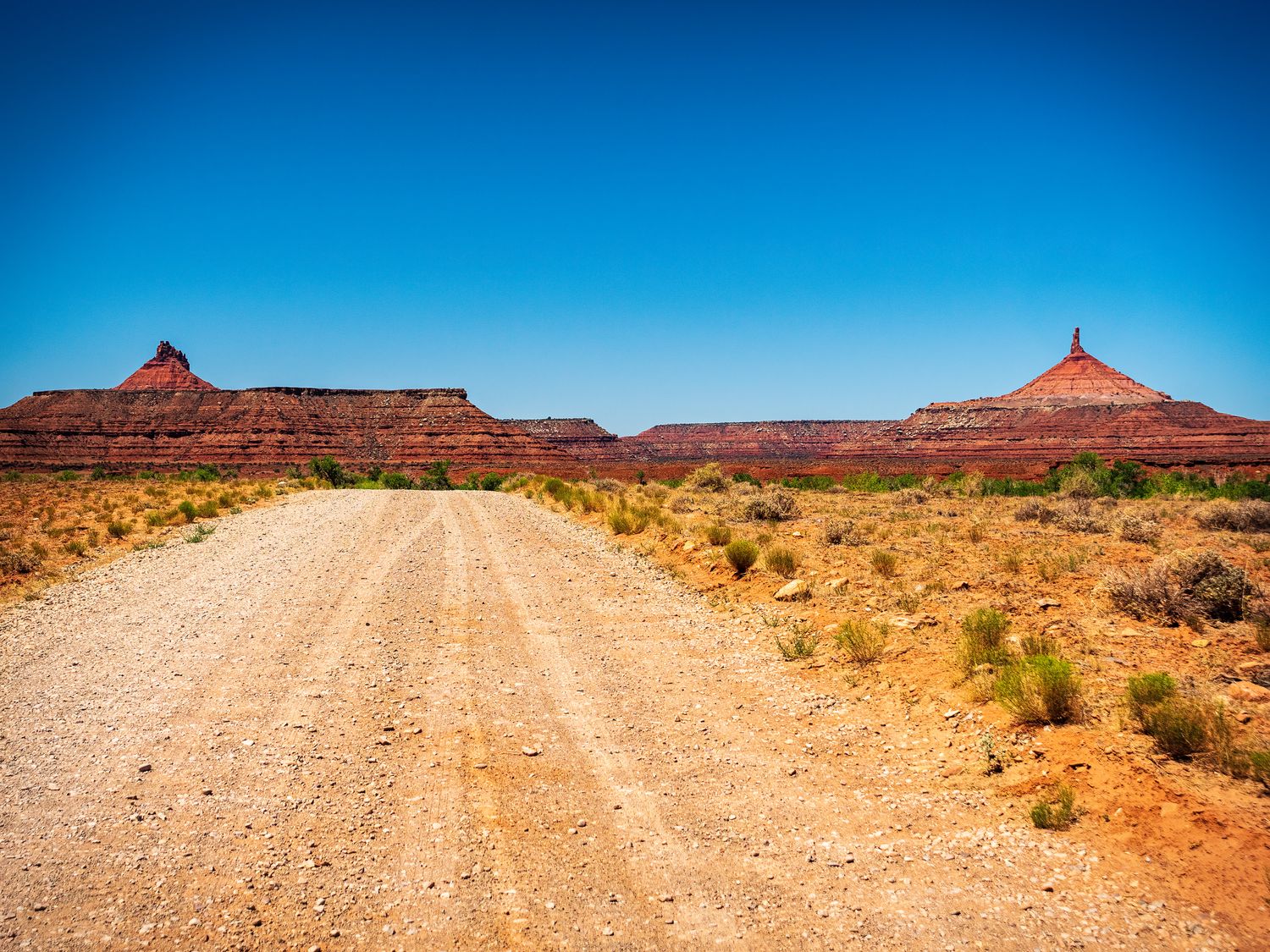
The most common reason a Utah trip dies before it starts is permit confusion. Three overlapping systems govern most of the routes worth driving:
- NPS backcountry vehicle permits (Canyonlands — all districts): Required for overnight trips. Released on recreation.gov four months in advance to the day. Set a calendar reminder. Day-use permits also required for White Rim and Elephant Hill in Needles.
- BLM dispersed camping (Lockhart Basin, most of San Rafael Swell, Bears Ears): No permit required for most camping, but some areas have designated sites. Always check the BLM Field Office page for the specific area before your trip — fire restrictions and seasonal closures change without much warning.
- State/county fee areas (Sand Flats for Fins & Things, some Goblin Valley access): Day-use or camping fees, generally $5–$25, payable at the kiosk on entry.
Apply for NPS permits the moment they open. For BLM routes, check the local field office website within 72 hours of your trip for newly-issued fire bans or road closures — that information rarely makes it onto Google.
Desert-Specific Vehicle Prep
Utah's high desert is not the Rockies and it is not the Pacific Northwest. The prep checklist is genuinely different.
Water: 1 Gallon Per Person Per Day, Minimum
The rule experienced desert travelers never relax. Plan for the trip you have plus 50% margin for breakdown or rescue delay. A three-day White Rim trip for two people = nine gallons of dedicated drinking water, carried in addition to water for cooking and radiator top-off. Temperatures over 95°F push that to 1.5 gallons per person per day.
Air Down Before the Trail, Not on It
Slickrock, sand, and washboard all benefit from lower tire pressures (typically 15–20 PSI for full-size SUVs and trucks, 12–15 PSI for stock Jeeps and side-by-sides). Lower pressure increases the contact patch, improves grip on rock, prevents getting stuck in soft sand, and dramatically reduces washboard fatigue on you and the vehicle. Don't guess — measure.

For a deeper look at sand-specific technique — including how low to actually go and when to stop airing down — see our guide on sand driving, airing down, and self-recovery.
Heat Management — Vehicle and Crew
Cooling systems work harder at altitude and in heat, and Utah delivers both. Before the trip: pressure test the radiator cap, inspect hoses for swelling, confirm coolant is fresh and correctly mixed, and verify the fan clutch or electric fans engage. Park nose-into-the-wind at lunch stops. Don't lug the engine on steep grades — downshift early.
For the crew: electrolytes matter more than water alone after day one. Dawn starts (4:30–5:30 AM) on summer Utah routes are not optional — they are how locals avoid heat exhaustion and afternoon thunderstorms.
Sand and Recovery
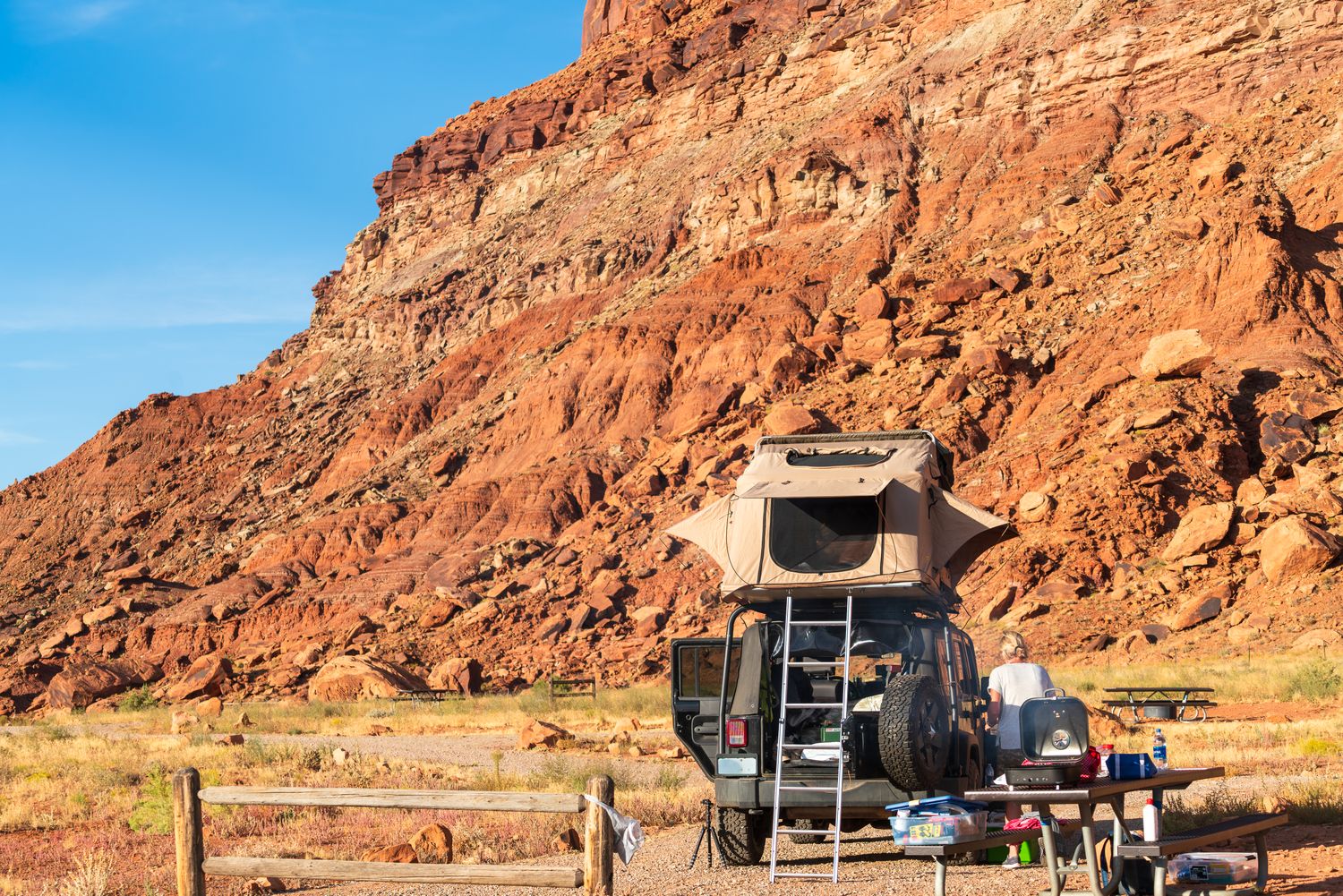
Soft sand traps more Utah overlanders than rocks do, and it usually happens within sight of camp on day one. Carry traction boards. Carry a real recovery rope or kinetic strap, not a tow strap. Carry a shovel. Practice in your driveway before you need it at sunset 40 miles from pavement.
Our breakdowns of traction boards and recovery vs. tow vs. snatch straps cover the gear specifics. Browse the full JACO 4x4 off-road collection for the air-down, air-up, and recovery essentials we recommend.
Canyon Navigation Without Cell Service
Your phone is a paperweight from the moment you leave US-191. Plan accordingly:
- Download offline maps in Gaia GPS or onX Offroad for your entire route plus a 20-mile buffer. Test in airplane mode before leaving asphalt.
- Carry a physical map (USGS or NatGeo Trails Illustrated). GPS units fail. Maps don't.
- A two-way satellite communicator (Garmin inReach, Zoleo) is no longer optional for serious Utah overlanding — it's the difference between a stuck vehicle and a search-and-rescue mortgage.
Airing Back Up — Don't Skip This Step
The trail ends but the highway doesn't. Driving 80 miles back to Moab on 15 PSI tires is how you destroy a sidewall — or worse, lose control. A capable portable compressor that can actually refill four full-size tires from trail pressure to highway pressure in under 20 minutes is the difference between a clean wrap-up and a long evening at the gas station.

Seasonal Access: When to Go and When to Stay Home
- Spring (March–May): The sweet spot. Daytime temps in the 60s–80s, permits competitive but available.
- Summer (June–August): Doable only with dawn starts and shade-by-noon discipline. Temps regularly exceed 100°F. Afternoon thunderstorms can flash-flood slot canyons faster than you can drive out — never camp in a wash.
- Fall (September–October): The other sweet spot. Cool nights, stable weather, fewer crowds after Labor Day.
- Winter (November–February): Empty trails and crisp air, but bentonite mud is the enemy. A half-inch of rain can close the Maze for two weeks. Check NPS road status before you commit.
For overlanders building a regional play list, our companion guide to the best off-road trails in Colorado covers what to drive on the way out and the way back home.
The Bottom Line
Utah and the Colorado Plateau reward overlanders who plan three things obsessively: permits, water, and tire pressure. Get those right and the rest — navigation, recovery, cooling, food — falls into place quickly. Get them wrong and you'll either turn around before the trailhead, run out of fluids at mile 30, or spend an evening peeling a sidewall off a rim in the Sand Flats parking lot.
This is a place that punishes shortcuts and forgives almost everything else. Air down, start early, drink water, and bring better recovery gear than you think you need. Memorial Day weekend is as good a time as any to start.