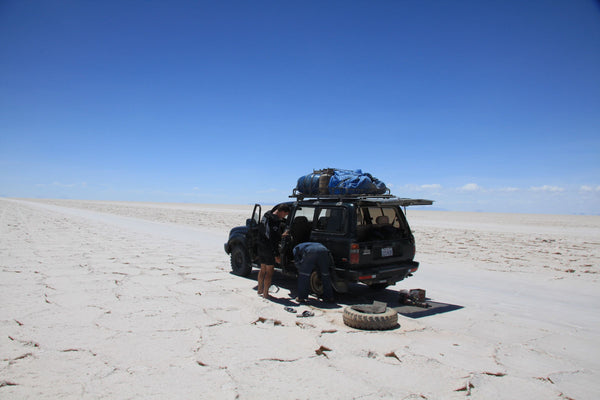


You're two miles down a backcountry trail when your front tires break through a soft shoulder and sink to the axles. Nobody's coming. Cell service died a mile back. This is the moment that separates prepared off-roaders from the ones calling for a very expensive tow truck—and the difference usually comes down to one piece of equipment: a recovery winch.
Whether you're building out a dedicated trail rig or just want peace of mind for remote adventures, understanding how winches work, what to look for, and how to use one safely will make you a more capable and confident driver. Here's everything you need to know.
What Is a Recovery Winch and How Does It Work?
A recovery winch is a mechanical device mounted to your vehicle's bumper that uses a motor-driven spool to pull heavy loads via a cable or rope. The basic components are simple: a motor (electric or hydraulic), a gear train that multiplies pulling force, a drum that wraps the line, and a fairlead that guides the line smoothly off the spool.
When you engage the winch, the motor turns the drum, reeling in the line and pulling your vehicle—or another vehicle—toward the anchor point. Most off-road winches are electric, drawing power from your vehicle's battery, and are controlled via a wired or wireless remote.
The rated line pull (measured in pounds) represents the maximum force the winch can exert with a single layer of cable on the drum. Here's the critical detail most people miss: as more line wraps around the drum, the effective pulling capacity decreases. With three or four layers of rope on the spool, you could lose 30-40% of your rated capacity. That's why proper rigging matters.
Choosing the Right Winch Size for Your Vehicle
The industry standard rule is straightforward: your winch's rated pulling capacity should be at least 1.5 times your vehicle's gross vehicle weight rating (GVWR). A 5,000-pound Jeep Wrangler needs a minimum 7,500-pound winch. A 7,000-pound full-size truck or SUV should run at least a 10,500-pound winch.
Why the 1.5x multiplier? Because you're rarely pulling your vehicle across a flat, dry surface. Mud creates suction. Steep inclines multiply the force needed. Water crossings add drag. The extra capacity gives you a safety margin when conditions get ugly.
- Compact SUVs and Jeep Wranglers (4,000–5,500 lbs): 8,000–9,500 lb winch
- Mid-size trucks and 4Runners (5,500–6,500 lbs): 9,500–10,000 lb winch
- Full-size trucks and heavy SUVs (6,500–8,000 lbs): 10,000–12,000 lb winch
- Built-out overlanding rigs (8,000+ lbs): 12,000–17,500 lb winch
Synthetic Rope vs. Steel Cable: Which Line Should You Run?
This is the biggest decision after winch size, and the off-road community has largely settled the debate: synthetic rope wins for most applications.
Synthetic rope is made from ultra-high-molecular-weight polyethylene (UHMWPE), the same material used in marine rigging and industrial lifting. It's lighter than steel cable by about 80%, it floats in water, and—most importantly—it doesn't store the same dangerous kinetic energy as steel cable. If a synthetic line snaps under load, it drops to the ground. A broken steel cable whips violently and can cause serious injury or death.
Steel cable still has its place. It's more abrasion-resistant against sharp rocks, it's cheaper to replace, and it handles heat better. If you're doing heavy rock crawling where the line drags across granite ledges, steel cable may last longer between replacements.
| Factor | Synthetic Rope | Steel Cable |
|---|---|---|
| Weight | ~80% lighter | Heavy |
| Safety (if line breaks) | Low recoil — drops to ground | Dangerous whiplash |
| Abrasion resistance | Moderate — needs a sleeve for rocky terrain | Excellent |
| Water handling | Floats, doesn't corrode | Sinks, rusts over time |
| Cost | Higher upfront | Lower upfront, shorter lifespan overall |
| Maintenance | Rinse after muddy use, inspect for fraying | Lubricate regularly, inspect for kinks |
For most recreational off-roaders and overlanders, synthetic rope is the better choice. The safety advantage alone is worth the price difference.
Essential Winch Accessories You Need Before Hitting the Trail

A winch by itself isn't a complete recovery system. You need supporting gear to use it safely and effectively:
- D-ring shackles: Bow-type shackles rated for your winch capacity connect the line to anchor points. Never use hardware store hooks.
- Tree saver strap (tree trunk protector): A wide nylon strap that wraps around a tree to create an anchor point without damaging the bark. This is trail etiquette and often required on public lands.
- Recovery strap: For kinetic recovery situations where a buddy vehicle can pull you out, a dedicated recovery strap like the JACO TowPro Recovery Strap (rated at 31,542 lbs break strength) is essential gear. Recovery straps stretch to absorb shock loads—regular tow straps don't, and using one for recovery can cause dangerous snap-back.
- Snatch block (pulley): Routes the winch line through a pulley to double your pulling capacity or change the pull angle. Invaluable when you can't pull in a straight line toward the anchor.
- Winch line dampener: A heavy blanket or weighted bag draped over the line that absorbs energy if the line breaks. Mandatory safety gear for any winching operation.
- Heavy-duty gloves: Steel cable will cut your hands. Even synthetic rope can cause friction burns. Always wear gloves when handling winch line.
How to Self-Recover with a Winch: Step-by-Step

Self-recovery means using your own winch to pull yourself out when you're stuck. Here's the process:
- Assess the situation. Before touching the winch, figure out what you're stuck on, where you need to go, and where you can anchor. Look for solid trees (alive, at least 8 inches in diameter), large boulders, or buried ground anchors.
- Set your anchor. Wrap a tree saver strap around the tree at the base and attach a D-ring shackle. Never wrap the winch line directly around a tree—it'll damage the tree and can damage your line.
- Unspool the winch line. Disengage the clutch on the winch drum and pull the line to the anchor point by hand. Leave at least five wraps of line on the drum to prevent the line from pulling free.
- Attach the line. Connect the winch hook to the D-ring shackle on the tree saver. Make sure the hook's safety latch is closed.
- Place a line dampener. Drape it over the line at the midpoint between your vehicle and the anchor. If the line snaps, this absorbs the recoil.
- Re-engage the clutch and take up the slack with the remote until the line is taut. Check all connections one more time.
- Winch in. Use steady, consistent pulls. Don't just hold the remote down—pulse it in intervals to avoid overheating the motor. If the vehicle isn't moving, stop and reassess. You may need a snatch block to increase pulling power.
- Drive forward as the winch pulls to reduce the load on the motor. The winch pulls, you drive—they work together.
Critical safety rule: Keep everyone clear of the line. Nobody stands within the "triangle of death"—the area between the anchor, the winch, and the line. If the line breaks, anything in that zone gets hit.
Buddy Recovery: When a Second Vehicle Is Available

When another vehicle is nearby, you have more options. You can use a winch to pull the stuck vehicle out with the recovery vehicle as the anchor. Or, for less severe situations, a kinetic recovery strap does the job without needing a winch at all.
The JACO TowPro Recovery Strap is designed specifically for this scenario. Its nylon construction stretches under load, storing kinetic energy that helps "slingshot" the stuck vehicle free. This is fundamentally different from a rigid tow strap, which transfers shock loads directly to both vehicles' frames and can cause damage or dangerous strap failure.
For winch-assisted buddy recovery, the process is similar to self-recovery, but the anchor is the other vehicle. Make sure the anchor vehicle is in park (or gear) with the parking brake set, and ideally chocked. The anchor vehicle's weight keeps it planted while the winch does the work.
Winch Maintenance: Keeping Your Gear Ready When You Need It
A winch that sits on your bumper for two years without maintenance is a winch that fails when you need it most. Here's the maintenance schedule that keeps your winch reliable:
After every trail day:
- Unspool the entire line, rinse off mud and grit, and respool under light tension. Dirty line packed tightly causes abrasion damage you can't see until it's too late.
- Inspect the line for fraying (synthetic) or kinks and rust spots (steel cable). Replace damaged line immediately.
- Check the hook and safety latch for bending or wear.
Every 6 months (or before the season):
- Test the winch under light load to verify the motor, solenoid, and remote are working.
- Check all electrical connections for corrosion. Clean terminals and apply dielectric grease.
- Inspect the fairlead for burrs or rough spots that could damage the line.
- Verify mounting bolts are torqued to spec. Vibration loosens hardware over time.
Annually:
- Open the gear housing and inspect the gear train. Re-grease with the manufacturer's recommended lubricant.
- Load-test the winch at 50% capacity to verify performance.
- Inspect all recovery accessories (straps, shackles, snatch blocks) for wear, UV damage, and proper ratings.
Common Winching Mistakes That Can Get You Hurt
Winch recovery involves serious forces—10,000+ pounds of tension on a line is no joke. These are the mistakes that lead to equipment damage, vehicle damage, or injuries:
- Hooking the winch line back to itself. Never wrap the line around an object and hook it back to the standing line. This creates a shock-load point that can break the hook. Use a tree saver and shackle.
- Not using a line dampener. This is non-negotiable. Always dampen the line.
- Running the winch until the motor overheats. Electric winch motors are rated for intermittent duty, not continuous use. Pull for 30 seconds, rest for 30 seconds. If the motor housing is too hot to touch, stop and let it cool completely.
- Using a tow strap for recovery. Tow straps don't stretch. Recovery straps do. Using the wrong one transfers shock loads directly to frame mounts and can rip out tow points. Always use a proper recovery strap rated for your vehicle weight.
- Ignoring the first-layer rule. Your winch's rated capacity only applies to the first layer of line on the drum. Unspool as much line as possible to maximize pulling power.
- Skipping the safety brief. Before any recovery, everyone present should know where to stand (far from the line), what the plan is, and what the signals mean. One person operates the winch. Everyone else stays clear.
Ready for Anything
A quality winch paired with the right recovery accessories transforms your rig from trail-capable to trail-confident. You don't buy a winch hoping you'll need it—you buy it knowing that when the moment comes, you'll be the one driving out instead of waiting for rescue.
Start by sizing your winch correctly (1.5x your GVWR), choose synthetic rope for the safety advantage, build out your accessory kit with rated shackles and a recovery strap, and commit to the maintenance schedule. The trail rewards preparation.