
You bought a truck or SUV with four-wheel drive, and somewhere near the gear shifter there is a second lever or a dial with settings like 2H, 4H, 4L, and N. Most drivers know 4-wheel drive helps in snow and mud, but far fewer understand the difference between 4-High and 4-Low — and using the wrong one at the wrong time can leave you stuck, or worse, cost you an expensive transfer case or driveline repair.
Here is the plain-English guide to what your transfer case actually does, when to use 4-High vs. 4-Low, and the mistakes that damage drivetrains. Whether you daily-drive a 4Runner or wheel a built Jeep, this is the stuff every four-wheel-drive owner should know.
What the Transfer Case Actually Does
The transfer case is a gearbox that sits behind your transmission on a four-wheel-drive vehicle. Its job is to split engine power between the front and rear axles. When you shift into four-wheel drive, the transfer case sends torque to both ends of the vehicle instead of just one.
Most part-time 4WD systems give you these positions:
- 2H (Two-High): Power to the rear axle only. Your normal, everyday setting on dry pavement.
- 4H (Four-High): Power to all four wheels at normal gear ratios. For driving at speed on low-traction surfaces.
- 4L (Four-Low): Power to all four wheels through a much lower gear ratio. For slow, high-torque crawling.
- N (Neutral): No power to either axle — used mainly for flat-towing behind an RV.
The key difference between 4H and 4L is gearing. 4-Low routes power through a reduction gear (commonly around 2.5:1 to 4:1), multiplying torque at the wheels while dramatically slowing everything down. That is the whole trick.
When to Use 4-High

Think of 4-High as your speed-and-traction setting. It gives you all-wheel grip while still letting you drive at a reasonable clip — roughly up to highway speeds on many vehicles, though you should check your owner's manual for the limit.
Use 4-High when:
- Driving on snow- or ice-covered roads where you need grip but are still moving 25–55 mph
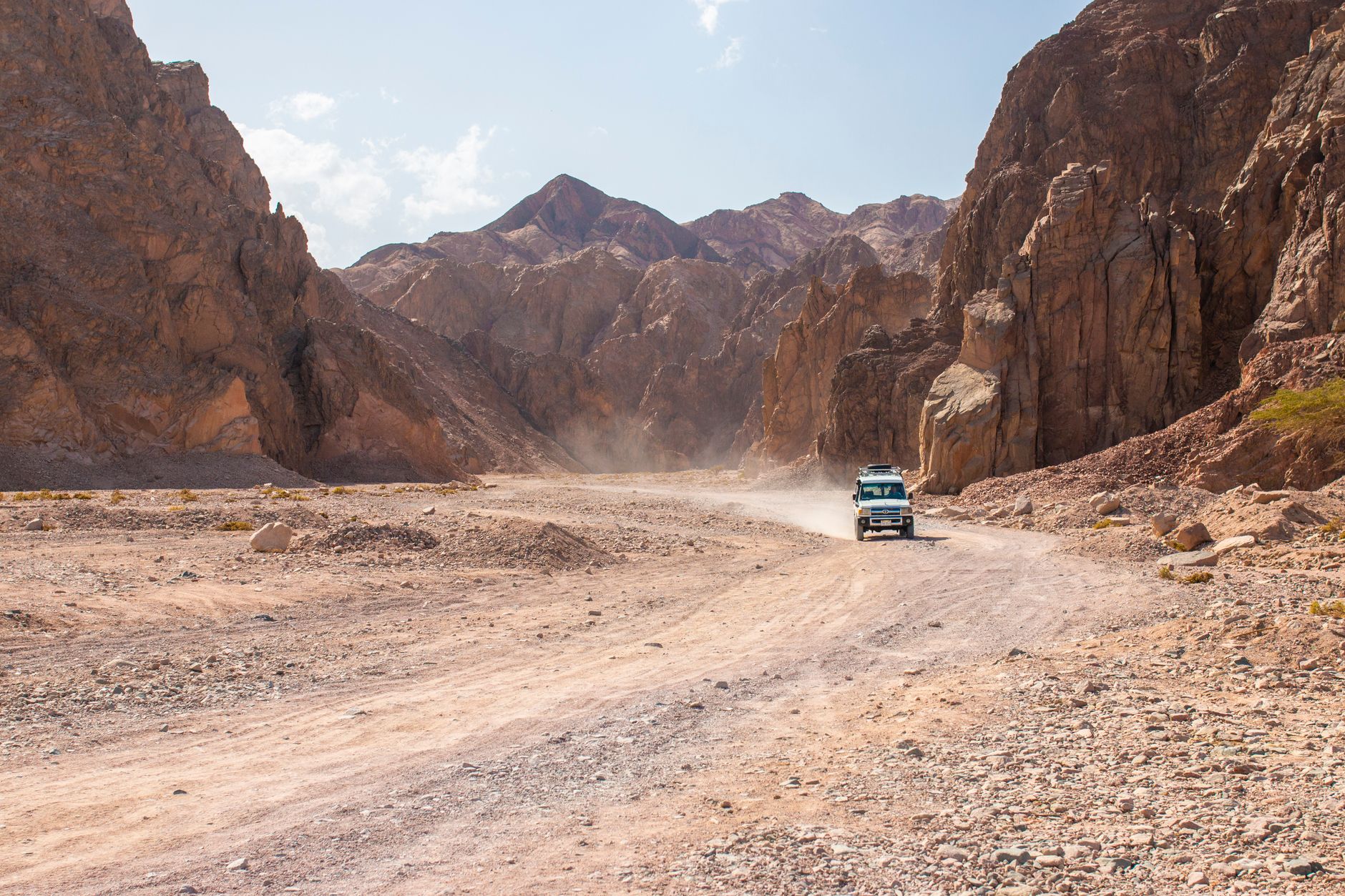
- Cruising graded dirt and gravel roads, forest service roads, or washboard
- Crossing hard-packed sand or light mud at moderate speed
- Any loose surface where you want stability but don't need extreme torque
4-High is the mode most drivers spend the most time in off-pavement. If you can maintain momentum and you're moving faster than a walking pace, 4-High is usually the right call.
When to Use 4-Low
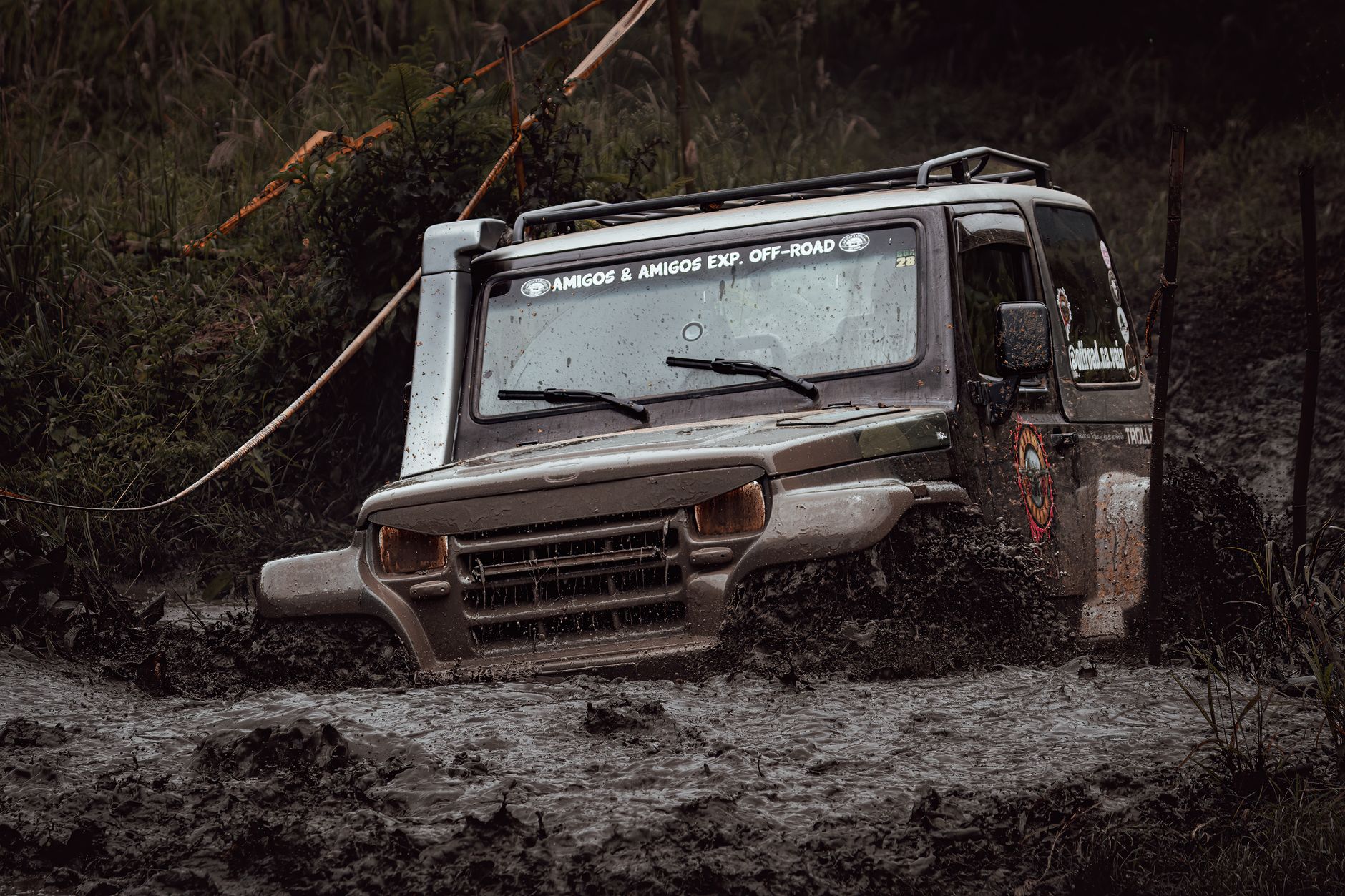
4-Low is your maximum-torque, minimum-speed setting. That low gear ratio multiplies power so you can crawl over obstacles, climb steep grades, and control your descent — all without riding the throttle or brakes hard. It also gives you far more precise control at slow speeds.
Use 4-Low when:
- Rock crawling or picking your way over ledges, roots, and boulders
- Climbing or descending steep, loose grades where engine braking keeps you controlled
- Powering through deep mud, sand, or snow where you need torque, not speed
- Pulling a heavy load or another vehicle at very low speed
- Any situation where you're moving slower than a walking pace and need finesse
A good rule of thumb: if you find yourself feathering the brakes going downhill or mashing the gas to keep moving over obstacles, you probably should have been in 4-Low. It does the work for you.
How to Shift Between Them (Without Grinding Anything)
Shifting into and out of 4-High vs. 4-Low works differently, and getting it wrong is where people cause damage.
Shifting into 4-High: On most modern systems you can engage 4H "on the fly" — while moving at low to moderate speed (typically under 40–60 mph). Ease off the throttle briefly as you shift.
Shifting into 4-Low: This almost always requires you to come to a complete stop, put the transmission in Neutral (Park won't work), and then move the lever or turn the dial into 4L. On an automatic, keep your foot on the brake. Once engaged, shift back into Drive. Never try to force 4-Low while rolling — you'll grind the gears and risk expensive damage.
Coming back out of 4-Low follows the same routine: stop, Neutral, shift up to 4H or 2H, then drive on.
The Mistakes That Wreck Drivetrains

Part-time 4WD systems lock the front and rear driveshafts together. That's great for traction, but it means the front and rear axles must turn at the same average speed. On dry pavement, your tires need to rotate at slightly different speeds through turns — and if they can't, that stress has to go somewhere.
Avoid these common errors:
- Driving in 4H or 4L on dry, high-traction pavement. This causes "driveline binding" (also called crow-hop), which stresses the transfer case, axles, and tires. Only use 4WD on loose or slippery surfaces where the tires can slip to relieve that pressure.
- Going too fast in 4-Low. The low gear means your engine is spinning hard even at low speed. Most vehicles shouldn't exceed roughly 25 mph in 4L.
- Forcing a shift into 4-Low while moving. Always stop and shift through Neutral.
- Forgetting to air down. Selecting 4-Low gets your torque right, but tire pressure controls your traction footprint. On rocks, sand, and mud, dropping your PSI does as much for grip as your gearing.
That last point is worth expanding on. The single biggest traction upgrade most off-roaders overlook isn't a locker or a lift — it's airing down. Lowering your tire pressure before a technical section widens the contact patch, lets the tire conform to obstacles, and smooths the ride. A dedicated deflator makes it fast and accurate so you're not guessing at the trailhead.

A Quick Cheat Sheet
- Dry pavement: 2H. Always.
- Snowy highway, gravel road, moderate-speed dirt: 4H.
- Rock crawling, steep climbs and descents, deep mud/sand, slow technical trail: 4L.
- Flat-towing behind an RV: N (check your manual).
If you're ever unsure, ask yourself two questions: Is the surface slippery or loose? (If no, stay in 2H.) And Am I going slower than walking speed and need serious torque or control? (If yes, it's time for 4-Low.)
Gear Up Before You Head Out
Understanding your transfer case is foundational, but it works hand in hand with the rest of your setup — proper tire pressure, recovery gear, and a way to air back up when you hit pavement. Before your next trail day, browse our full lineup of off-road air-up and air-down tools and check out our related guide on 4WD vs. AWD and what the difference actually means.
Master when to use 4-High vs. 4-Low, respect the shift procedure, and never lock your driveline on dry pavement — do that, and your transfer case will outlast the truck.