
The trail doesn't care how nice your rig is. A slow leak on a rocky shelf, a buried tire in soft sand, or a stalled engine miles from pavement can turn a great day into a long, cold night—fast. The difference between a story you laugh about later and a genuine emergency almost always comes down to one thing: whether you brought the right gear and knew how to use it.
Building your first off-road emergency kit doesn't have to be complicated or expensive. You don't need a $5,000 drawer system to be prepared. You need a thoughtful, layered kit that covers the failures most likely to happen out there. This guide walks you through exactly what belongs in a first off-road emergency kit, why each piece matters, and how to pack it so you can actually find it when things go sideways.
Why an Off-Road Emergency Kit Isn't Optional
On the highway, a breakdown means a phone call and a tow truck. In the backcountry, there's often no cell signal, no passing traffic, and no quick rescue. Self-recovery becomes your only option, and your kit becomes your lifeline.
The most common trail problems are surprisingly predictable: getting stuck, losing tire pressure, and minor mechanical failures. Prepare for those three categories well, add a solid safety and survival layer, and you've covered the vast majority of what a weekend wheeler will ever face.
Think of your kit in five layers: air management, recovery, tire repair, personal safety, and tools/spares. Build each one and you'll be ready for almost anything the trail throws at you.
Layer 1: Air Management—Your Most-Used Trail Tools
Ask any experienced off-roader what they reach for most, and airing down and back up will top the list. Dropping your tire pressure before a technical section dramatically improves traction and ride comfort. Airing back up before you hit the highway keeps your tires from overheating and wearing out prematurely.
A dedicated deflator lets you drop pressure quickly and precisely instead of fumbling with a valve cap and a rock. A rapid air-down tool with a built-in gauge is one of the best upgrades a new off-roader can make.

Airing down is only half the equation. You must be able to air back up before returning to pavement, and a portable compressor is non-negotiable. A cordless unit is ideal for a first kit because there are no clamps to fuss with and no dead-battery worries—just grab it, thread it on, and fill.

Round out the air layer with a quality standalone gauge. Digital compressors and deflators have built-in readouts, but a trusted backup gauge is cheap insurance and lets you spot-check pressure anytime. Browse the full tire pressure gauge collection if you want a dedicated unit for your kit.
Layer 2: Recovery Gear—Getting Unstuck
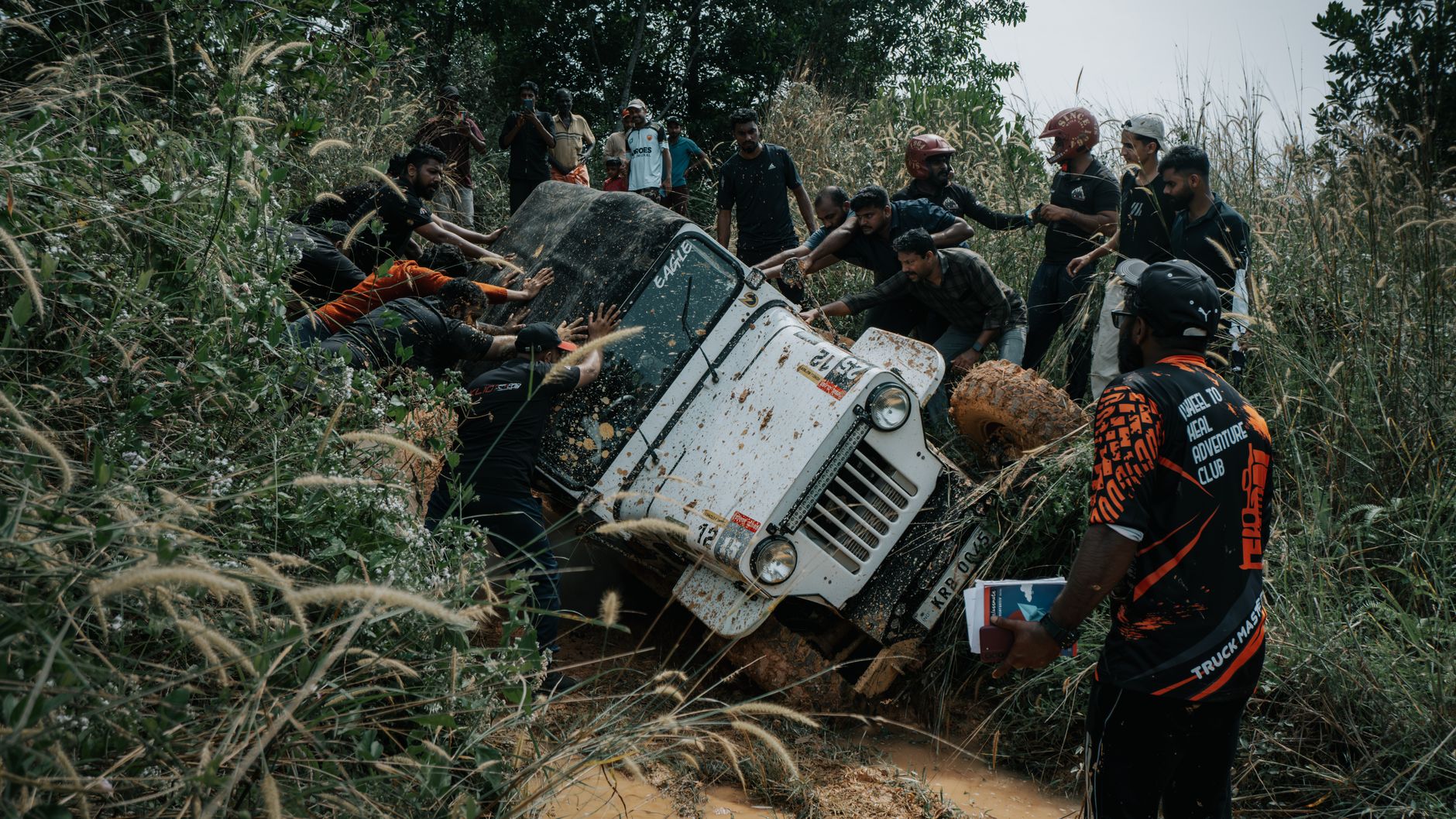
Everyone gets stuck eventually. The question is whether you can get yourself out. A basic recovery kit covers the two most common scenarios: needing traction under a spinning tire, and needing a pull from another vehicle.
- Traction boards—the fastest, safest self-recovery tool for sand, mud, and snow. Wedge them under your tires and drive out. No second vehicle required. (New to them? Read our traction board buyer's guide.)
- A recovery strap or kinetic rope—rated well above your vehicle's weight, for a controlled pull from a buddy's rig.
- Soft shackles—lighter and safer than steel, they connect straps to recovery points without becoming dangerous projectiles.
- Gloves and a recovery damper—protect your hands and reduce the risk if a strap or shackle lets go under load.
One rule that never changes: only ever connect to rated recovery points, never to a bumper, tow ball, or trailer hitch. If you're unsure of the difference between strap types, our guide on using a recovery strap safely is worth a read before your first trip.
Layer 3: Tire Repair and a Real Spare

Punctures are the single most common trail failure. A tire plug kit lets you repair most tread punctures in minutes—without even removing the wheel—and paired with your compressor, you're back rolling fast.
Pack these tire essentials:
- A tire plug/repair kit with plenty of plugs and rubber cement
- A full-size spare in good condition (check its pressure before every trip)
- A proper jack that works on uneven ground, plus a sturdy base board so it won't sink
- A lug wrench or breaker bar that actually fits your lug nuts
Here's where your gauge earns its keep again—after a plug repair or spare swap, set pressure correctly before you drive.

Layer 4: First Aid and Personal Safety
Gear failures are inconvenient. Injuries are serious. A well-stocked first aid kit is the most important thing in your rig, and it should go beyond a few bandages.
- A comprehensive first aid kit with trauma supplies (tourniquet, pressure bandage, gauze)
- A fire extinguisher mounted where you can reach it from the driver's seat
- Work gloves, a headlamp, and spare batteries
- Extra water—at least one gallon per person, per day, beyond what you plan to drink
- Warm layers and an emergency blanket, even in summer; high-desert and mountain nights get cold
- High-calorie snacks that won't melt or spoil
Take a basic first aid or wilderness first-responder course if you can. Gear you don't know how to use is just dead weight.
Layer 5: Tools, Spares, and Fluids
You don't need a full mechanic's chest, but a focused tool roll handles most trailside fixes:
- A quality multi-tool and a compact socket/wrench set sized for your vehicle
- Zip ties, duct tape, and mechanic's wire—the holy trinity of field repairs
- Spare fuses, a few key bulbs, and extra hose clamps
- Extra engine oil, coolant, and a funnel
- A tow strap for flat, hard-ground pulls (distinct from your kinetic recovery strap)
- A recovery-grade air hose or extension so your compressor reaches every tire
If you run air tools or a compressor at home too, a durable air hose pulls double duty in the garage and the field.
Navigation and Communication
Cell coverage vanishes fast off-grid. Don't rely on your phone alone.
- Paper maps and a compass—and the knowledge to use them
- Offline GPS maps downloaded before you lose signal
- A satellite communicator or personal locator beacon for true emergencies
- A CB or GMRS radio to stay in touch with your group on the trail
Always tell someone your route and expected return time. It's the simplest, cheapest safety tool you own—and it costs nothing.
How to Pack and Store Your Kit

A great kit you can't find in a hurry isn't much of a kit. Organize by frequency of use and urgency:
- Fast-access items (first aid, fire extinguisher, deflator, gloves) go somewhere you can reach in seconds.
- Recovery gear travels together in a dedicated duffel or gear bag so it's grab-and-go.
- Tools and spares live in a sealed, labeled box or roll to keep them dry and rattle-free.
- Secure everything. Loose gear becomes a dangerous projectile in a rollover or hard stop. Strap heavy items down.
Run through your kit before every trip: top off fluids and water, check your spare's pressure, confirm batteries are charged, and restock anything you used last time.
Start Small, Build Smart
You don't have to buy everything at once. Start with the essentials that cover the most common failures—air management, a basic recovery setup, tire repair, and a solid first aid kit—then expand as you gain experience and tackle harder trails.
The goal isn't to prepare for every conceivable disaster. It's to handle the predictable ones calmly and get everyone home safe. Build your kit thoughtfully, learn how to use each piece, and the backcountry becomes a place you explore with confidence instead of anxiety. Explore JACO's full lineup of off-road gear and recovery tools to start building yours today.