
Every trip to the shop for a job you could have done in your own driveway is money handed to someone else. The good news: you don't need a professional lift or a wall of chrome to handle 90% of routine car care at home. You need the right 15 tools — the ones that pay for themselves after two or three uses and then keep saving you money for years.
This guide walks through the essential tools for a home garage built around DIY car maintenance: what each one does, why it earns its spot, and where it's worth spending a little more. Whether you're setting up a garage from scratch or filling gaps in a half-finished collection, start here.
Why a Home Garage Setup Pays Off
A basic oil change at a quick-lube shop runs $60–$100. A brake job can top $400. Even a simple tire rotation is $25–$50 every few months. Do a handful of those yourself and a starter tool kit has already paid for itself.
Beyond the savings, working on your own vehicle means you actually know it's done right — correct torque specs, the right fluids, no upsells for services you don't need. The tools below are the foundation. Buy quality once instead of replacing cheap junk twice.
1–4: Lifting and Supporting the Vehicle
Almost every job under the car starts with getting it safely off the ground. This is where you never cut corners.
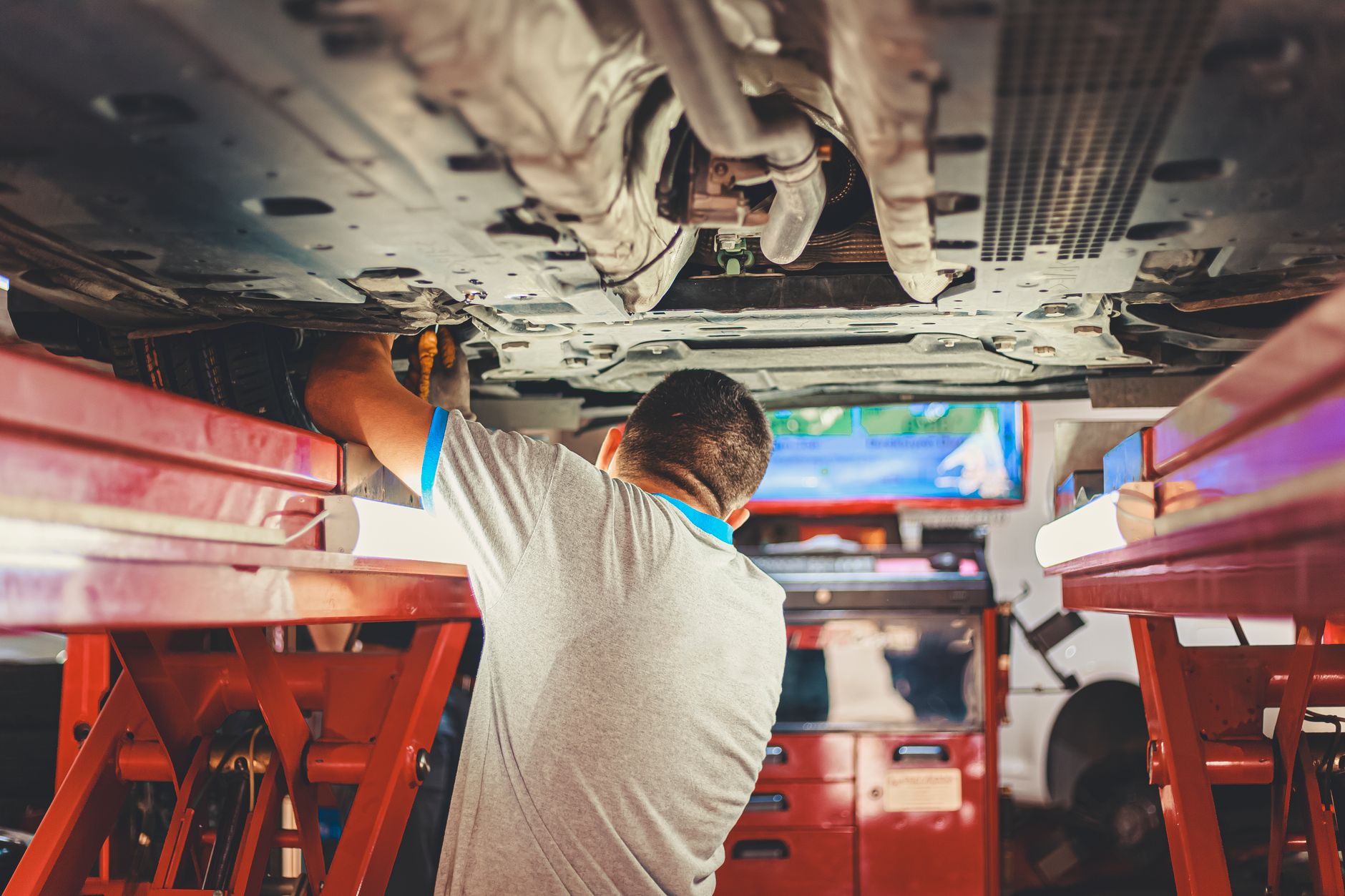
- Hydraulic floor jack — A low-profile 2- to 3-ton jack lifts faster and more safely than the scissor jack that came with your car.
- Jack stands (pair) — Never work under a vehicle held up only by a jack. Rated stands are non-negotiable.
- Wheel chocks — Cheap insurance that keeps the car from rolling while it's lifted.
- Creeper or foam mat — Saves your back and lets you actually reach what you're working on.
5–8: Turning, Fastening, and Torquing
The core of any tool kit is the hardware that removes and installs bolts. Get these right and most maintenance jobs open up to you.
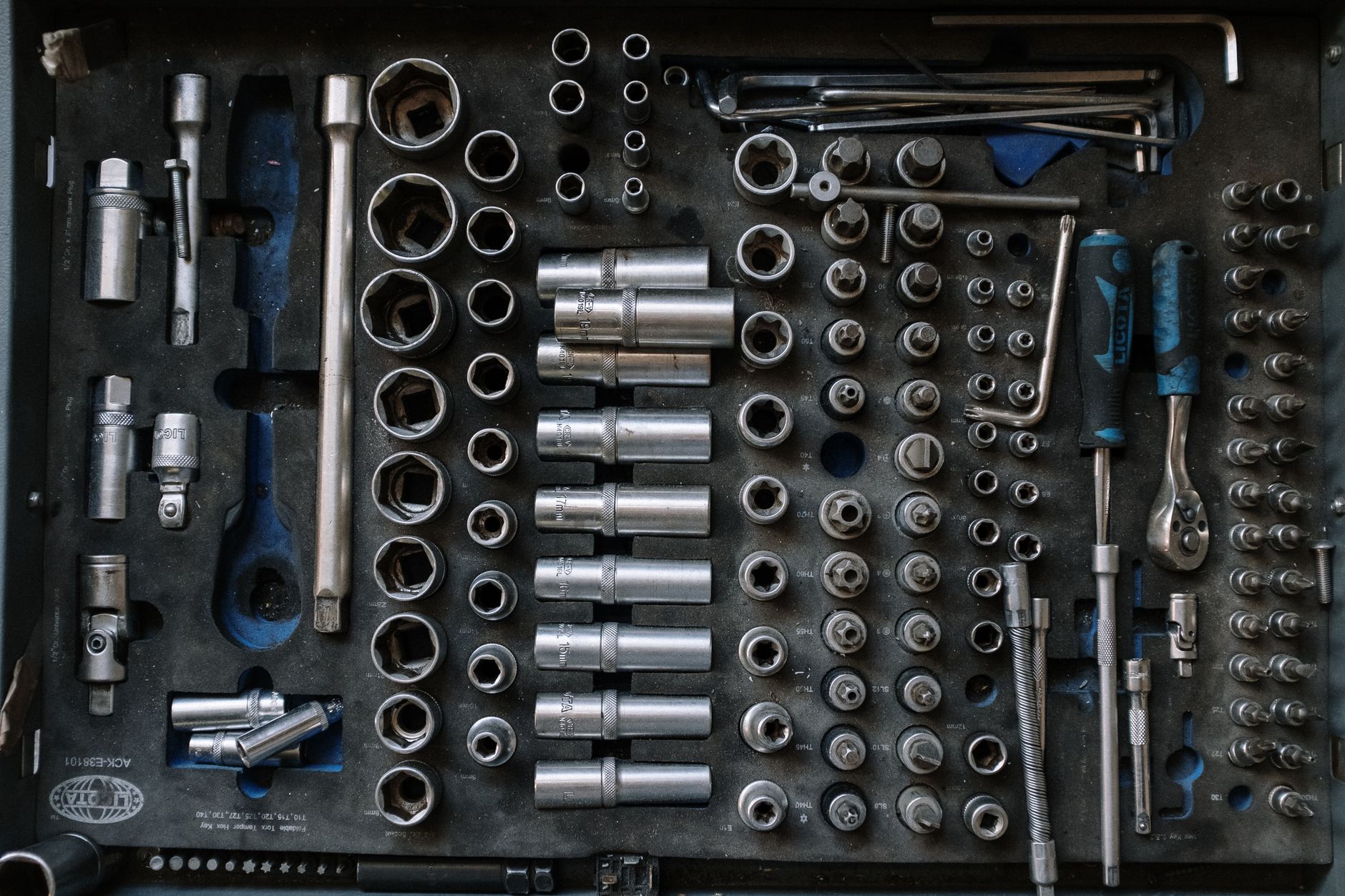
- Socket set (metric + SAE) — A 3/8" drive set with a good ratchet covers the majority of automotive fasteners. Add a 1/2" drive for bigger bolts.
- Combination wrench set — For the spots a socket can't reach.
- Torque wrench — The one tool DIYers skip and shouldn't. Over- or under-tightening lug nuts, drain plugs, and caliper bolts causes real damage. A click-type 1/2" wrench is the sweet spot.
- Breaker bar — For stubborn, rusted, or factory-tight fasteners without wrecking your ratchet.
If you want a deeper breakdown of the must-have hand tools, our guide on 10 tools every gearhead should have is a great companion read.
9–11: Tire and Air Tools
Tire care is the most frequent maintenance you'll do, and it's where an accurate gauge and a reliable inflator earn their keep every single week. Properly inflated tires last longer, improve fuel economy, and are safer — but the tire-shop gauge on the wall is often wildly inaccurate.
Start with a professional-grade pressure gauge. The cheap pencil gauges in the glovebox can be off by several PSI, which is enough to wear tires unevenly and cost you at the pump.

Round out your air tools with these:
- Digital tire inflator — Pairs with a compressor for fast, precise top-offs at home.
- Air compressor — Powers inflators, impact wrenches, and blow guns. See our air compressor buying guide to size one for your garage.
If you already run a compressor, a shop-grade inflator gauge turns tire fills from guesswork into a 10-second job with a locking chuck and an accurate readout.

12–13: Power Tools That Save Real Time
Hand tools do the job, but a couple of cordless power tools turn hour-long chores into 10-minute ones.
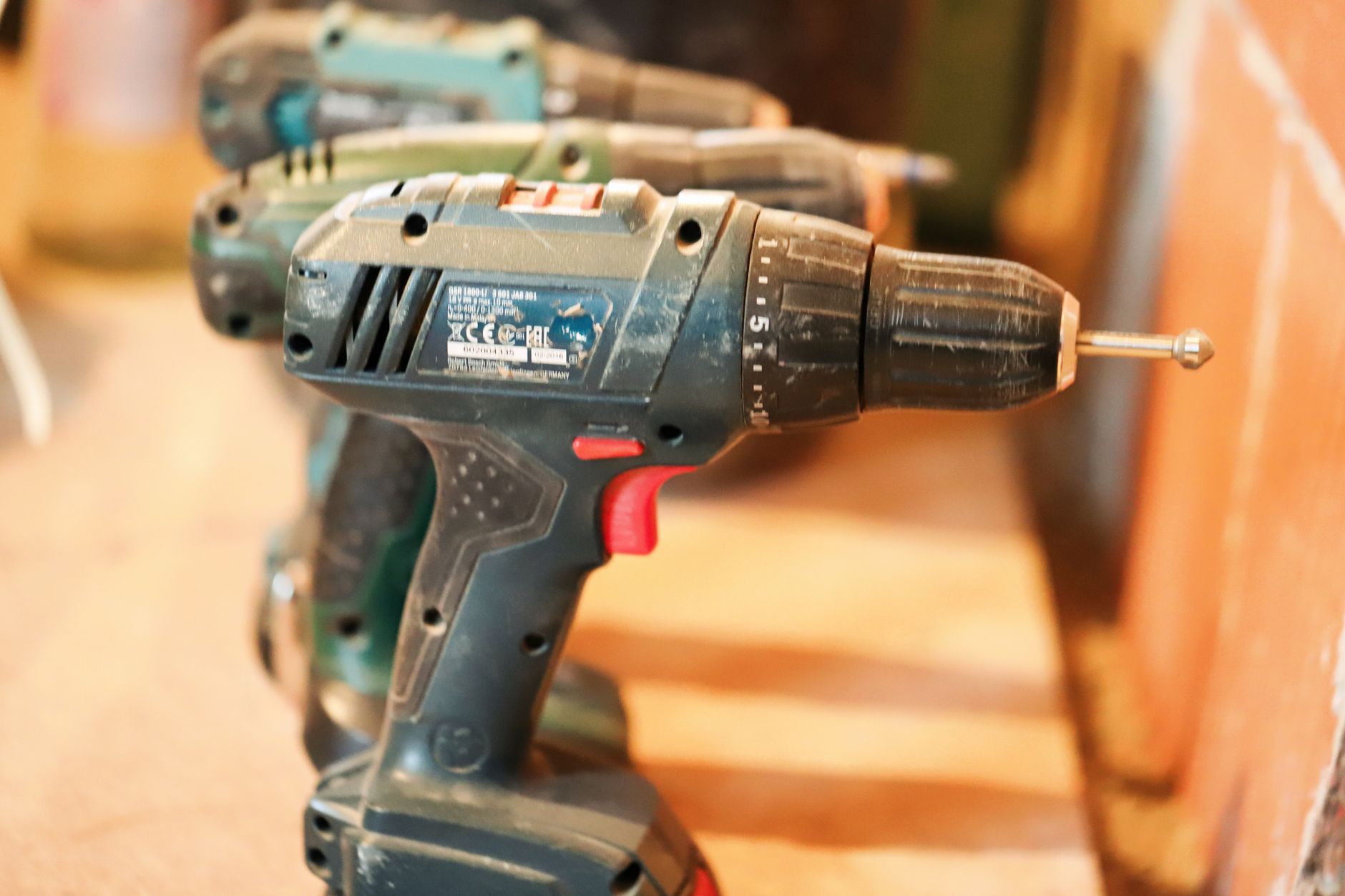
- Cordless drill/driver — For removing splash shields, interior panels, and a hundred non-automotive projects around the house.
- Cordless impact wrench — Removes lug nuts and stubborn bolts in seconds. Just remember to finish with a torque wrench to spec.
14–15: Diagnostics and Securing Loads
The last two rounds out a truly capable home garage:
- OBD2 scanner — Reads and clears check-engine codes so you can diagnose problems before paying a shop to plug in the same tool.
- Ratchet straps — Essential the moment you need to haul a project, move furniture, or transport a mower or motorcycle. A quality set with soft loops protects your cargo and gives you real peace of mind.
Don't underestimate that last one. Weak or frayed straps are one of the most common causes of lost or damaged cargo on the highway. A rated, AAR-certified set is worth every penny.

How to Prioritize on a Budget
You don't have to buy all 15 tools at once. Build in phases:
- Phase 1 (safety + tires): Floor jack, jack stands, torque wrench, and an accurate tire pressure gauge. This covers rotations, tire care, and safe lifting.
- Phase 2 (core wrenching): Socket set, wrenches, breaker bar. Now you can tackle oil changes, brakes, and most bolt-on jobs.
- Phase 3 (efficiency + extras): Cordless drill, impact wrench, inflator, compressor, OBD2 scanner, and ratchet straps.
Once your gear starts to pile up, a smart storage plan keeps it usable — check our guide on how to organize a small garage.
The Bottom Line
A well-stocked home garage isn't about having the most tools — it's about having the right ones. These 15 essentials cover the vast majority of routine car maintenance, pay for themselves quickly, and give you the confidence to stop outsourcing work you can handle in your own driveway.
Buy quality where it counts — especially on the tools you'll reach for every week, like a trustworthy tire pressure gauge and inflator — and your garage will serve you for decades. Explore JACO's lineup of precision tire gauges, inflators, and tie-down gear to round out your setup with tools built to last.