
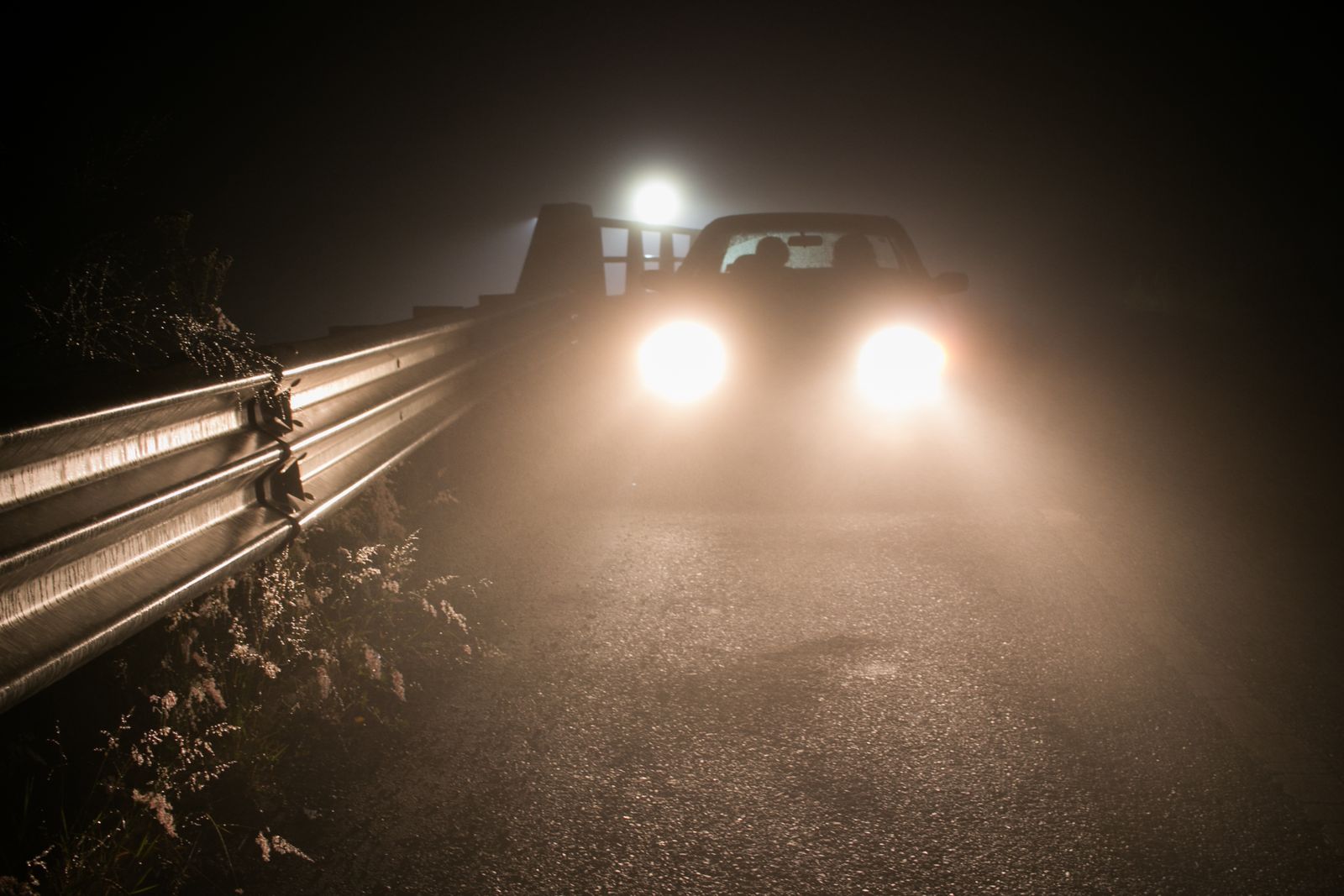
Here is the mistake almost every driver makes the moment the road disappears into a gray wall: they reach up and flick on their high beams. It feels right. More light should mean you can see more, right? In dense fog, the exact opposite happens. Those bright beams bounce straight back off millions of suspended water droplets and glare into your own eyes, cutting your visibility even further.
Fog is one of the most underestimated driving hazards on the road. It rolls in fast, it turns a familiar commute into a near-blind crawl, and it is a leading cause of dangerous multi-car pileups every fall and winter. The good news: driving in dense fog safely comes down to a handful of techniques that most people never learned. Here is exactly what to do when visibility drops to near zero.
Why Fog Is So Much More Dangerous Than Rain
It is tempting to lump fog in with rain, but they are completely different problems. Rain reduces grip and deflects light. Fog is a cloud of tiny water droplets suspended right at eye level, and it scatters light in every direction instead of letting it pass through.
That scattering is why your instincts work against you. The brighter and higher your light source, the more it reflects back at you. It is also why fog can shrink your usable sight distance from a quarter mile to less than a hundred feet in seconds. At highway speed, a hundred feet of visibility is gone before you can react to anything inside it. Understanding that single fact changes how you drive through it.
Low Beams and Fog Lights Only — Never High Beams
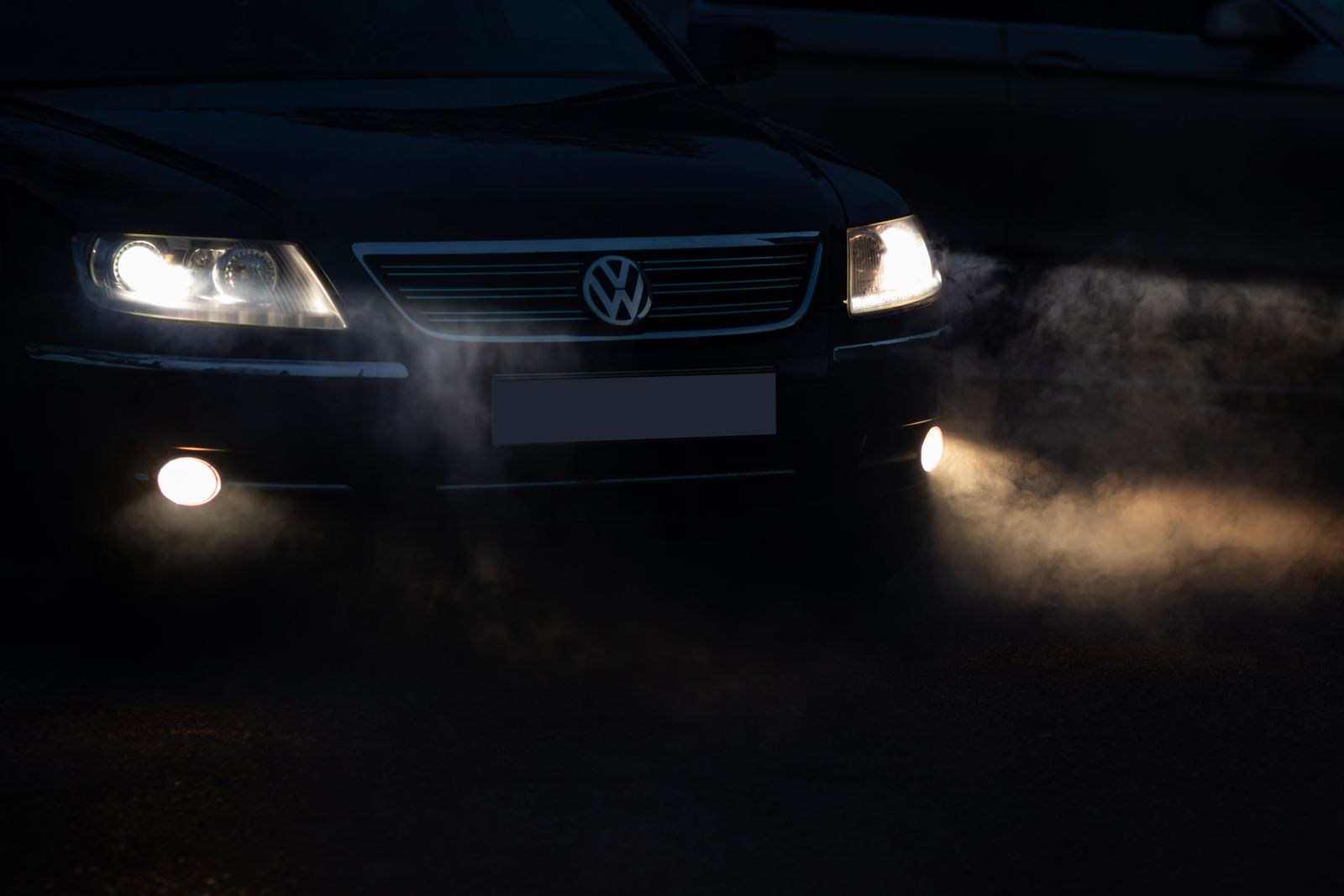
Your low beams are the correct setting in fog, every time. They aim down toward the pavement and keep most of the light under the densest part of the fog layer.
If your vehicle has dedicated fog lights, use them. They are mounted low and throw a wide, flat beam with a sharp upper cutoff, designed specifically to light the road surface and lane edges without blasting into the fog above. The simple rulebook:
- Fog lights: Yes, use them if equipped.
- Low beams: Yes — your default headlight setting in fog.
- High beams: Never. They reduce your visibility, not increase it.
One more detail people forget: turn your headlights on even in daytime fog. It does little for your own vision, but it makes you dramatically more visible to the drivers around you, and being seen is half the battle.
Slow Down Until Your Speed Matches Your Visibility
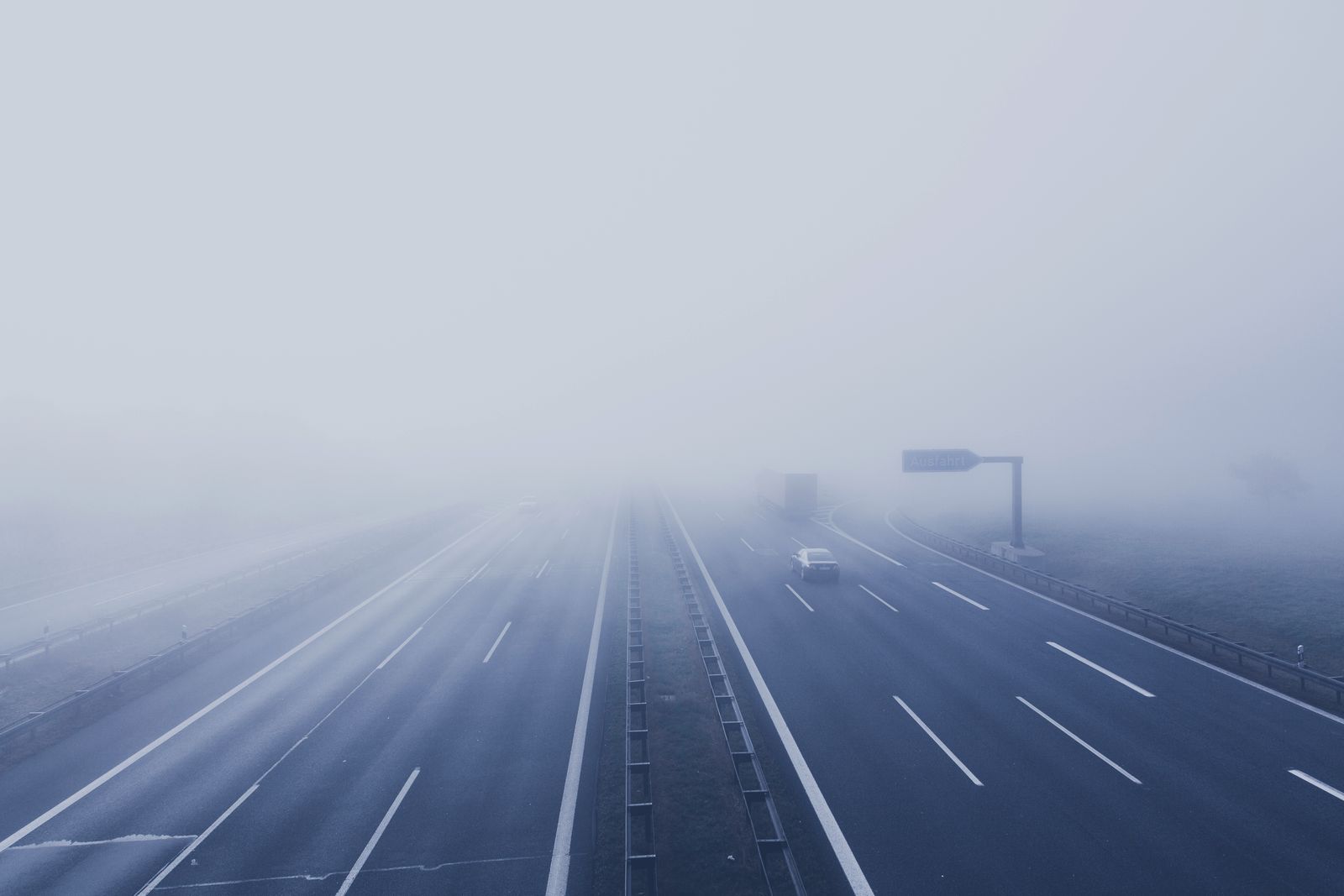
This is the rule that prevents the most serious fog crashes: never drive faster than you can stop within the distance you can see. If you can only see 100 feet ahead, you need to be moving slowly enough to come to a complete stop inside that 100 feet — which on most roads means 20 to 25 mph, even if the posted limit is 65.
It feels painfully slow. Do it anyway. The vast majority of fog pileups happen because a driver is traveling too fast to react when brake lights suddenly materialize out of the gray. If traffic behind you is impatient, that is their problem to solve by slowing down too — not a reason for you to outrun your own sight line.
Use your speedometer, not your gut. Fog has a hypnotic, disorienting effect that makes it genuinely hard to judge how fast you are going. Glance down and confirm the number.
Double or Triple Your Following Distance
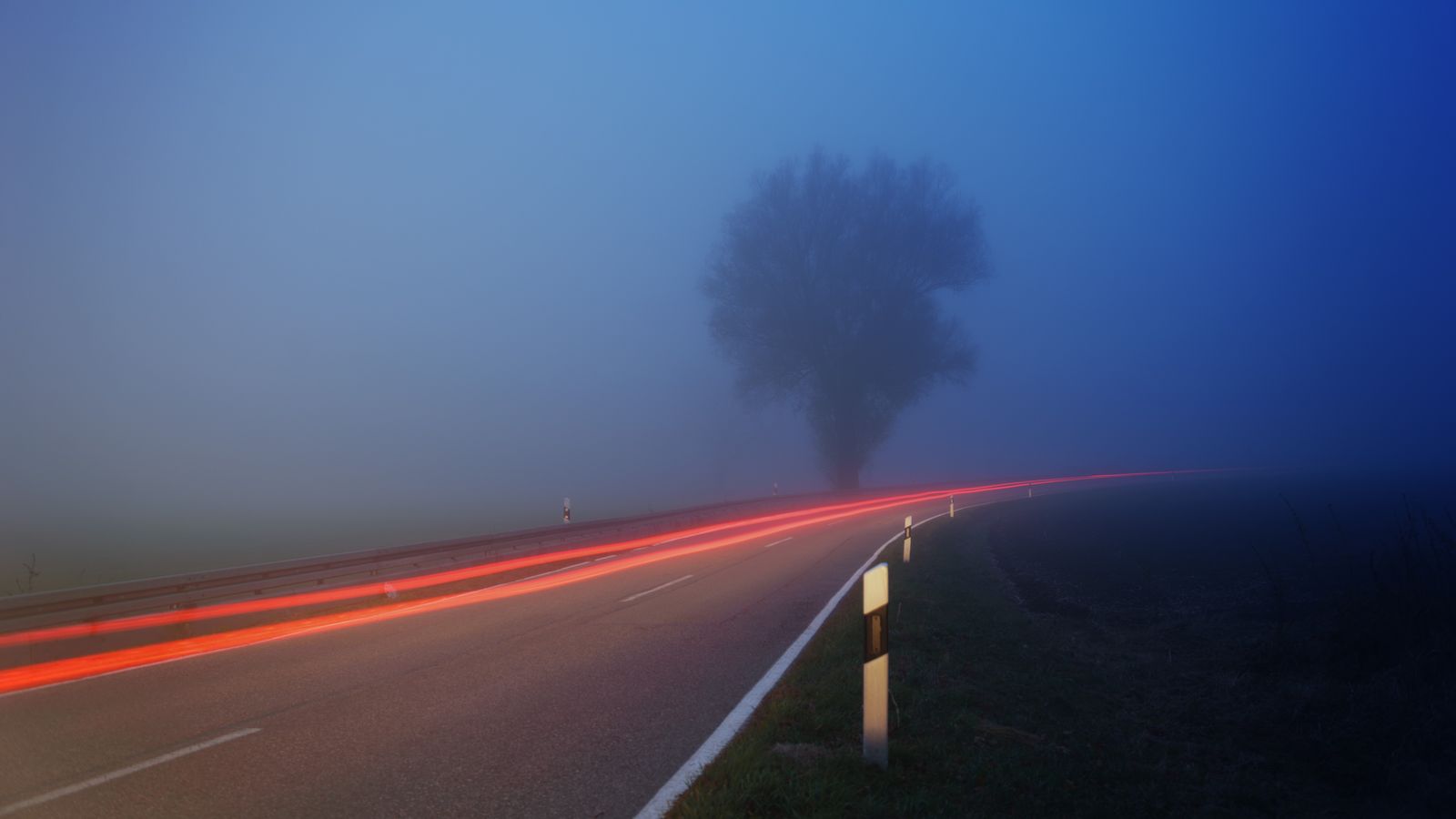
In clear weather, a two to three second following distance is plenty. In dense fog, the car ahead of you can appear and vanish in a heartbeat, so you need a much bigger cushion — aim for at least four seconds, and more if the fog is thick.
Resist the urge to tuck in close behind another vehicle and use their taillights as a guide. It feels reassuring, but it is a trap: you inherit their reaction time instead of your own, and if they stop short or hit something, you have nowhere to go. Hang back far enough that their taillights are a reference, not a leash.
And once you do stop safely, worn tires turn a controlled stop into a slide. Reduced visibility is exactly when you want every inch of stopping distance your tread can give you, which brings up a quick piece of prep that pays off before fog season even starts.

Use the Road's Edge Line to Stay on Track

When the center of the road vanishes, your eyes naturally drift toward the centerline — and toward oncoming traffic. Don't. Use the white line on the right edge of your lane as your guide instead.
Tracking the right fog line keeps you anchored in your lane and well away from vehicles coming the other direction. Watching the centerline does the opposite, subtly pulling you toward the one place you least want to be. It is a small shift in where you point your eyes, and it makes a real difference when the lane markings are the only thing you can see.
Keep your windshield working for you, too. Run your wipers on an intermittent setting and switch on the defroster — fog condenses on the glass and compounds the problem from the inside.
Skip the Hazard Lights While You're Moving
This one trips people up. In the United States, hazard lights are meant to signal a stopped or disabled vehicle. If you flip them on while rolling through fog, other drivers may assume you are parked or stalled and either slam on their brakes or swerve to avoid a car that is actually moving.
Leave the hazards off while driving. Save them for when you are genuinely stopped. Your running lights and taillights, kept clean and on, are what other drivers need to track you in the murk.
Know When to Pull Over — and Do It Safely
Sometimes the smartest move is to get off the road entirely. If the fog thickens to the point where you can barely see past your hood, look for a safe place to wait it out — a rest area, a parking lot, or a wide shoulder well clear of traffic.
When you do pull off, get as far from the travel lanes as you can, then turn your lights off and take your foot off the brake. Here is why: other drivers in fog instinctively follow any lights they see. If your lights are on near the road, a disoriented driver may steer straight toward you, thinking you are a lane to follow. Lights off, well off the pavement, is the safest way to park.
Ground fog adds one more wrinkle. In valleys and low spots it can go from clear to blinding in a single dip, so stay ready for sudden visibility changes any time the road drops or you cross a river bottom.
A Little Prep Before Fog Season Goes a Long Way
The best fog drives start before you ever leave the driveway. A few minutes of maintenance stacks the odds in your favor: confirm your fog lights and all your bulbs work, clean your headlight and taillight lenses so they actually throw light, top off your washer fluid, and check that your wiper blades aren't smearing.
Tires matter as much as lights. Healthy tread and correct pressure give you the shortest possible stopping distance — your real margin for error when a hazard appears out of the gray. If you want the full seasonal rundown, our guide on fall driving hazards most people ignore pairs perfectly with this one, and if your lenses have gone cloudy, here is how to restore foggy headlights at home so your low beams work as hard as they should.
The Bottom Line on Driving in Fog
Dense fog rewards patience and punishes instinct. Drop the high beams, switch to low beams and fog lights, slow down until your speed matches your sight line, and give yourself room. Track the right-edge line, keep your hazards off while moving, and don't be too proud to pull over and wait it out. Handle those basics and you turn one of the scariest conditions on the road into something you can manage calmly — every single time the gray rolls in.