

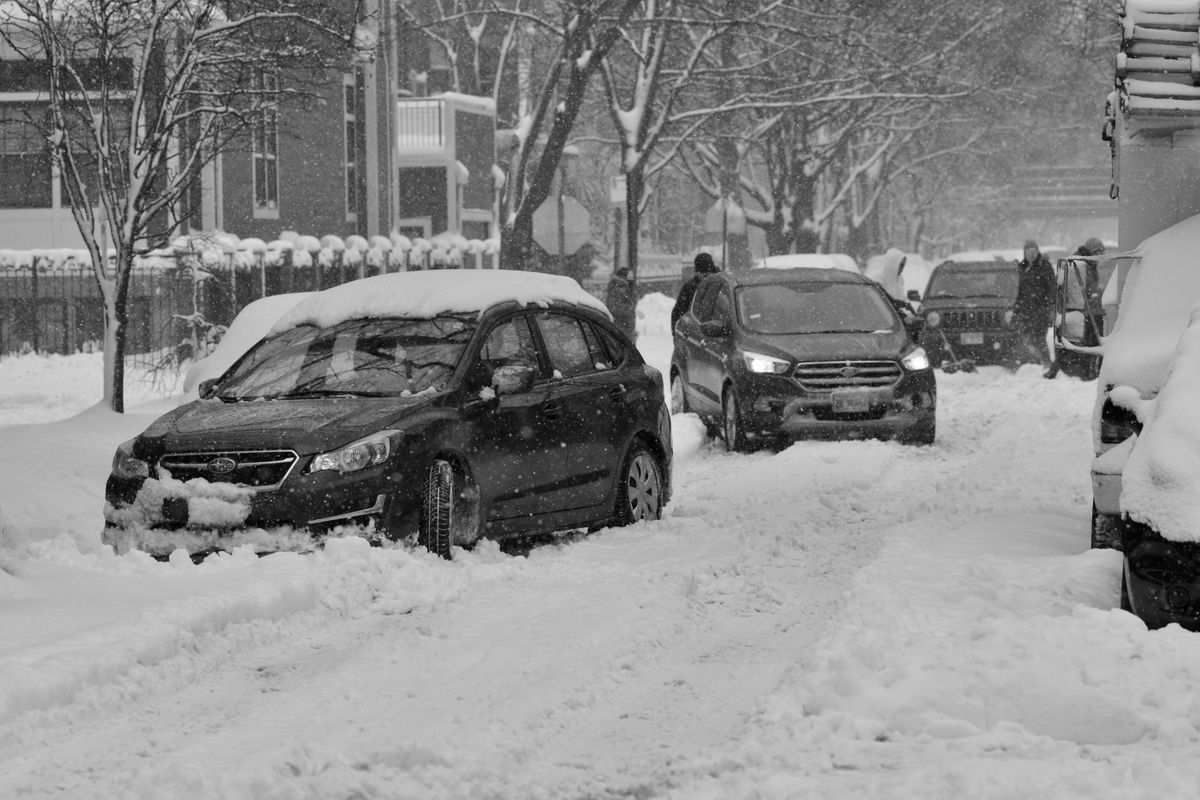
It happens to almost every driver who lives where it snows: you hit the gas, the engine revs, and the car doesn't move. The tires whine, the snow sprays, and you sink a little deeper. The good news? Most snow-stuck situations can be solved in 10 to 20 minutes without a tow truck — if you know what to do and, just as important, what not to do.
This guide walks you through how to get unstuck in snow step by step: assessing the situation, digging out the right way, using traction aids, rocking the vehicle free, and knowing when it's time to call for a pull. Keep it bookmarked for the first big storm.
Step 1: Stop Spinning Your Tires
The instinct is to floor it. Don't. Spinning your tires polishes the snow underneath into a layer of ice and digs ruts that trap the wheels even deeper. Within a few seconds of wheelspin, a mildly stuck car can become a seriously stuck one.
Instead, take your foot off the gas and assess:
- Which wheels are spinning? On a front-wheel-drive car it's the front; rear-wheel-drive trucks spin the rear. Focus your effort on the drive wheels.
- Is the vehicle high-centered? If the undercarriage or frame is resting on packed snow, the tires may not have enough weight on them to grip. You'll need to dig that snow out.
- Is your tailpipe clear? If you're stuck in a drift and plan to keep the engine running, check that the exhaust isn't buried. A blocked tailpipe can push carbon monoxide into the cabin.
Step 2: Dig Out the Right Way

Digging is the single most effective way to get unstuck in snow, and most people don't dig enough. A compact folding shovel in your trunk is worth its weight in gold here — but in a pinch, an ice scraper, a floor mat, or even a hubcap can move snow.
Focus on these areas:
- In front of and behind the drive tires. Clear a path at least two to three feet long in the direction you want to go. You're giving the tires a runway to build momentum.
- Around the sides of the tires. Packed snow against the sidewalls creates drag. Knock it away.
- Under the vehicle. If you're high-centered, clear the snow under the bumpers, frame, and axles so the weight transfers back onto the tires.
- Down to the ground, if possible. Pavement or gravel offers far more grip than packed snow.
Also clear snow away from the tailpipe and, if you've been in a ditch, check that the front grille and radiator aren't packed solid.
Step 3: Add Traction Under the Tires
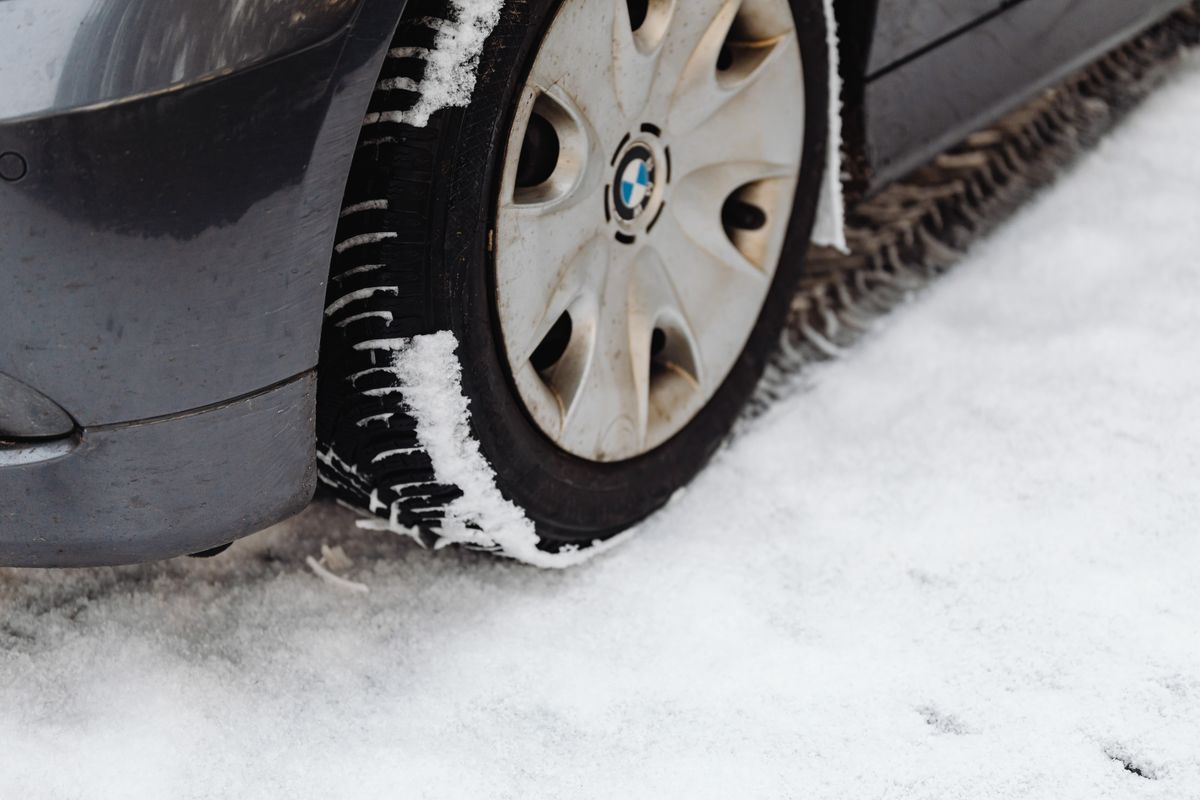
Once you've dug a path, give the drive wheels something to bite into. Wedge traction material firmly against the front edge of each drive tire (or behind it, if you're backing out).
Best Traction Aids for Snow
- Traction boards or mats: Purpose-built plastic boards with aggressive teeth. The most reliable option and reusable for years.
- Kitty litter (non-clumping): A classic for a reason. A few cups in front of each drive tire adds grit and grip.
- Sand: Works similarly to litter and doubles as rear ballast in a pickup truck bed.
- Your car's floor mats: Rubber mats wedged under the tire can work in a pinch — just know they may get shredded or launched, so keep bystanders clear.
- Cardboard, branches, or gravel: When you have nothing else, anything that breaks up the slick surface helps.
Avoid using table salt alone. It eventually melts snow, but it doesn't give you immediate grip and can leave you on slush that refreezes.
Step 4: Use the Rocking Technique
If you can't drive straight out, rocking the vehicle back and forth builds momentum and packs down a longer track. Done gently, it's one of the most effective snow recovery techniques there is. Done aggressively, it can overheat a transmission.
Here's how to rock a car out of snow:
- Turn off traction control. Traction control cuts power when it detects wheelspin — which is exactly what you need a little of right now. Most vehicles have a button; check your owner's manual. Turn it back on once you're free.
- Straighten the steering wheel. Wheels pointed straight roll with the least resistance.
- Ease forward in a low gear. Use Drive (or 1st/L) with very light throttle until the car rolls as far as it will go.
- Stop, then shift to Reverse. Come to a complete stop before shifting, then roll backward as far as you can with light throttle.
- Repeat, gaining a few inches each time. When you've built a long enough track, give it steady throttle in the direction you want to go and keep moving until you reach solid ground.
Important: Never slam between Drive and Reverse while the wheels are still turning. Limit rocking to a minute or two at a time, then let the transmission rest. If you smell burning or the car isn't gaining ground after several attempts, stop and move to the next option.
Lower Tire Pressure for More Grip (Carefully)
Letting a little air out of the drive tires widens the contact patch and can help them float on top of deep snow. For most passenger vehicles, dropping a few PSI is plenty — never go so low that the tire could come off the bead. The catch: you need to air back up to your door-jamb pressure before driving at speed. That's why a cordless inflator belongs in every winter car kit.

Step 5: Add Weight or Get a Push
Rear-wheel-drive pickups are notorious for getting stuck in snow because there's so little weight over the rear axle. A few sandbags or a load of snow shoveled into the bed over the axle can make a real difference. In any vehicle, having a passenger sit over the drive wheels helps too.
If you have helpers, a push can tip the balance. Pushers should stand to the sides of the vehicle (never directly in line with a spinning tire that can throw debris), push on solid body panels rather than spoilers or lights, and keep their footing in mind on icy ground. The driver should use gentle, steady throttle — not a burst.
When to Stop and Call for a Pull
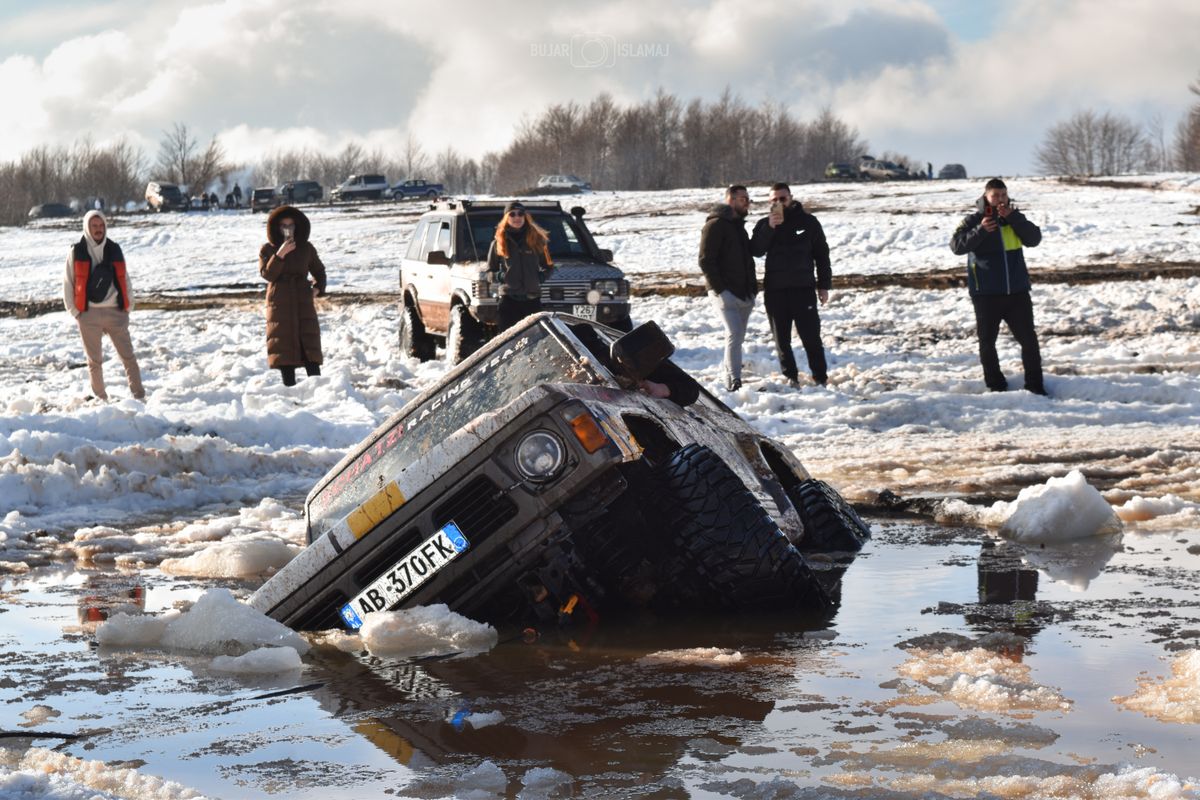
Knowing when to quit is part of getting unstuck in snow safely. Stop self-recovery and get help if:
- The vehicle is sliding sideways toward a ditch, drop-off, or traffic
- You're stuck on a busy road or blind curve where you could be hit
- The vehicle is badly high-centered and digging isn't making progress
- You smell burning from the transmission or clutch
- Conditions are worsening and you're getting cold, wet, or exhausted
If a friend with a truck or a good Samaritan offers a pull, use a proper strap attached to rated recovery points or tow hooks — never a bumper, trailer hitch ball, axle, or suspension part. Pull slowly and steadily, and keep everyone well clear of the strap's path. For a deeper look at choosing the right strap, read our guide to tow straps vs. recovery straps vs. snatch straps.

If you're waiting for help in a stuck car, stay with the vehicle, keep the tailpipe clear, run the engine for about 10 minutes per hour for heat, and crack a window slightly for fresh air.
Build a Simple Snow Recovery Kit
The best way to get unstuck in snow is to have the right gear already in the trunk. A basic kit covers almost every situation:
- Compact folding shovel
- Traction boards or a bag of non-clumping kitty litter
- Recovery or tow strap (plus a shackle if your vehicle has receiver-mounted recovery)
- Portable tire inflator and gauge
- Gloves, a warm hat, and a flashlight or headlamp
- Ice scraper and snow brush
Pair it with the rest of our winter car emergency kit checklist and you'll be ready for whatever the season throws at you.
The Bottom Line
Getting stuck in snow is frustrating, but it rarely has to end with a tow bill. Stop spinning, dig out more than you think you need, add traction, rock gently, and know when to ask for a pull. With a shovel, a strap, and a portable inflator in the trunk, you can get unstuck in snow and back on the road in minutes. Explore JACO's full lineup of tire and recovery gear before the next storm rolls in.