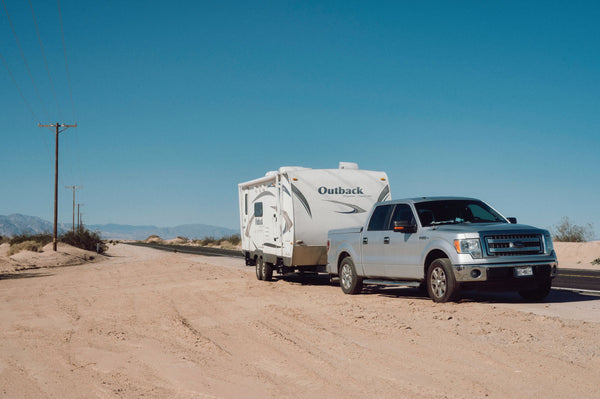

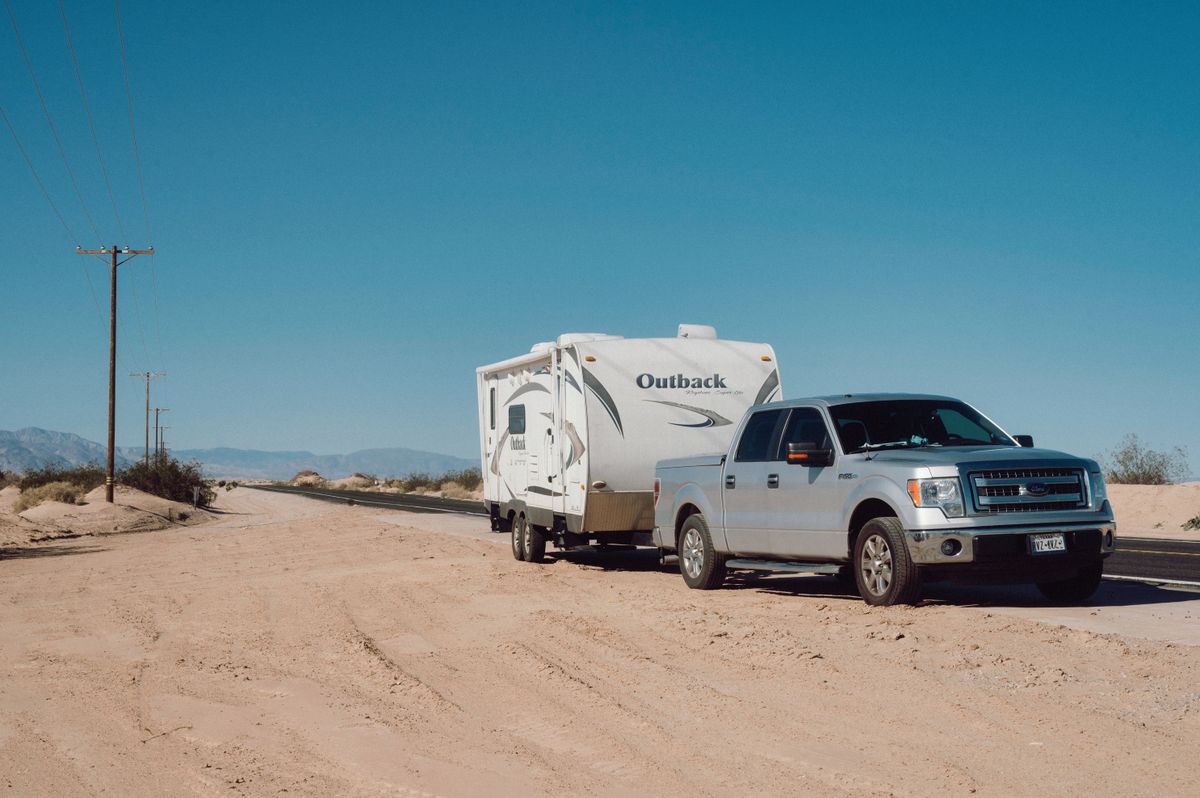
Climbing a mountain pass with a trailer is loud, slow, and obvious. You feel the engine working, and you watch the temperature gauge. Coming down is the part that actually gets people in trouble. Gravity is doing the work, the trailer is pushing on your truck, and your brakes are the only thing between a controlled descent and a runaway ramp.
If you tow a camper, boat, or utility trailer anywhere with real elevation — Colorado's I-70, Wolf Creek, Raton Pass, or any long western grade — this guide covers how towing downhill really works: tow/haul mode, engine braking, trailer brake controller gain, and how to spot brake fade before it turns into an emergency.
Why Towing Downhill Is Harder Than Climbing
On a climb, the worst case is usually an overheated engine and a slow lane. On a descent, all the momentum of your truck and trailer has to be absorbed somewhere. If your only tool is the brake pedal, that energy turns into heat in your rotors and drums.
Brakes work by friction, and friction makes heat. Ride them for five or six miles on a 6% grade and they can get hot enough to boil brake fluid or glaze the pads. That's brake fade: the pedal goes soft, the truck stops slowing down, and you're out of options.
The goal on any long grade is simple: let the engine and transmission hold your speed, and save your brakes for stopping.
Use Tow/Haul Mode Before the Grade Starts
Most modern trucks and many SUVs have a tow/haul button, usually on the shifter or dash. It's not a gimmick. When it's on, the transmission:
- Holds lower gears longer instead of upshifting early for fuel economy
- Downshifts on its own when you tap the brakes on a descent (often called grade braking)
- Firms up shift points so the transmission isn't hunting between gears under load
Turn it on before you crest the pass, not halfway down. Once you're carrying speed downhill, it's much harder to get the truck into a useful gear.
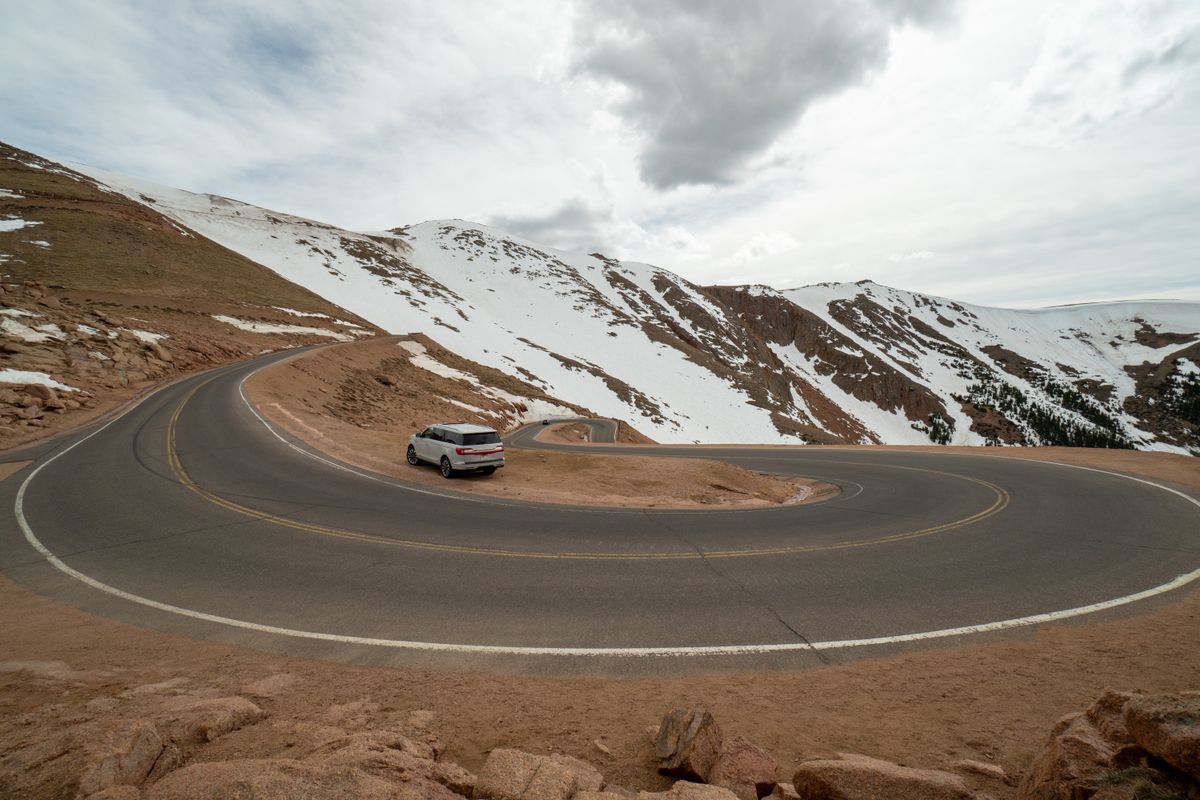
Engine Braking: Pick the Gear at the Top
The old trucker rule still holds: go down the hill in the same gear (or one lower) than you'd use to climb it. Pick that gear at the top, before speed builds.
Here's how to do it in a modern automatic:
- Slow to a reasonable speed before the descent begins — usually 5–10 mph below the posted limit when towing.
- Use manual mode, the +/– buttons, or a gear limiter to select a lower gear (often 3rd or 4th on a 6- to 10-speed transmission).
- Let the engine hold your speed. RPMs will climb — that's normal and safe below redline.
- If speed still creeps up, drop one more gear.
Diesel trucks with an exhaust brake have an extra tool. Turn it on for the whole descent. It does a lot of the work your service brakes would otherwise have to do.
Snub Braking, Not Riding the Brakes
Even in the right gear, you'll sometimes need the brakes. How you use them matters more than how often.
Riding the brakes means light, constant pressure for miles. That's the fastest way to overheat everything.
Snub braking is what professional drivers use: pick a safe target speed (say, 45 mph). When you hit about 50, brake firmly enough to drop back to 40, then get completely off the pedal. Let the brakes cool while the engine holds things steady, and repeat only when needed.
Firm, short applications give your brakes time to shed heat between uses. Long, light ones never let them cool.
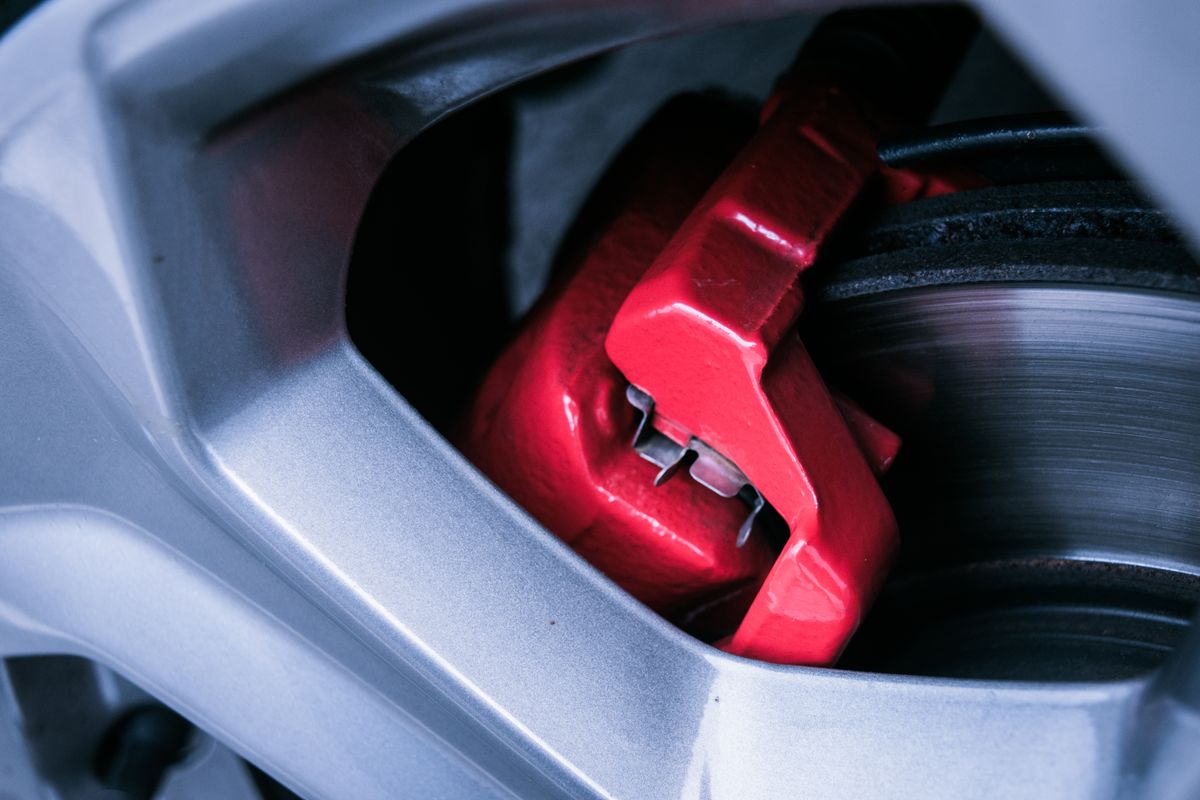
Set Your Trailer Brake Controller Gain Correctly
If your trailer has electric brakes, the brake controller in your cab decides how hard they grab. Set it wrong and your truck's brakes end up stopping the whole rig alone — exactly what you don't want on a long grade.
To set the gain:
- On a flat, dry surface, drive at about 20–25 mph.
- Squeeze the controller's manual lever all the way.
- The trailer brakes should grab firmly — just short of locking up the trailer wheels.
- If the trailer wheels lock, turn the gain down. If you barely feel it, turn it up.
Heavier loads need more gain, so re-check it any time you load the trailer differently. Wet or icy pass conditions call for a little less. A properly set trailer handles its share of the braking and keeps the trailer from pushing the truck on the way down.
Before any mountain trip, it's also worth running through a full pre-trip trailer inspection checklist so you aren't discovering a dead brake magnet or bad wiring at the summit.
Check Tire Pressure Before You Start the Climb
Tires play a bigger role on mountain grades than most people realize. An underinflated trailer tire runs hotter, flexes more, and is far more likely to fail on a long descent when brake heat is soaking into the wheel. Underinflated truck tires make the rig feel vague and floaty in tight corners.

Check every tire — truck and trailer — cold, before you leave. Trailer (ST) tires usually run at the maximum pressure printed on the sidewall. Truck tires should match the door-jamb placard, or the towing pressure listed in your owner's manual. If you're heading up in altitude, our guide to how elevation affects tire pressure, engine power, and brakes explains why your readings change on the way up.

Signs of Brake Fade (and What to Do Right Now)
Know these warning signs before you need them:
- A soft or sinking pedal — you're pressing harder for the same result
- A burning smell — sharp and chemical, from overheated pads
- Smoke from the wheels — on the truck or the trailer
- Longer stopping distances — the rig keeps rolling after you expect it to slow
If you notice any of these:
- Get off the brakes as much as safely possible and downshift right away.
- Turn on your hazards.
- Pull off at the next safe turnout and let everything cool for at least 20–30 minutes. Don't touch the rotors or hubs.
- Don't pour water on hot brakes — rapid cooling can warp rotors and crack drums.
Runaway Truck Ramps Are for You, Too
Runaway ramps aren't just for semis. If your brakes are gone and the gears aren't holding, a runaway ramp is the safest place to be — far better than the next curve. Most ramps are signed miles in advance, so make a mental note of where they are on any pass you're driving.
Using one will likely damage your trailer and cost you a tow bill. That beats the alternative every time.
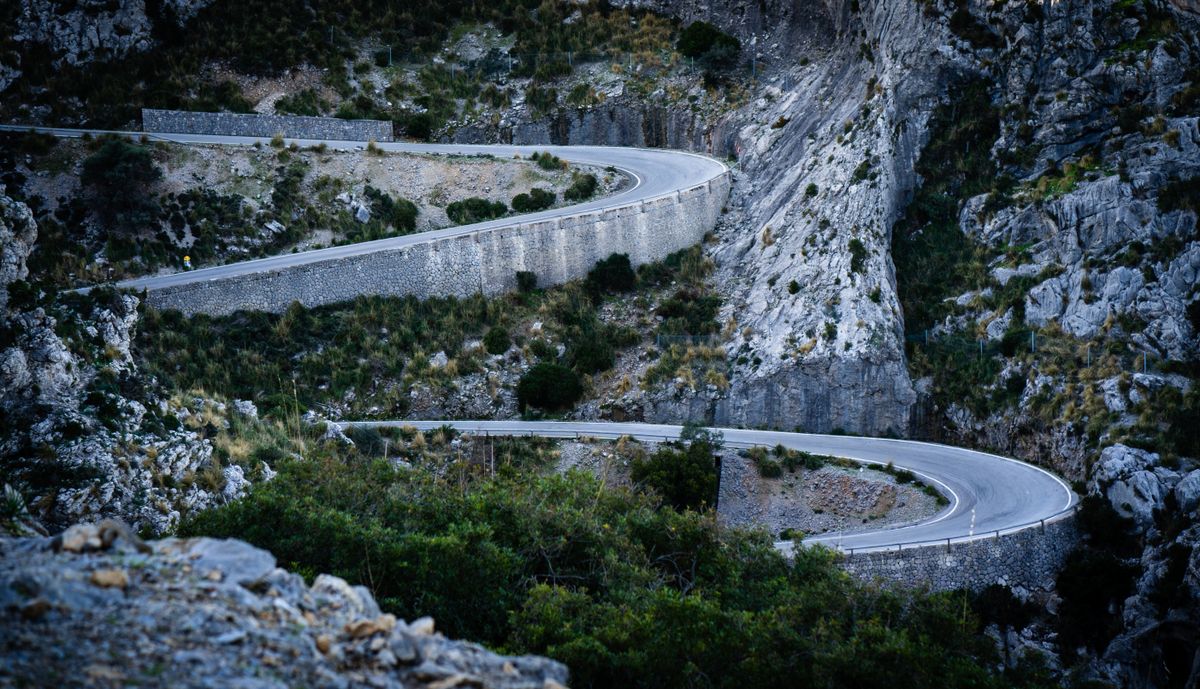
Secure the Load Before the Switchbacks
Steep descents throw weight forward, and tight corners throw it sideways. Gear that sat still on the highway can slide, tip, or shift the trailer's balance on a grade. Before the pass:
- Strap down anything heavy in the trailer or truck bed — generators, coolers, bikes, tool boxes
- Keep the heaviest cargo low and slightly forward of the trailer axle for proper tongue weight
- Re-tighten straps at the summit pull-off, since loads settle on the climb

Quick Mountain-Grade Towing Checklist
- Tire pressure checked cold on truck and trailer
- Brake controller gain tested and set for today's load
- Cargo strapped down and re-checked at the top
- Tow/haul mode on before the descent
- Lower gear selected at the summit — exhaust brake on if equipped
- Speed 5–10 mph under the limit, with snub braking only
- Runaway ramp locations noted
Final Thoughts: Let the Engine Do the Work When Towing Downhill
Towing downhill safely comes down to one habit: control your speed with gears, not brakes. Turn on tow/haul mode, pick a low gear at the top, set your trailer brake controller properly, and save your service brakes for short, firm stops. Check your tires and straps before the climb, and the descent turns into what it should be — a slow, steady roll with a great view.
Planning a mountain trip this fall? Grab a reliable JACO tire pressure gauge and a set of ratchet straps for the truck — the two easiest pre-trip habits to keep.