
A dead battery always picks the worst moment — the grocery store parking lot, the trailhead, the airport pickup lane. If you know what you're doing, a jump-start takes about five minutes and costs nothing. If you don't, you can damage electronics, weld your wrench to the terminals, or leave a permanent reminder on the back of your hand.
Here's how to jump-start a car the right way, which cable goes where, and the small mistakes that quietly cost drivers hundreds of dollars in alternator and ECU repairs every year.
Why Car Batteries Die in the First Place
Most "dead" batteries aren't actually dead — they're drained. The usual suspects:
- Lights left on overnight — headlights, dome lights, or a trunk light with a bad switch
- Short trips only — the alternator never gets enough time to fully recharge
- Extreme temperatures — cold weather slashes battery capacity; heat accelerates internal wear
- Parasitic drain — aftermarket stereos, dash cams, and phone chargers pulling power while parked
- Old age — most lead-acid batteries last 3–5 years. After that, every cold morning is a gamble
If you're jumping the same battery more than once a month, it's not a jump-starting problem — it's a new-battery problem.
Before You Jump: Safety Checks That Take 30 Seconds
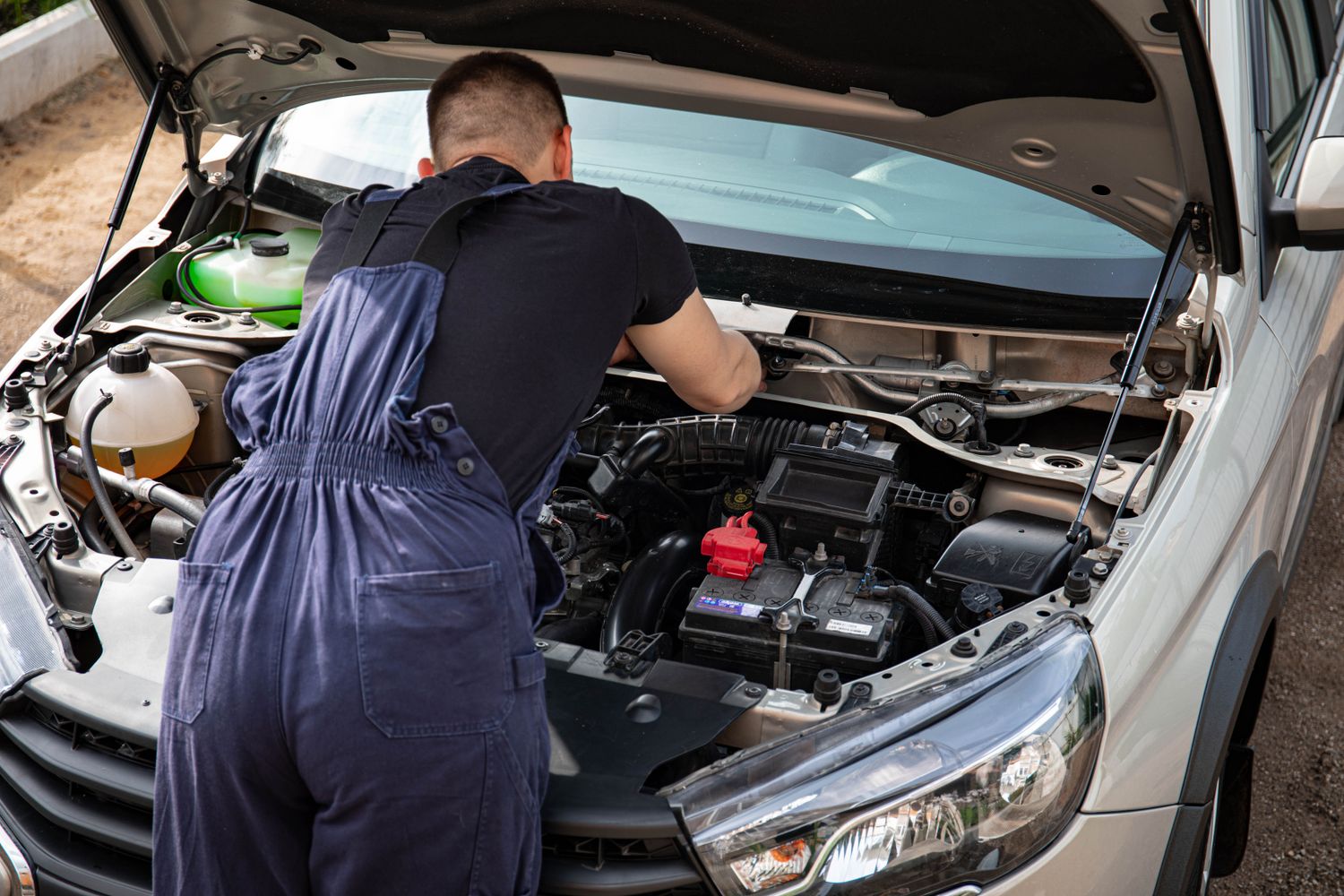
Before you pop the hood, run through this short checklist:
- Look at the battery. If the case is cracked, bulging, or leaking acid, do not jump-start it. Call for a tow or replace the battery directly.
- Check for frozen electrolyte. A battery that's been sitting in sub-zero weather can freeze. If it looks swollen or you hear sloshing ice, skip the jump.
- Remove metal jewelry. Rings and watches can arc across terminals fast enough to cause serious burns.
- Put both cars in Park (or Neutral for manual) with the parking brake set.
- Turn off everything. Headlights, radio, HVAC, phone chargers — all off in both vehicles before you connect anything.
How to Jump-Start a Car with Jumper Cables (Step by Step)
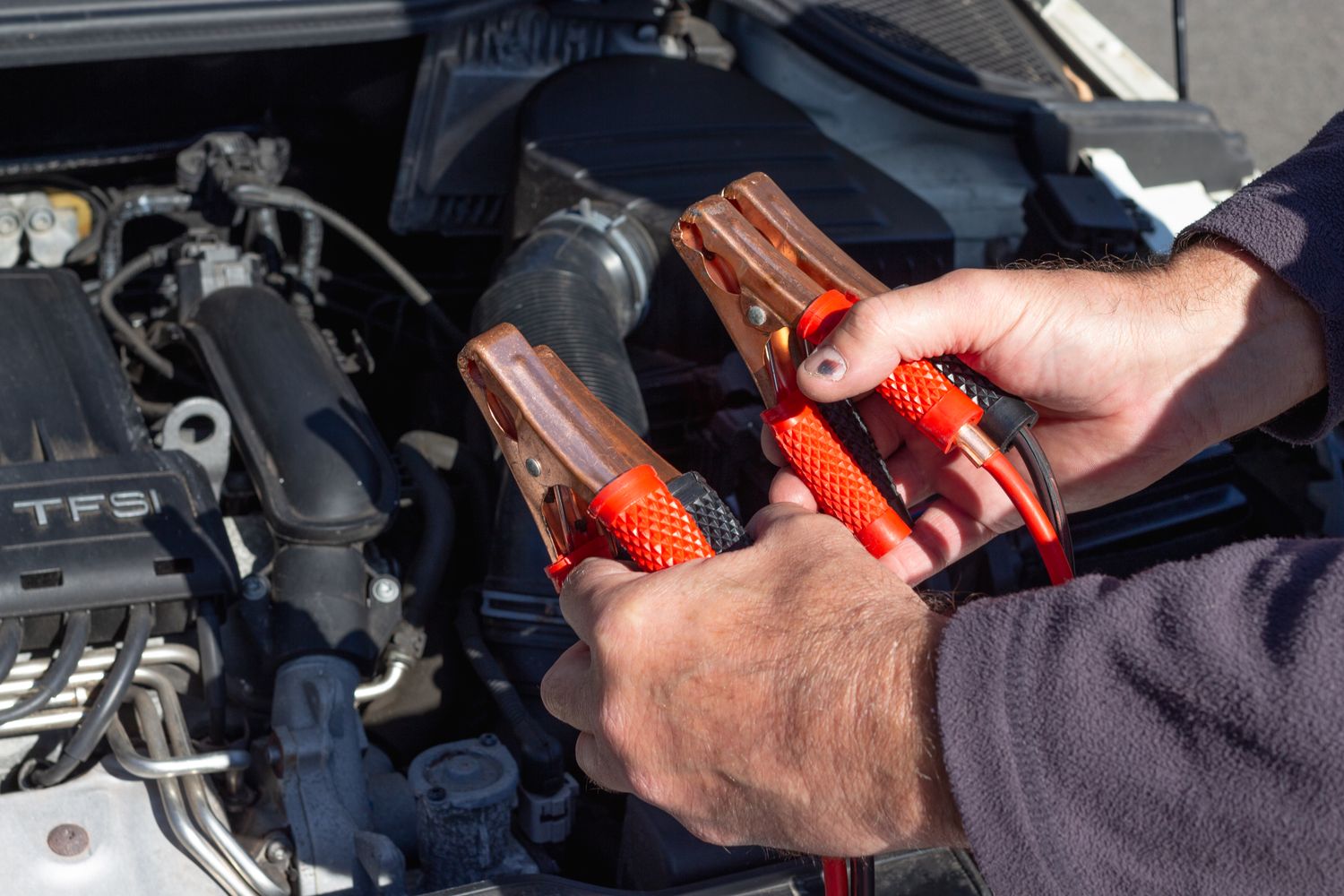
The cable connection order matters. Follow it exactly — this sequence is designed to keep sparks away from the battery itself, where hydrogen gas can collect.
- Position the cars. Park the donor vehicle nose-to-nose or side-by-side, close enough that the cables reach easily, but not touching.
- Open both hoods and locate the batteries. Identify the positive (+) and negative (−) terminals. Positive is usually red; negative is black.
- Connect RED (positive) to the dead battery's positive terminal.
- Connect the other RED clamp to the donor battery's positive terminal.
- Connect BLACK (negative) to the donor battery's negative terminal.
- Connect the final BLACK clamp to an unpainted metal ground on the dead vehicle — an engine bolt, a bracket, a chassis bolt. Not directly to the dead battery's negative terminal. This is the single most-skipped step, and it's what prevents a spark near the battery.
- Start the donor vehicle and let it idle for 2–3 minutes. This gives the dead battery a surface charge.
- Start the dead vehicle. If it doesn't crank, wait another two minutes and try again. If it still refuses after three attempts, the battery is likely beyond a simple jump.
- Disconnect in reverse order: ground first, then donor negative, donor positive, then the dead vehicle's positive.
- Drive — don't idle — for at least 20–30 minutes to give the alternator a real chance to recharge the battery.
Keep the clamps from touching each other (or any metal) while the other ends are connected. That's what causes the loud pop and the burn mark on your screwdriver.
Jumper Cables vs. Portable Jump Starters
The biggest shift in roadside kits over the last decade: you no longer need a second car. A modern lithium-ion jump pack fits in a glovebox and can boost a dead battery 20+ times on a single charge. No flagging down a stranger, no awkward parking lot shuffle, no hoping your cables are long enough.
Traditional cables still work, and they're cheap insurance — but if you drive solo, commute at odd hours, or travel anywhere remote, a portable jump starter is one of the best roadside upgrades you can make.
5 Costly Jump-Start Mistakes to Avoid
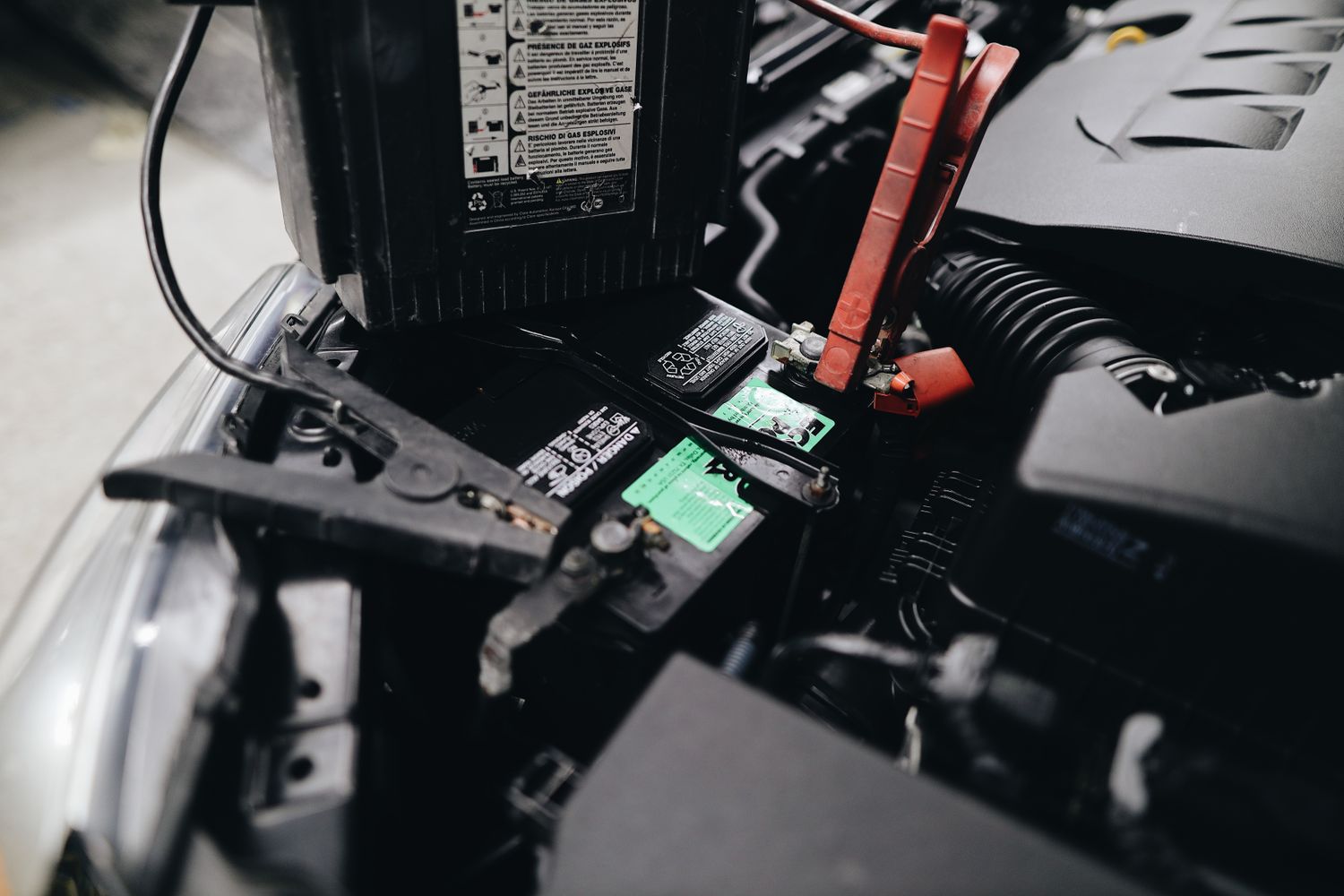
- Reversing polarity. Red on negative, black on positive can instantly fry fuses, the ECU, or the alternator on modern vehicles. Double-check the "+" and "−" stamps on the battery before you clamp anything.
- Clamping the final black cable to the dead battery. That's where hydrogen gas lingers. A single spark there can ignite it. Always ground to bare metal on the frame or engine instead.
- Letting the clamps touch. Once any cable is connected to a battery, the two clamps on the other end are live. If they touch each other or anything metal, you'll get sparks, damage, or worse.
- Cranking for too long. If the engine doesn't fire in 5–6 seconds, stop. Wait a minute, let the battery recover some charge, then try again. Extended cranking cooks the starter motor.
- Driving straight home and shutting the engine off. A 10-minute drive back to the driveway isn't enough. You need 20–30 minutes of sustained driving so the alternator can actually replace what was used to start the car.
When NOT to Jump-Start a Car
A few situations call for a tow, not a boost:
- Hybrid and electric vehicles. Many hybrids have a small 12V auxiliary battery that can be jumped, but some (and most EVs) have specific jump procedures — or forbid it entirely. Check the owner's manual.
- A visibly damaged battery. Cracks, bulges, or acid leaks mean the battery is finished. Replace it.
- A frozen battery. Thaw it in a warm garage first, or replace it. Jumping a frozen battery can cause it to rupture.
- You've already jumped it twice this week. At that point the battery can't hold a charge — you're just delaying the inevitable.
After the Jump: What to Do Next
Once the car's running, don't call it a win and move on. A jump-start is a diagnosis, not a cure. Your next stops:
- Drive for 20–30 minutes. Highway driving is best — steady RPMs give the alternator its best shot at recharging.
- Get the battery and alternator tested. Most auto parts stores do this free. It takes five minutes and tells you whether you need a battery, an alternator, or just a longer commute.
- Clean the terminals. Corrosion on the posts reduces the current reaching the starter. A wire brush and a splash of baking-soda water fixes it.
- Restock your kit. A fresh set of jumper cables or a portable jump starter belongs in every vehicle — alongside a good tire pressure gauge and a basic tool roll. See our year-round car essentials checklist for the full rundown.
The Bottom Line
Jump-starting a car isn't complicated — but it is unforgiving. Get the cable order wrong and you can cook a $1,200 alternator. Get it right and you're back on the road in five minutes.
Learn the sequence once, keep a quality jump pack or a proper set of cables in the vehicle, and handle the basics — clean terminals, healthy battery, regular longer drives. Most roadside rescues are self-rescues when you're prepared for them.