

There's a special kind of stress that hits about ten minutes into a road trip with a kayak on the roof: the vague, nagging worry that your boat might become an expensive, airborne hazard on the interstate. It doesn't have to be that way. Transporting a kayak or canoe safely is completely learnable, and once you have a system dialed in, loading up becomes a two-minute job instead of a white-knuckle gamble.
Whether you're hauling a single rec kayak to the local lake or strapping a pair of touring boats down for a weekend trip, the fundamentals are the same: the right carry method, solid attachment points, and straps you actually trust. Here's how to get your boat to the water and back without drama.
Choose Your Transport Method: Roof, Hitch, or Trailer
Before you touch a single strap, figure out how the boat is riding. There are three main ways to move a kayak or canoe, and the right one depends on your vehicle, your boat, and how far you're going.
- Roof rack: The most common method. Works for nearly any vehicle with crossbars. Best for one or two boats and easy to live with day to day.
- Hitch-mounted carrier: A bed extender or hitch rack lets longer boats overhang the rear of a truck or SUV. Great for solo loading since you're not lifting overhead.
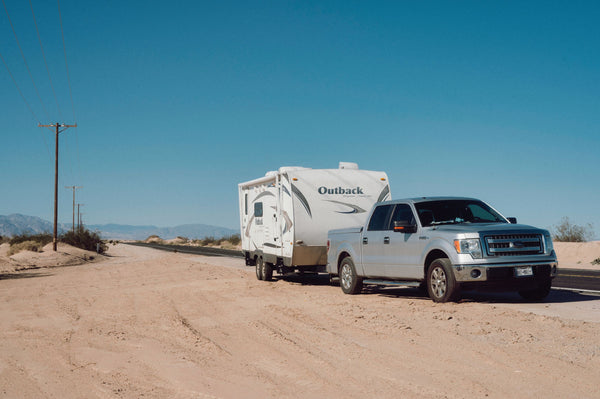
- Trailer: The gold standard for multiple boats, heavy fishing kayaks, or anyone who hates hoisting a boat onto a roof. More upfront cost, but the easiest on your back.
If you're only moving one lightweight boat occasionally, a roof setup is plenty. If you're a serious angler with a 90-pound pedal kayak, do yourself a favor and look at a trailer or hitch carrier from day one.
Roof Rack Basics: Crossbars and Carriers
A bare factory roof won't cut it — you need crossbars to give your straps something structural to grab. From there, you have a few carrier styles:
- Foam blocks or pads: The budget entry point. The boat rides hull-down on padded blocks. Fine for short trips at moderate speeds.
- J-cradles: Hold the kayak on its side at an angle, freeing up roof space for a second boat.
- Saddles/rollers: Cradle the hull upright and make loading smoother, especially for longer sea kayaks.
- Canoe gunwale brackets: Canoes ride upside-down, resting on their gunwales directly on the crossbars.
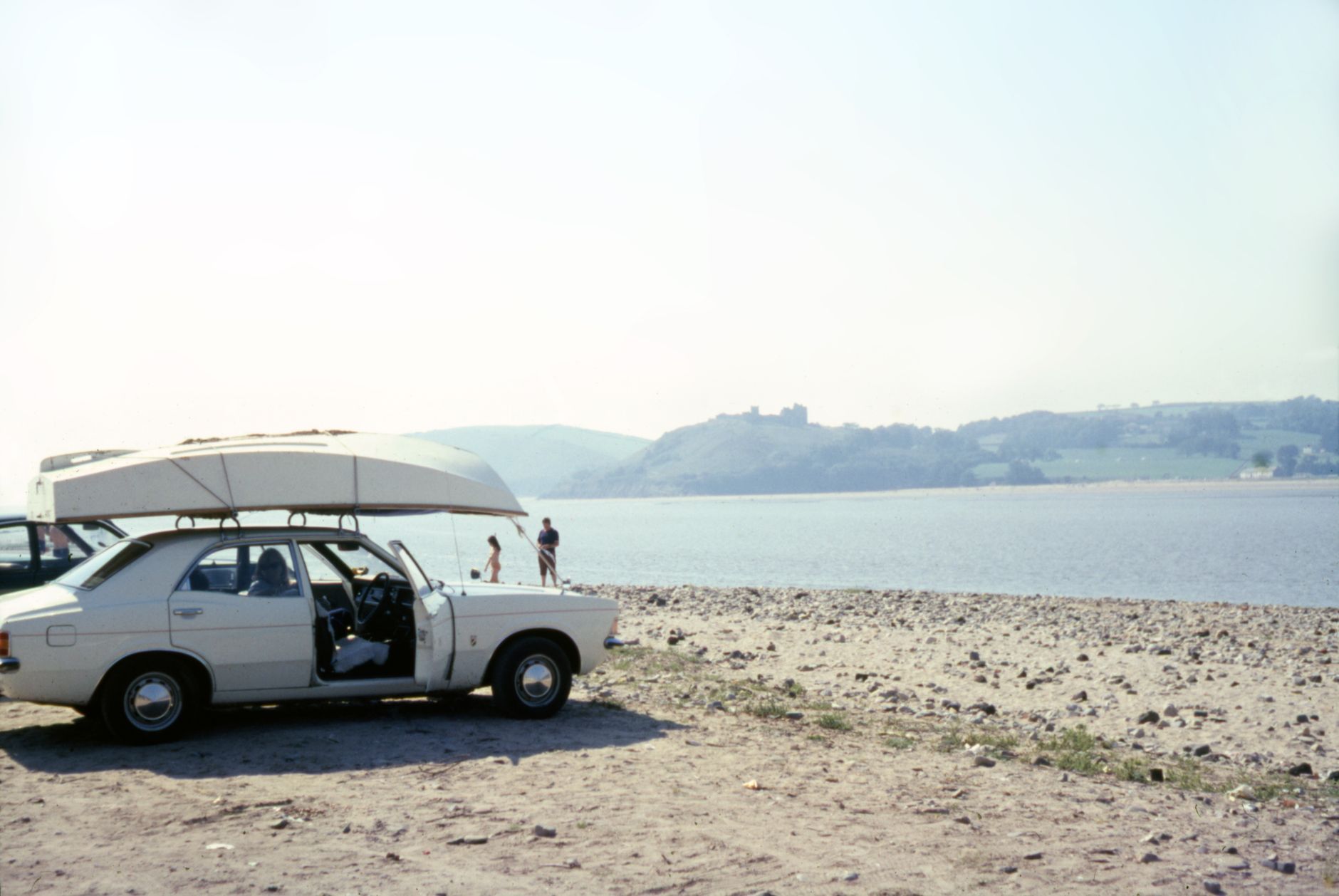
Whichever carrier you use, the golden rule is the same: the boat should not shift when you grab it and shove it hard side to side or front to back. If it moves, it's not tight enough — and that's almost always a strap problem, not a rack problem.
Strapping It Down: Do This Part Right
This is where most kayaks-gone-wrong stories start. Bungee cords and cheap cam straps flex and loosen at highway speed. What you want are quality ratchet straps or cam-buckle straps rated well beyond the weight of your boat, run over the hull at two points — one near the front of the cockpit, one near the back.
The basic sequence:
- Center the boat on your crossbars, hull down (kayak) or hull up (canoe).
- Run one strap over the boat and around each crossbar, near the front.
- Repeat with a second strap near the rear.
- Tighten until the hull just begins to compress slightly — snug, not crushing.
- Twist any long strap runs a half-turn to kill the annoying highway hum, and tie off or tuck the loose tails so nothing flaps.
For anything over an hour on the highway, add bow and stern lines running from the ends of the boat down to your tow hooks or bumper. These prevent the boat from lifting or pivoting in a gust or a sudden stop, and they're the single most-skipped safety step. If you've ever felt a boat try to "fly" at 70 mph, you'll never skip them again.
When it comes to the straps themselves, this is not the place to cut corners. A blown strap at speed is a genuine hazard to you and everyone behind you. Heavy-duty ratchet straps with soft loop ends protect your boat's finish and give you the mechanical advantage to lock things down tight and keep them there.

Not sure whether ratchet or cam-buckle straps are right for your setup? Our breakdown of ratchet straps vs. cam buckle straps walks through when to reach for each.
Hitch and Truck-Bed Transport

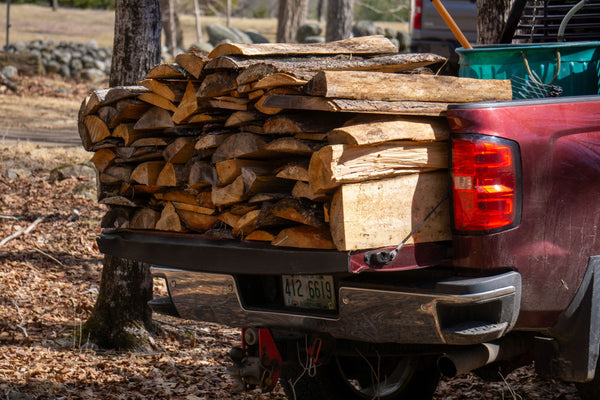
If lifting a boat overhead isn't your idea of a good time, hitch and bed transport are your friends. A hitch-mounted bed extender lets a long kayak sit in the truck bed with the tailgate down and the nose supported out back — perfect for solo loading.
The rules don't change much:
- Support the hull so it isn't bearing all its weight on the tailgate edge.
- Strap it down front and back so it can't slide out or bounce.
- Flag the overhang. Most states require a red or orange flag on any load extending more than a few feet past the rear bumper. Check your local law — it varies.
Never rely on the tailgate alone or a single loose strap. A boat sliding out at a stoplight is embarrassing at best and dangerous at worst.
Trailer Transport: The Easy Button
For multiple boats or heavy fishing rigs, a trailer is hard to beat. You load at waist height, skip the overhead press entirely, and can leave your carriers set up permanently. If you go this route, treat the trailer like any other tow load: check your tire pressure before every trip, confirm your lights and safety chains work, and secure each boat individually rather than trusting one strap across the whole stack.
The tie-down principles carry straight over — quality straps at multiple contact points, snug but not crushing, with tails secured. A trailer just saves your back and your roof.
Pre-Drive Safety Check
Before you pull out of the driveway, run this 30-second check every single time:
- Push test: Shove the boat side to side and front to back. Zero movement.
- Strap check: Every strap tight, buckles seated, tails tucked.
- Bow/stern lines: Attached for any highway driving.
- Clearance: Know your new total height before you approach a garage, drive-thru, or low bridge.
- Re-check at the first stop: Straps settle and boats shift slightly in the first few miles. Pull over, re-snug, and you're set for the rest of the drive.
Get to the Water With Confidence

A kayak or canoe should be the fun part of your day — not a source of highway anxiety. Pick the transport method that fits your vehicle and your boat, set up the right carrier, and lock it down with straps you can trust. Do that, and the only thing you'll be thinking about on the drive home is where you're paddling next weekend.
Load smart, strap tight, and enjoy the ride.