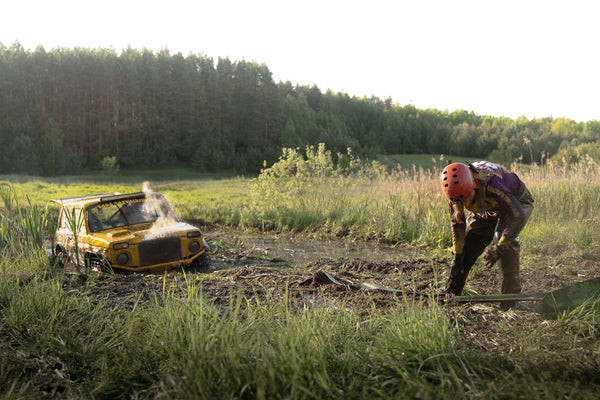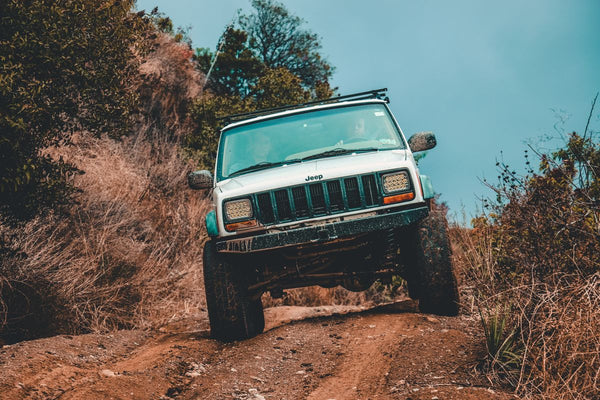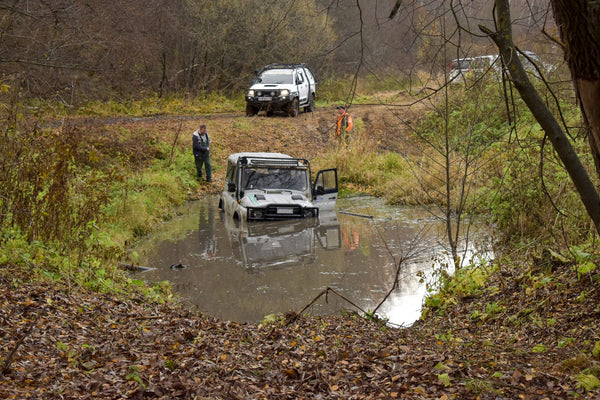


You are third in a line of four rigs, crawling up a shelf road with a blind switchback ahead. The lead driver spots an oncoming truck and needs everyone to stop now. Hand signals won't reach you. Cell service died an hour ago. This is the moment a trail radio earns its keep — and it's exactly why the CB-vs-GMRS-vs-ham debate matters more than any spec sheet suggests.
Trail communication is one of the most argued-about topics in off-roading, and for good reason: the "right" radio depends on who you wheel with, how far you roam, and how much you're willing to learn. Here's a straight, practical breakdown of the three main options so you can buy once and stop second-guessing.
Why Trail Radios Still Matter in the Cell-Phone Era
Phones are great until they aren't. Most serious trails run through canyons, national forests, and high-desert basins where there's zero bars. Even with signal, texting a spotter mid-obstacle is a great way to bend a fender.
A dedicated two-way radio gives you instant, push-to-talk contact with your group and, in an emergency, with other trail users or monitoring stations. It's the difference between "we regrouped in 30 seconds" and "we lost the tail truck for an hour." Whatever you choose, having something beats having nothing.
CB Radio: The Old Standby
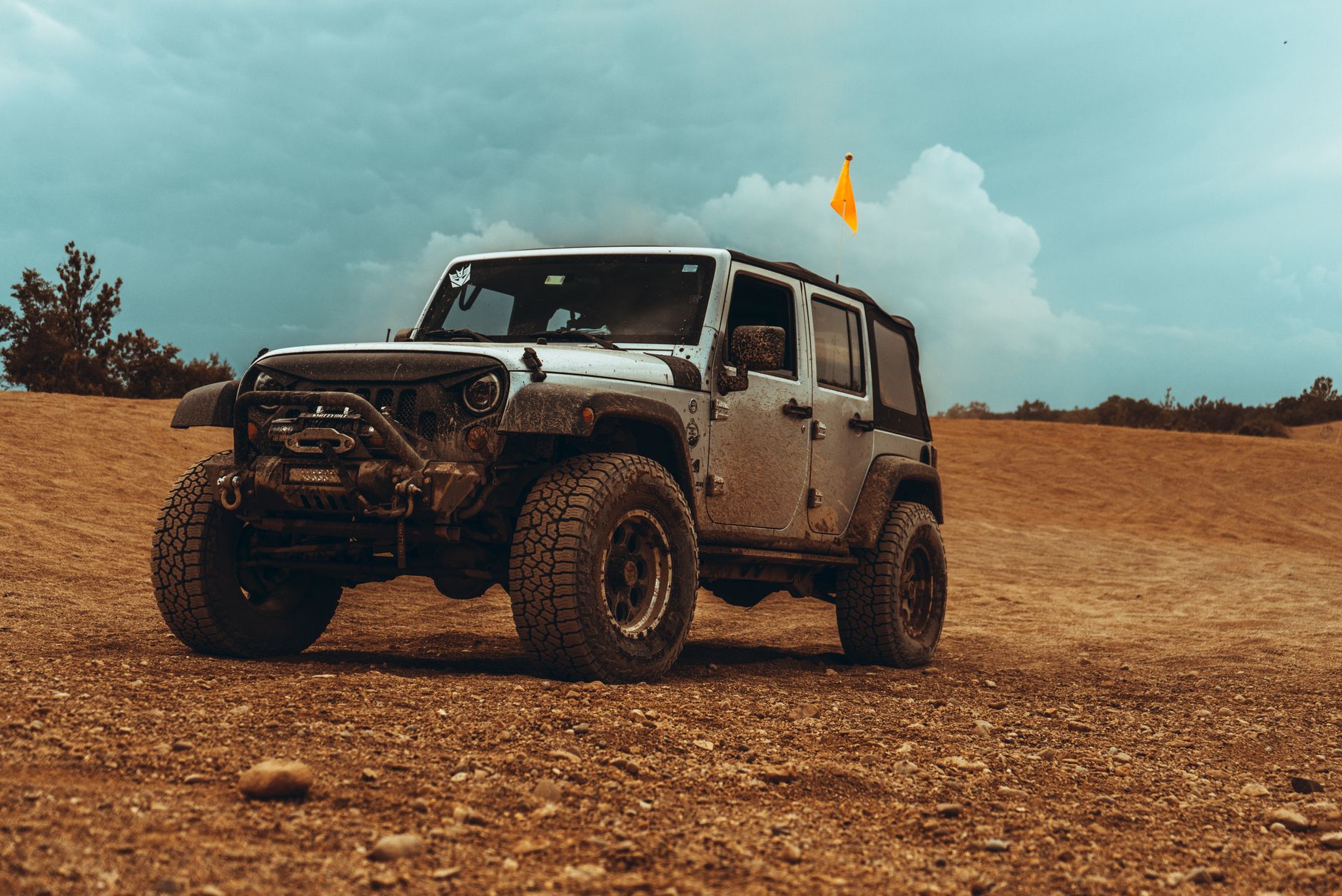
Citizens Band radio has been the trail standard for decades. It operates on 40 channels in the 27 MHz band, requires no license, and there's a good chance the older crowd you wheel with still runs it.
- Pros: No license needed, cheap entry, universally understood, still common at organized runs.
- Cons: Bulky antennas (a proper CB whip is long), limited real-world range (often under 5 miles in terrain), and it's noisy — AM CB picks up engine whine and skip from distant stations.
CB's biggest weakness is the physics: 27 MHz needs a big antenna to work well, and most trail setups compromise on antenna length, which kills range. If your entire group already runs CB, match them. If you're starting fresh, there's a better option.
GMRS: The Sweet Spot for Most Wheelers

The General Mobile Radio Service (GMRS) has quietly become the default for the modern overlanding crowd — and it's easy to see why. It runs in the UHF band (462/467 MHz), which handles vehicle-to-vehicle line-of-sight communication far better than CB, with a fraction of the antenna size.
GMRS does require a license, but it's about as painless as licensing gets:
- No test — you just pay the FCC fee and register.
- One license covers your entire immediate family.
- It's valid for 10 years.
In exchange you get up to 50 watts on mobile units, access to repeaters (which can extend range to 30+ miles in some areas), and clean UHF audio that cuts through terrain and foliage. Handhelds are compact, and a magnetic-mount antenna takes seconds to install. For a typical group of friends who want reliable rig-to-rig comms without homework, GMRS is the answer.
Whatever radio lives in your cab, it should sit alongside the rest of your trail-day essentials — and airing tools top that list. A rapid deflator lets everyone drop pressure at the trailhead in minutes so you spend less time fiddling and more time rolling.

Ham Radio: Maximum Power and Range
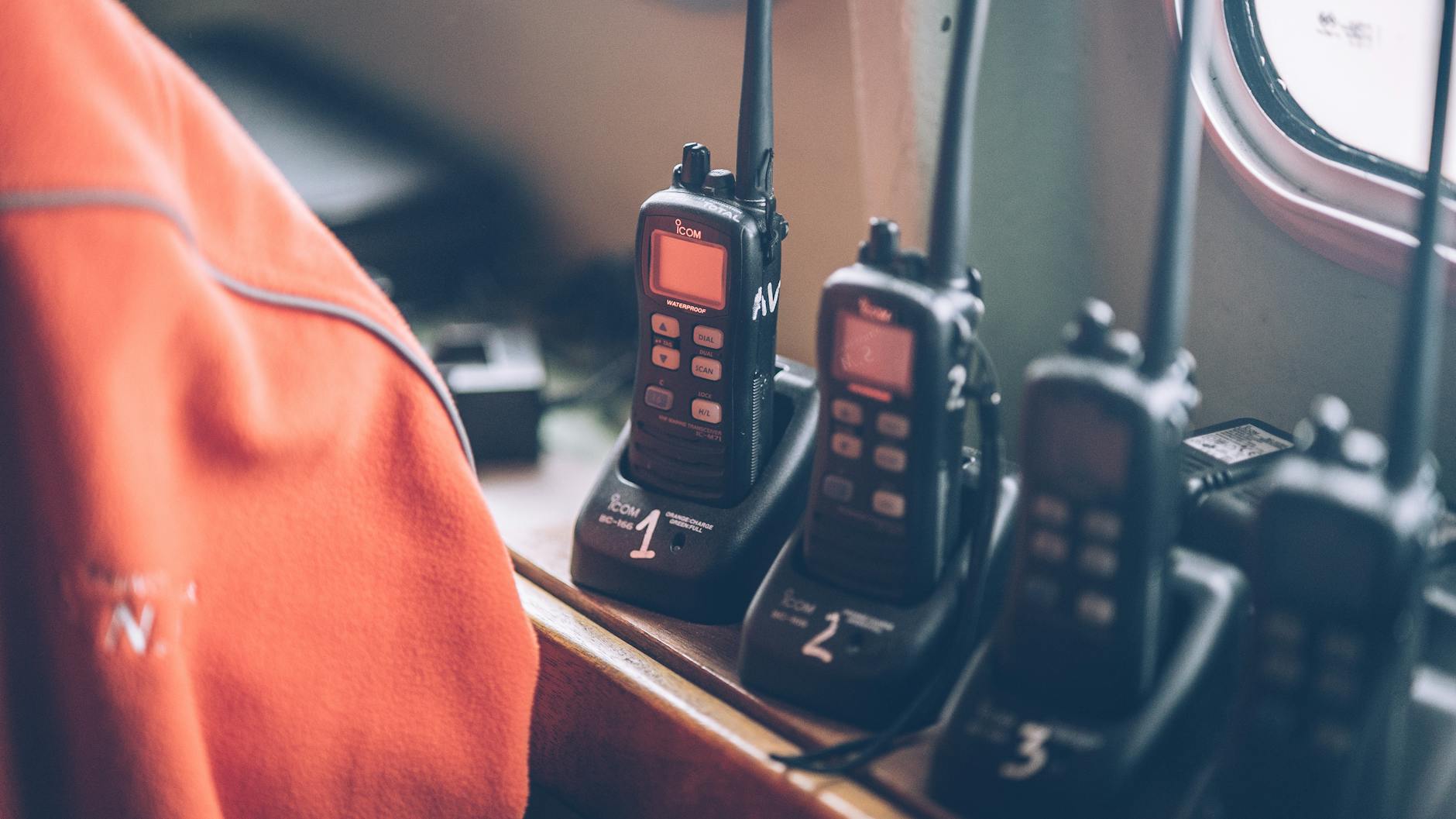
Amateur (ham) radio is the most capable option, full stop. It spans multiple bands, supports the widest range of frequencies and power levels, and taps into a massive nationwide network of repeaters. In a genuine backcountry emergency, ham operators can reach help when nothing else will.
- Pros: Best range and flexibility, huge repeater network, strong emergency-communication capability, dedicated hobbyist community.
- Cons: Requires passing an FCC exam (the entry-level Technician test), a steeper learning curve, and it's illegal to transmit on ham frequencies without a license.
The Technician license exam is very doable — a weekend of study and a 35-question test — but it is a real barrier for casual users. Ham makes the most sense for solo overlanders, remote-area travelers, and anyone who genuinely enjoys the radio hobby. A popular middle path: get your GMRS license now and work toward a ham Technician ticket later.
Head-to-Head: Which Radio Wins?
Here's the quick decision framework:
- Choose CB if your existing group runs CB, or you want the absolute cheapest, no-paperwork entry.
- Choose GMRS if you want the best all-around balance — easy license, small antenna, solid range, family coverage. This is the right call for most people.
- Choose ham if you travel remote and solo, prioritize maximum range and emergency capability, or want to grow into the hobby.
One practical note: GMRS and FRS share some frequencies, so a GMRS radio can often talk to those cheap blister-pack walkie-talkies your buddies already own — a nice bonus for mixed groups.
Don't Forget the Rest of Your Trail Kit
A radio keeps your group connected, but comms are just one layer of trail readiness. The same convoy that coordinates over GMRS still needs to air down before the rocks and air back up before hitting pavement. Skipping the air-up step at the trailhead exit is how you cook a tire on the highway home.
A cordless inflator means nobody has to hunt for a plug or run a compressor off the battery — just clip on and top off all four corners before you leave the dirt.

The Bottom Line
If you take one thing away: GMRS is the best starting point for most off-roaders. It clears the low bar of a no-test license, uses a compact antenna, delivers real range through repeaters, and covers your whole family on one registration. CB still has a place if that's what your crew runs, and ham is the ceiling for range and emergency capability if you're willing to study for the exam.
Whatever you mount in the cab, pair it with a dialed-in air-down and air-up routine and a solid off-road gear setup. Reliable comms plus reliable tire tools is what keeps a group moving together — and gets everyone home. For more trail prep, check out our guide on building your first off-road emergency kit.