


Every truck owner eventually faces the same decision: keep it or sell it. And when that day comes, the difference between a smart sale and leaving money on the table can be thousands of dollars. Pickup trucks are one of the best vehicle categories for holding value — but only if you understand what buyers actually pay for. This guide breaks down the pickup truck resale value landscape: which modifications hurt, which help, the documentation that adds real dollars, and the exact timing that maximizes what you walk away with.
Why Trucks Hold Value Better Than Cars
Trucks depreciate more slowly than almost anything else on four wheels. The average full-size pickup loses roughly 40% of its value over three years, compared to about 50% for a typical sedan. Certain platforms do even better — a Toyota Tacoma, a Ford F-250 diesel, or a Jeep Wrangler can shrug off depreciation in ways that make owners look like geniuses at resale time.
The reason is simple: demand. Work fleets, weekend adventurers, tradespeople, and families all compete for the same used trucks, and supply never fully catches up. That built-in demand is your advantage — but only if you don't sabotage it with the wrong choices.
Modifications That Hurt Resale Value
Here's the hard truth: most modifications you love will shrink your buyer pool, not grow it. The used market is dominated by people who want a clean, capable, mostly-stock truck they can trust. Every personal touch you add narrows that audience.
- Big lift kits (over 4 inches): A tall lift screams "abused off-road" to cautious buyers and can raise insurance and alignment concerns. It thrills a small niche and scares off everyone else.
- Aggressive wheel and tire combos: Buyers pay for exclusivity when they build it themselves — but most used shoppers want stock or near-stock rubber they don't have to immediately replace.
- Loud exhaust mods: A booming aftermarket exhaust is polarizing. What sounds great to you is a dealbreaker to the next owner.
- Color wraps and custom paint: Anything that hides or alters factory paint raises "what are they covering up?" suspicion.
- Custom engine tunes: Aggressive tunes can void powertrain warranties and worry buyers about long-term reliability.

Modifications That Help (or Stay Neutral)
Not every upgrade drags your value down. A handful of practical, broadly useful additions can actually raise your asking price — or at least pay for themselves.
- Spray-in bed liner: A net positive almost every time. It protects the bed and signals a truck that was cared for.
- Running boards / step bars: Practical, widely wanted, and easy for buyers to appreciate.
- Tow package: Adds real value, especially on 3/4-ton and 1-ton trucks where towing is the whole point.
- Factory or factory-grade accessories: OEM-style add-ons with the original hardware retained keep the truck looking intentional rather than pieced-together.
The pattern is clear: modifications that broaden usefulness help. Modifications that narrow the truck to your personal taste hurt. When in doubt, keep the takeoff parts — being able to return a truck to stock is worth money.
The Documentation Premium
This is the most overlooked lever in the entire resale game, and it costs almost nothing. Paperwork sells trucks.
- Full service records: A complete maintenance history can add $500–$1,500 in private-party value. It transforms your truck from a gamble into a known quantity.
- The original window sticker: Surprisingly, buyers pay a premium for it. It verifies the exact trim, options, and original MSRP.
- Retained original equipment: Keeping the takeoff wheels or factory parts can add $300–$500 and reassures buyers you didn't cut corners.
Start a folder the day you buy the truck. Every oil change, tire rotation, and repair receipt is a future dollar in your pocket.

Mileage Thresholds That Create Pricing Cliffs
Used-truck pricing isn't linear — it drops in steps. Certain odometer numbers trigger buyer hesitation and take a bite out of your value the moment you cross them:
- 50,000 miles: The end of many bumper-to-bumper warranties. Prices soften.
- 100,000 miles: A major psychological wall. Many buyers filter their searches to stay under it.
- 150,000 miles: Powertrain-longevity concerns start driving the conversation.
If you're already close to one of these numbers and thinking about selling, timing the sale just under the threshold has real, measurable financial impact. A truck at 98,000 miles is a noticeably easier sell than the same truck at 103,000.
Presentation: The Cheapest Value You'll Ever Add
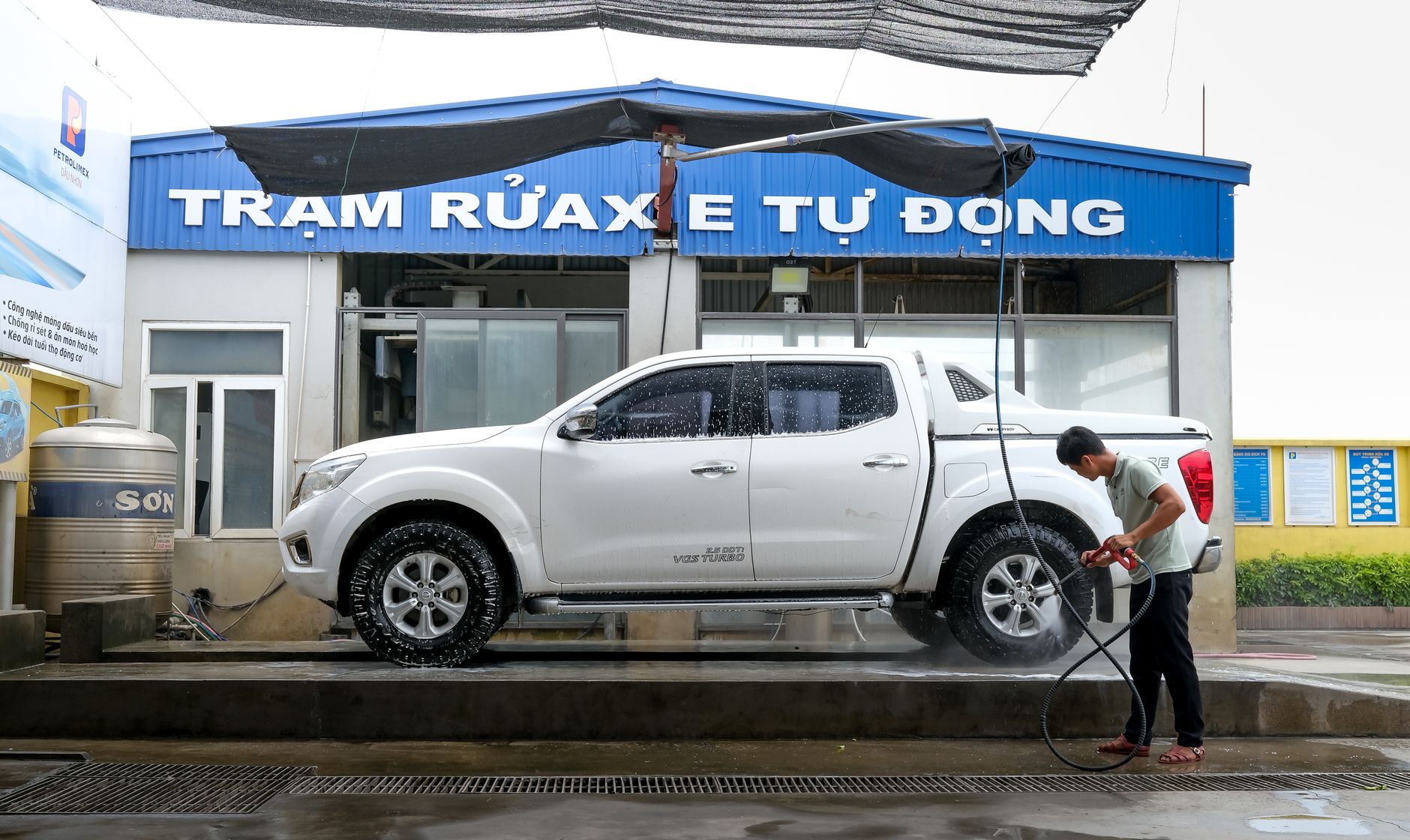
Before a single photo, a used truck should look — and measure — like it was loved. A thorough detail, clean bed, and squared-away engine bay do more for first impressions than almost anything else. Small details signal care: matching tire pressures, clean glass, and a cabin that doesn't smell like a job site.
Setting every tire to the correct, even pressure is a five-minute job that makes a truck feel dialed-in during the test drive — and it's exactly the kind of detail sharp buyers notice. A precise digital gauge takes the guesswork out of it.

Where to Sell: Private Party vs. Instant Offer vs. Trade-In
How you sell matters almost as much as what you're selling. Each path trades money for convenience:
- Private party: Typically nets 10–20% more than any other route, but it takes 2–6 weeks of listings, messages, and test drives. Best if you have the time and patience.
- Instant cash offer (CarMax, dealers online): Fast and painless, but you pay for that speed with a lower number. Great when you need it gone this week.
- Dealer trade-in: The most convenient, and in many states it reduces the sales tax on your next vehicle. That tax savings can partially close the gap versus a private sale — do the math before assuming trade-in is the worst option.
The Optimal Ownership Window
For most trucks, the sweet spot to sell is around 3–5 years and 60,000 miles. By then you're past the steepest part of the depreciation curve — you've already absorbed the biggest early losses — but you're still ahead of the mileage and age where powertrain-reliability worries start dragging prices down. Sell in that window and you capture the best balance of "already depreciated" and "still desirable."
Owners who hold too long often watch their truck slide across the 100K and 150K cliffs, giving back value they could have kept. Owners who sell too early eat the worst of the depreciation. The middle is where the money lives.
The Bottom Line
Pickup trucks reward owners who play the long game. Keep your modifications practical and reversible, hoard every service record, watch the mileage thresholds, and time your sale into that 3–5 year window. Detail it, air the tires to spec, and present it like the well-maintained machine it is. Do those things and your truck won't just hold its value — it'll outperform nearly everything else on the road when it's finally time to hand over the keys.
Keeping your truck dialed-in for years starts with the basics. Explore JACO's full lineup of tire gauges, inflators, and garage tools to keep every vehicle you own in resale-ready shape.