
Ask any group of off-roaders what recovery gear to buy first and you'll start an argument. One camp swears by a winch bolted to a steel bumper. The other reaches for a set of recovery boards before anything else. The truth is that a winch and recovery boards solve two completely different problems, and the drivers who never get stranded understand exactly when to reach for each. This guide breaks down what each tool actually does, where it wins, and why the most prepared rigs carry both.
What Recovery Boards Actually Do
Recovery boards—MaxTrax, ARB Tred, and similar ridged traction devices—solve one specific problem: no grip. When your tires are spinning uselessly in sand, mud, loose gravel, or light snow, boards give the tire something firm and toothed to bite into. You dig out in front of the spinning wheel, wedge the board under the tire, and drive up and out.
What they do not do is generate pulling force. If your rig is buried to the axle and the frame is resting on the ground, a board alone won't drag you out. Boards restore traction; they don't create leverage. That distinction is the whole debate in one sentence.
Their greatest practical advantage is that they need no anchor. No tree, no second vehicle, no ground stake—just the board and the driver. For a solo off-roader miles from another rig, that self-sufficiency is hard to overstate.

What a Winch Actually Does
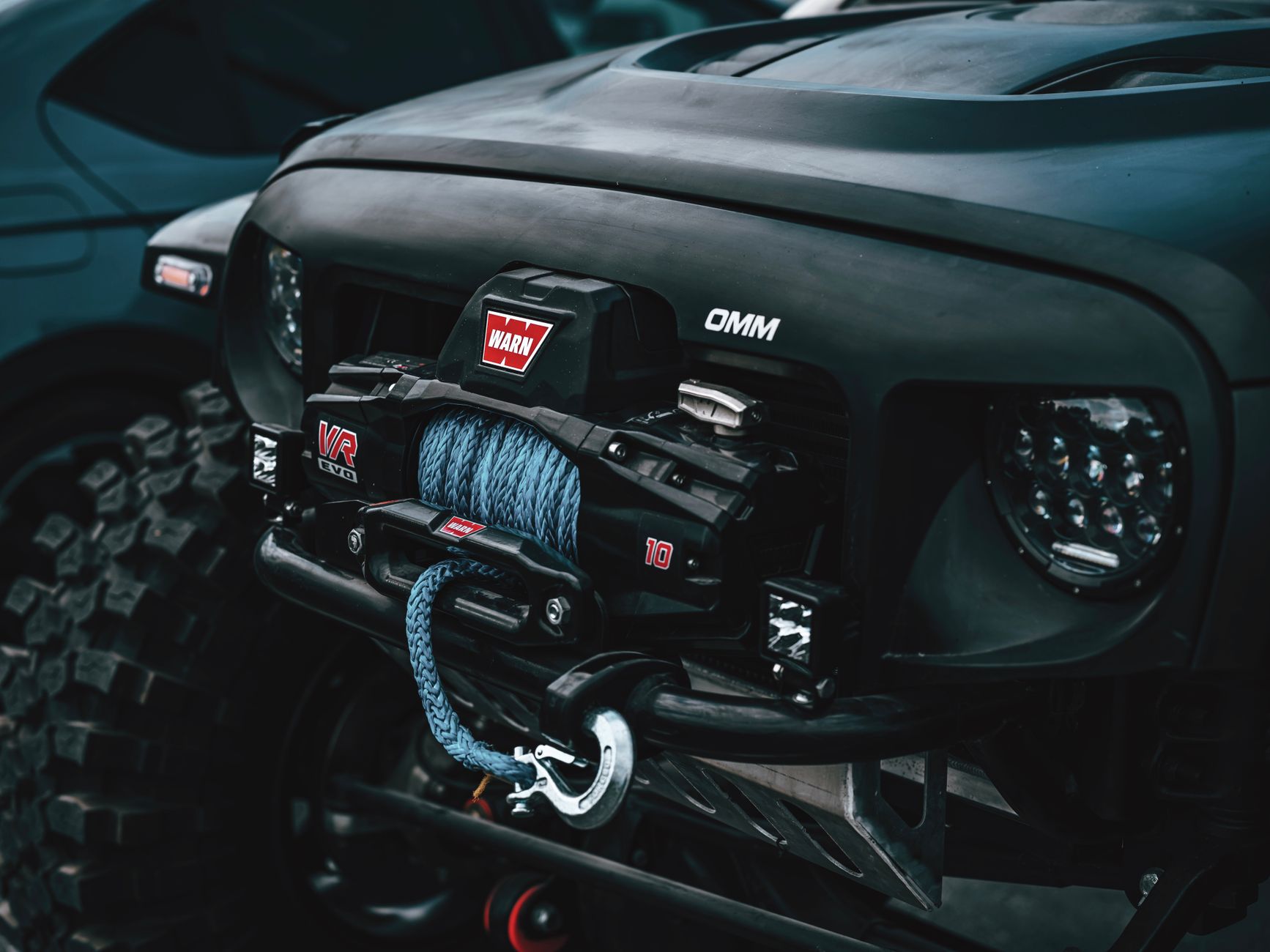
A winch is a pulling machine. Depending on the rating, it generates anywhere from 9,500 to 17,500 pounds of line pull—enough to drag a heavily buried vehicle out of a hole, off a ledge, or back onto a trail even when every tire is spinning uselessly. Where boards give you traction, a winch gives you brute extraction force.
But a winch has one hard requirement: an anchor. The line has to attach to something solid—a tree with a tree-saver strap, a buried deadman, or another vehicle—and that anchor must be within cable distance. Winch a rig in the middle of an open sand flat with no tree for 200 yards and you're out of luck. A winch also does nothing to improve traction; it simply pulls, whether or not your tires are helping.
Where Each Tool Wins by Scenario
The right tool depends entirely on how you're stuck.
- Boards win: Soft sand, mud, loose gravel, or light snow where the vehicle is mostly mobile and just needs grip. One or two wheels are spinning, the frame isn't buried, and there's no solid anchor nearby.
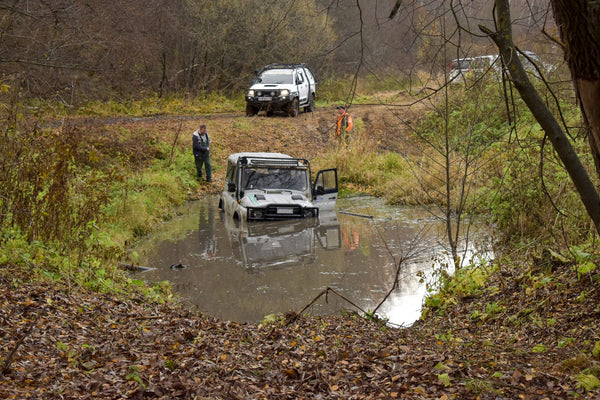
- Winch wins: Axle-deep mud, a nose off a ledge, or a rig stuck sideways on an off-camber slope with zero available traction—as long as there's a viable anchor point within reach.
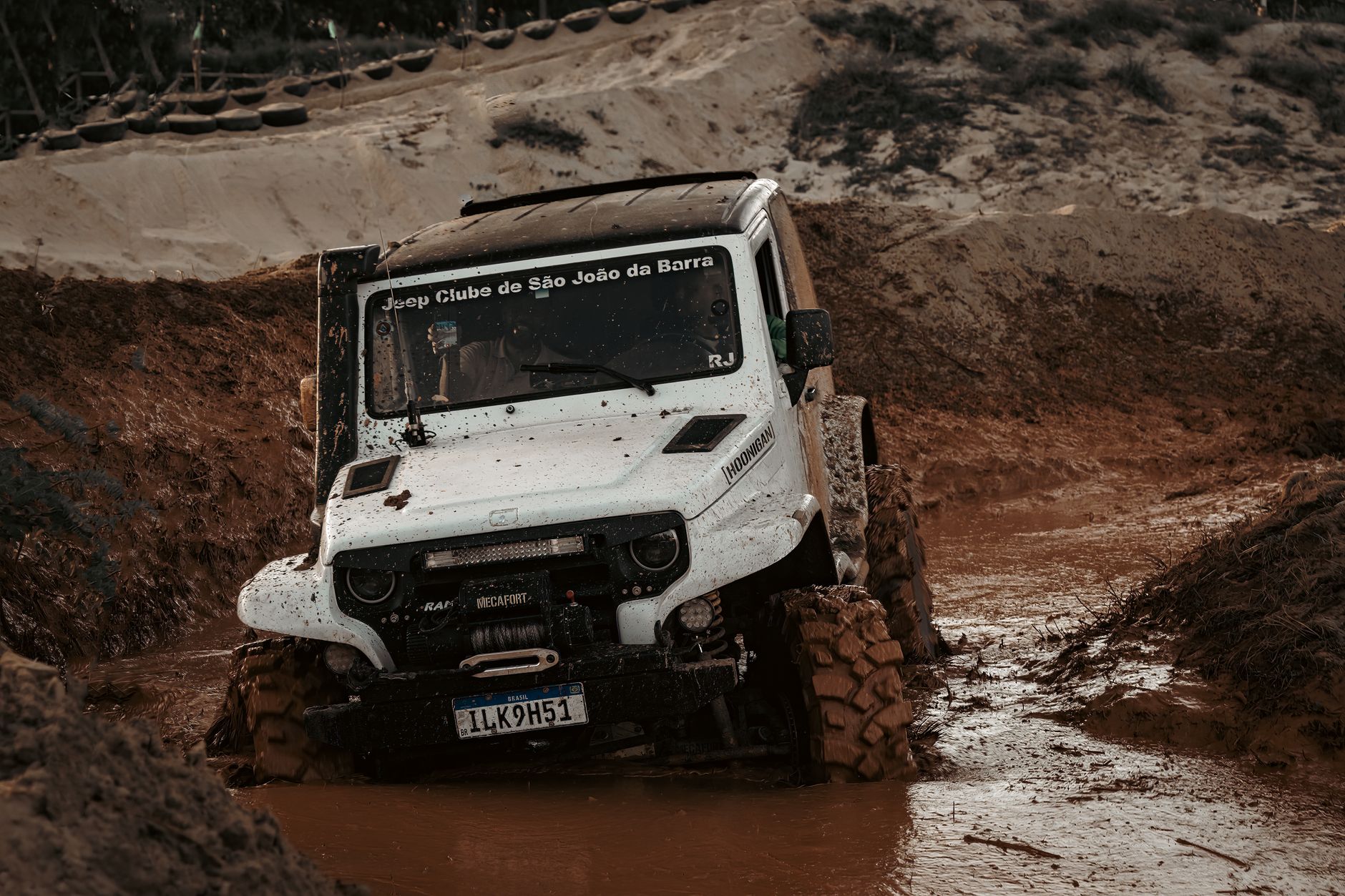
- Both needed: Deep mud or soft sand where you're buried and have no traction. Boards get the tires back up onto a firm surface while the winch supplies the extraction force. This combination handles the scenarios that defeat either tool alone.
The Anchor Problem
The single biggest limitation of a winch is the anchor. In dense forest, anchors are everywhere. On an open desert playa, a salt flat, or a wide beach, there may be nothing solid for hundreds of yards. That's exactly the terrain—deep, gripless sand—where recovery boards shine, because they need nothing but the ground under your tires.
This is also where a proper recovery strap earns its place in the kit. When another vehicle is available, a kinetic recovery strap lets a mobile rig snatch a stuck one out using stored elastic energy—no winch required. It's the third leg of a complete recovery system.

The Solo Off-Roader Math
If you wheel alone, the calculus changes. Recovery boards work perfectly solo—no spotter, no second vehicle. A self-recovery winch also works solo, pulling against a tree or deadman. What doesn't work well alone is a kinetic strap without a winch: you need another vehicle to do the pulling. For the solo driver, boards are the no-brainer starting point, and a winch is the logical upgrade for harder terrain.

Cost and Weight
Recovery boards are the cheaper, lighter entry point. A quality pair runs roughly $150–$300, weighs 12–18 pounds for the set, and mounts almost anywhere on the exterior—roof rack, bed rails, or a rear swing-out. There's no installation and nothing to wire.
A winch is a bigger commitment. Expect $300–$700 for the winch itself, plus $200–$1,000 for a compatible steel bumper or synthetic-rope upgrade—often $600–$1,000+ installed. It also demands a dedicated mount and adds meaningful weight to the front axle. That's not a knock; it's just a different tier of investment.
Maintenance
Boards are low-fuss: rinse the mud off after use and inspect for cracks or stripped teeth. A winch needs more attention—spool the rope back under light tension after each pull, keep the fairlead clean and lubricated, test the electrical connections monthly, and plan to replace synthetic rope every three to five years depending on use and UV exposure.
The Verdict: Start With Boards, Grow Into a Winch
For nearly every off-roader, recovery boards are the first recovery purchase. They're compact, affordable, require no installation, and—critically—need no anchor, which makes them ideal for solo drivers and open terrain. A winch is the next investment when you push into serious terrain, tackle deep mud regularly, or want maximum self-recovery capability where an anchor is available.
The two aren't rivals; they're a system. Boards restore traction, a winch supplies pulling force, and a kinetic recovery tow strap covers vehicle-to-vehicle snatches. Serious off-roaders carry all three because the trail rarely lets you choose how you get stuck. Build your recovery kit in that order, learn to use each piece before you need it, and you'll spend a lot less time waiting on a tow truck that can't reach you anyway. For more trail-tested gear, browse the full JACO lineup.