
Most trailer blowouts don't start on the highway. They start in the driveway, when someone eyeballs the tires, decides they look fine, and pulls out at 20 PSI under spec. Trailer tire pressure is the single cheapest thing you can get right before a tow, and the rules for trailer tires are different from the rules for the truck pulling them.
Here's why ST (Special Trailer) tires usually belong at the maximum PSI on the sidewall, how to check and set them correctly, and what changes when your load does.
ST Tires vs. Passenger and LT Tires: Why Trailer Tire Pressure Is Different
Your truck's tires have to steer, brake, absorb bumps, and keep you comfortable. Their recommended pressure is a compromise between ride quality, handling, and load, which is why the door-jamb placard on your truck is often well below the sidewall maximum.
ST tires have one job: carry weight in a straight line without overheating. They're built with stiffer sidewalls and heavier construction to resist trailer sway and handle the scrubbing forces that happen when tandem axles turn. Nobody rides on a trailer, so comfort doesn't factor in.
- Load is rated at max pressure. The load capacity printed on an ST tire's sidewall is only valid at the cold inflation pressure listed next to it.
- Every PSI below that cuts capacity. Run a tire 15 PSI low and it may no longer be rated for the weight sitting on it.
- Trailer tires work harder than they look. Tandem axles drag tires sideways in tight turns, which adds stress that passenger tires never see.
Why ST Tires Usually Belong at Max Sidewall PSI
Most ST tire manufacturers recommend inflating to the maximum cold pressure on the sidewall, and most trailer builders set their tire placard to match. That's not a coincidence. Trailers tend to be loaded heavier than owners think, and the extra pressure gives you the full rated load capacity plus a margin for heat.
The common load ranges are a good reference point. Always confirm on your own tire, since sizes vary:
- Load Range C: typically 50 PSI
- Load Range D: typically 65 PSI
- Load Range E: typically 80 PSI
Before you change anything, find the tire and loading label on your trailer, usually on the front driver-side of the tongue or near the VIN plate. If it lists a cold pressure, that number plus the sidewall maximum should be your guide. If the two disagree, follow the placard for your trailer and never exceed the sidewall max.
What Underinflation Does to a Trailer Tire
Low pressure is the number one killer of trailer tires. An underinflated tire flexes more at the sidewall with every revolution. That flexing creates heat, and heat is what breaks down the rubber and the bonds between the tire's internal belts.
The damage builds quietly. A tire can run low for hundreds of miles, weakening inside, and then fail on a hot afternoon with no warning. That's when you get tread separation, a shredded fender, and a damaged wiring harness, or worse, a sway event at highway speed. Our guide on RV tire blowout prevention covers the warning signs in more detail.
Watch for these clues that a trailer tire has been running low:
- Wear on both outer edges of the tread
- Cracking or bulges on the sidewall
- One tire noticeably hotter than the others at a rest stop
- A tire that needs air more often than its axle partner
How to Check Trailer Tire Pressure the Right Way
Checking trailer tires takes five minutes, but the timing and the tool matter.
1. Check Cold
"Cold" means the trailer has sat for at least three hours or been driven less than a mile. Tire pressure rises as tires heat up, so a reading taken after an hour on the interstate will be several PSI higher than the true cold number.
2. Never Bleed Air From Hot Tires
If you check at a fuel stop and see pressure above the sidewall max, leave it alone. That rise is normal and was accounted for when the tire was designed. Letting air out of a hot tire leaves it underinflated once it cools.
3. Use a Gauge That Reads High Pressures Accurately
A Load Range E tire at 80 PSI is beyond the useful range of many cheap pencil gauges and 60 PSI dial gauges. Use a gauge rated well above your target, such as the JACO ElitePro Digital Tire Pressure Gauge (200 PSI), so you're reading in the accurate middle of its range instead of pinning the top.

4. Check Every Tire, Including the Spare
Tandem and triple axle trailers hide tires behind each other, and inner valve stems can be hard to reach. Don't skip them. And check the spare, because a flat spare is no help on a dark shoulder.

Setting Trailer Tire Pressure for Your Load
Running at sidewall max is the safe default, but it only works if the tires are actually rated for what you're hauling. Here's how to make sure they are:
- Weigh the loaded trailer. A certified truck scale costs a few dollars and tells you the real number. Most people are surprised by how heavy their camper or equipment trailer is once it's packed.
- Subtract tongue weight. Roughly 10-15% of trailer weight rides on the hitch. The rest is split across the trailer tires. See our guide to tongue weight for how to measure it.
- Divide by the number of tires. Then compare that per-tire load to the sidewall rating at max PSI.
- Leave a cushion. Aim to keep each tire at no more than 85-90% of its rated capacity. Loads are rarely split perfectly evenly side to side.
If the math puts you at or over capacity, more air is not the answer. You need a higher load range tire, provided your wheels are rated for the higher pressure.

Topping Off: Inflating ST Tires to 80 PSI and Beyond
Most portable 12V inflators are built for passenger car pressures and slow down dramatically as they approach 80 PSI. For Load Range E and higher, a shop compressor with an inline inflator gauge is the fastest way to hit your number precisely.
An inflator like the JACO FlowPro 2.0 Digital Tire Inflator lets you add air and read pressure in one tool, so you can creep up to the target instead of overshooting and bleeding back down. Off the grid, a high-duty-cycle unit like the TrailPro portable air compressor can handle trailer tires as well as your truck.
One more detail: valve stems. Standard rubber snap-in stems are designed for lower pressures. If you're running 80 PSI or more, make sure your stems are rated for it. High-pressure or metal bolt-in stems are a small upgrade that prevents a slow leak from turning into a failure.
Trailer Tire Pressure Habits That Prevent Blowouts
- Check before every trip. Trailer tires lose air while parked, often a few PSI per month.
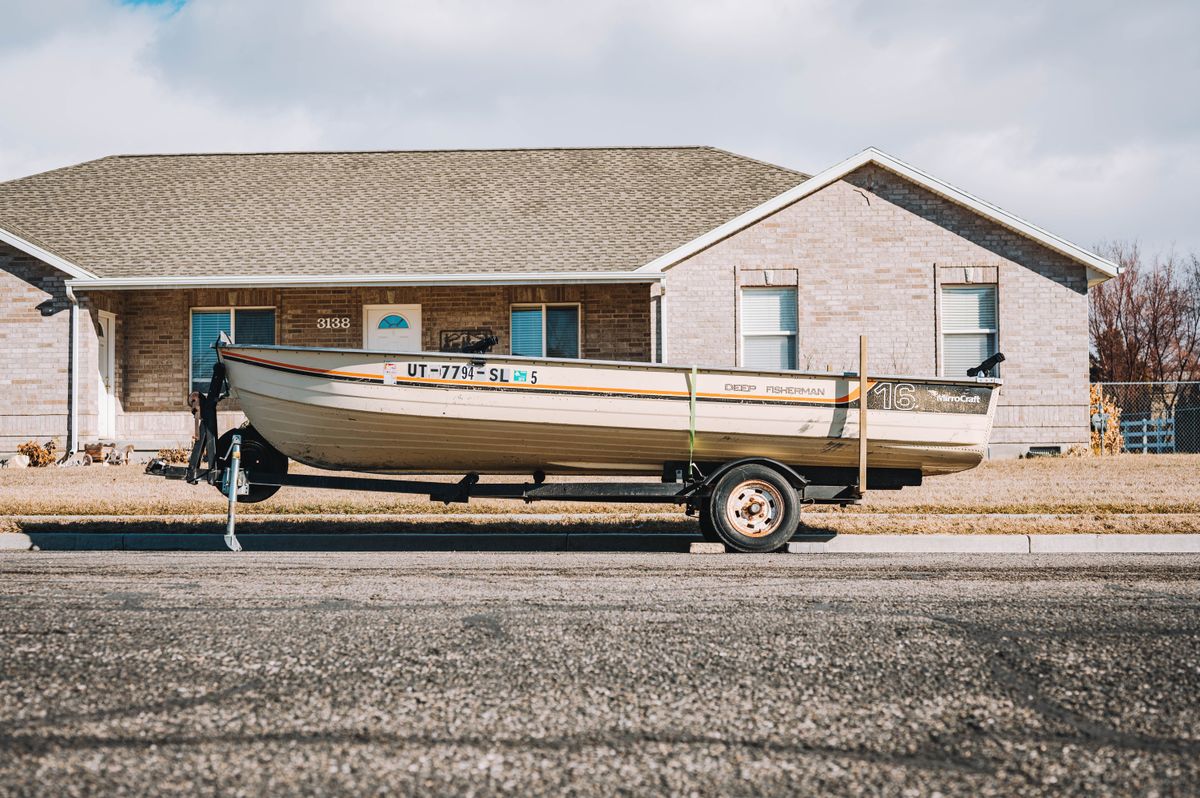
- Re-check after storage. A boat or camper trailer that sat all winter can be 10-20 PSI low by spring.
- Adjust for cold snaps. Pressure drops roughly 1 PSI for every 10°F temperature drop, so a fall morning can leave you short.
- Respect the speed rating. Many ST tires are rated for 65 mph. Check your sidewall and tow at or below it.
- Watch tire age. ST tires often age out before the tread wears out. Replace them based on the date code, not just tread depth.
Pair those habits with a full walk-around from our pre-trip trailer inspection checklist and you'll catch most problems before they leave the driveway.
The Bottom Line on Trailer Tire Pressure
Getting trailer tire pressure right comes down to a few simple rules: ST tires are designed to run at the maximum cold PSI on the sidewall, that pressure is what unlocks their full load rating, and underinflation is what turns a normal tow into a roadside disaster. Check cold, never bleed hot tires, weigh your load, and use a gauge built for high pressures.
Ready to take the guesswork out of your next tow? Explore JACO's tire pressure gauges and inflators, built and calibrated for the pressures your trailer actually runs.