
Walk into any off-road shop or scroll through any 4x4 forum and you'll see three terms thrown around like they're interchangeable: tow strap, recovery strap, and snatch strap. They're not. Mixing them up is one of the fastest ways to break expensive recovery gear, damage a vehicle, or seriously hurt someone.
The differences come down to how each strap is built, how much it stretches, and what kind of recovery it's designed for. Once you understand that, picking the right one becomes obvious — and your recoveries get a lot safer.
Here's the plain-English breakdown of all three, when to use each, and the mistakes that get people in trouble.
The Quick Answer
Before we go deep, here's the cheat sheet:
- Tow strap — Low or no stretch. For pulling a freely rolling vehicle (dead battery, broken axle on flat ground) at slow speeds. Often has metal hooks.
- Recovery strap — Moderate stretch (around 10–20%). The do-it-all option. Built with sewn loop ends (no hooks) so it can pull a stuck vehicle out of mud, sand, or a ditch with a smooth, controlled tug.
- Snatch strap (or kinetic rope) — High stretch (up to 30%). Acts like a giant rubber band. Stores energy as the recovery vehicle drives forward, then snaps the stuck rig free. The most powerful — and most dangerous if used wrong.
Same basic idea, three very different tools. Now let's break each one down properly.
1. Tow Strap: For Towing, Not Recovery
A true tow strap is the simplest of the three. It's a flat piece of woven webbing with very little stretch (usually under 5%) and is rated to tow a vehicle — meaning the vehicle being pulled is rolling on its own wheels with steering and (ideally) working brakes.
You'll often see tow straps with steel hooks on each end, which is fine for hauling a non-running car onto a flatbed or down a driveway, but it's a red flag in a recovery situation. Hooks become projectiles if a strap snaps under load.
Use a tow strap when:
- A vehicle has a dead battery and just needs to roll to a safer spot
- You're moving a non-running vehicle short distances on a flat surface
- Both vehicles can move slowly and steadily — no jerking required
Don't use a tow strap when:
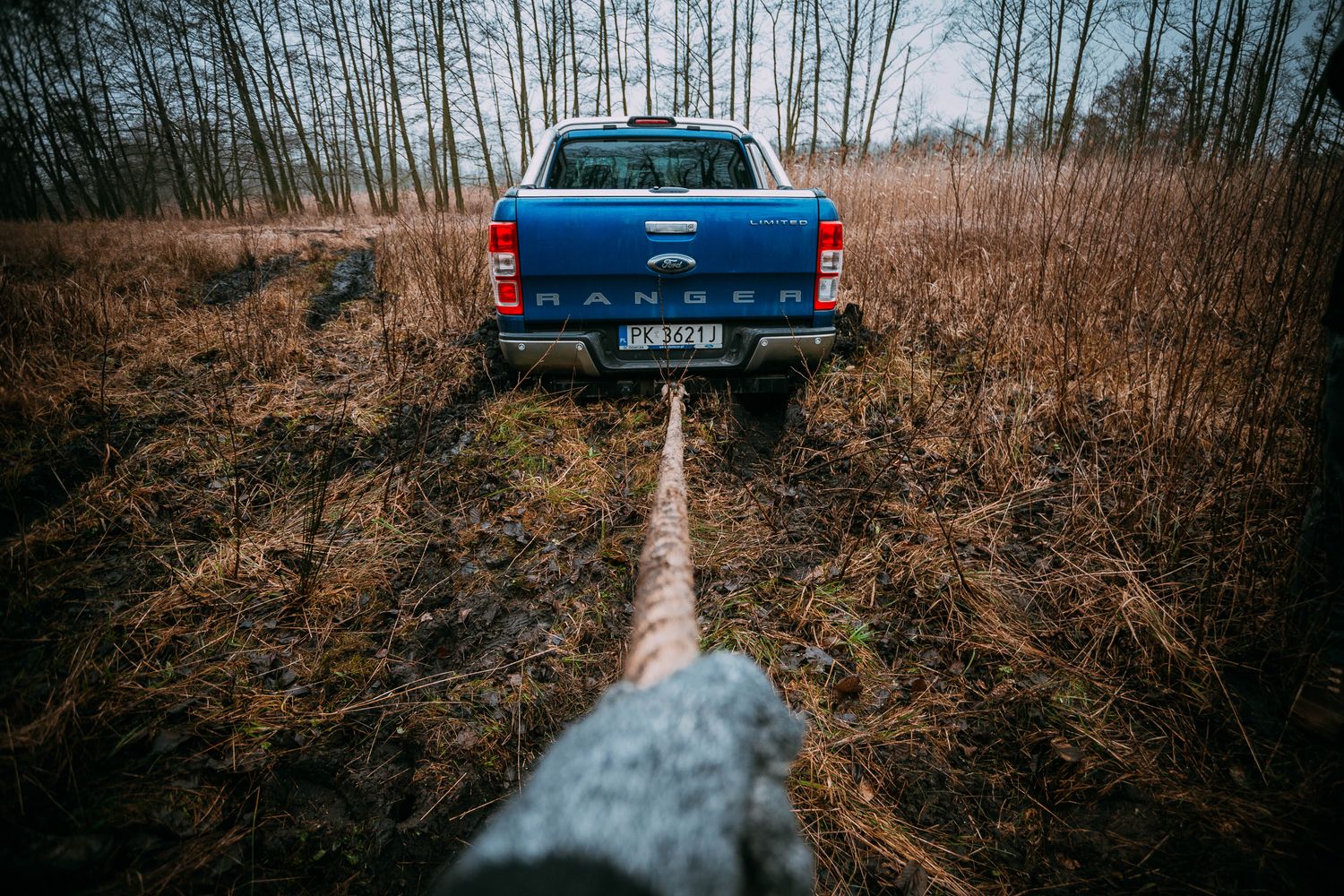
- A vehicle is stuck in mud, sand, snow, or a ditch
- You need a "running pull" or any kind of kinetic force
- The strap has visible damage, cuts, or hooks with bent gates
Bottom line: a tow strap is a transport tool. The moment a vehicle is genuinely stuck, you've moved into recovery territory and need different gear.
2. Recovery Strap: The Off-Road Workhorse
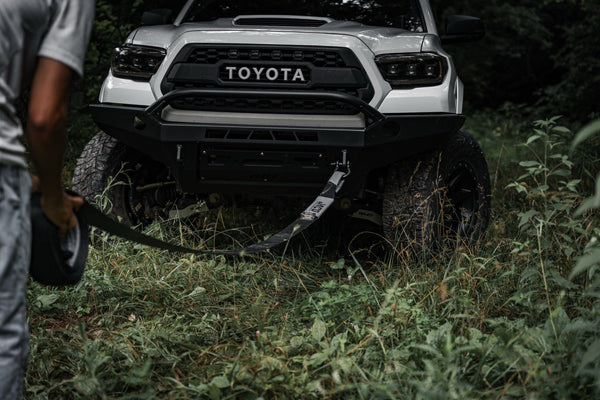
This is the strap most off-roaders should own first. A recovery strap looks similar to a tow strap but is engineered very differently. The webbing is heavier (usually nylon or high-grade polyester), it has more controlled stretch, and both ends are reinforced sewn loops instead of hooks.
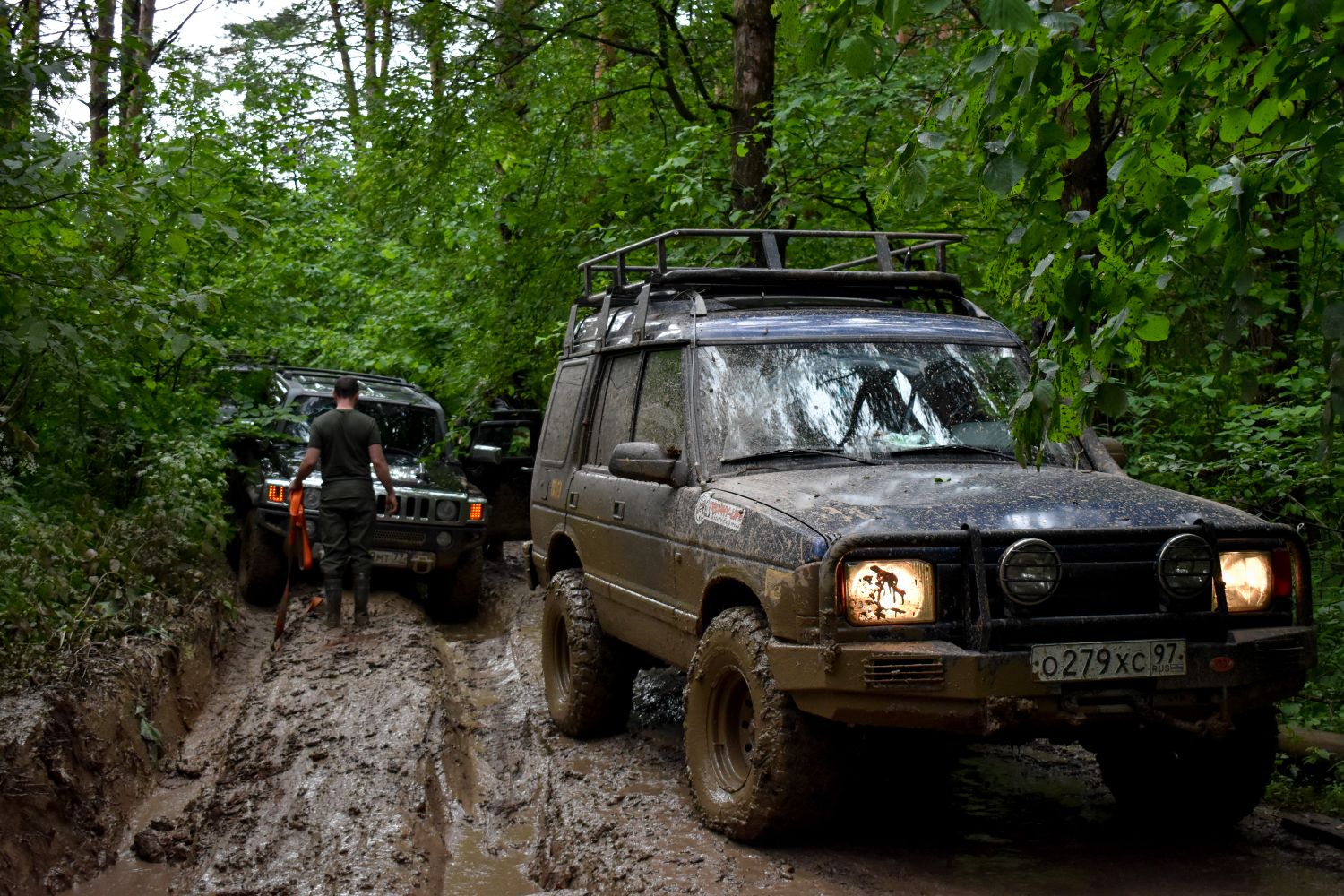
The loop ends are critical. They attach directly to a properly rated recovery point or a soft shackle — no metal hooks flying around if anything fails. The strap also has just enough stretch to absorb the shock of a moving recovery vehicle pulling on a stuck one, instead of slamming it like a rigid chain.
This is the strap that lives in most overlanders' kits because it handles the vast majority of real-world stuck scenarios:
- Bogged down in mud on a forest service road
- Buried in soft sand at the dunes or a beach
- High-centered on a rock or rut
- Slid off the trail into a ditch or shallow embankment
JACO's TowPro Recovery Tow Strap is a good example of what to look for: heavy polyester webbing, reinforced sewn loop ends, no metal hooks, and a clearly published break strength so you actually know what it can handle. (More on break strength in a minute — it matters more than most people realize.)

3. Snatch Strap (Kinetic Rope): The Heavy Hitter
Snatch straps — also marketed as kinetic recovery ropes when they're made of double-braided nylon — are the most aggressive recovery tool of the three. They're designed to stretch up to about 30% of their length and then snap back, converting the recovery vehicle's forward motion into stored energy and using it to yank a stuck rig free.
That energy is incredibly useful when a vehicle is buried so deep that a steady pull won't budge it. It's also what makes snatch straps the most dangerous piece of recovery gear in your kit if you misuse them.
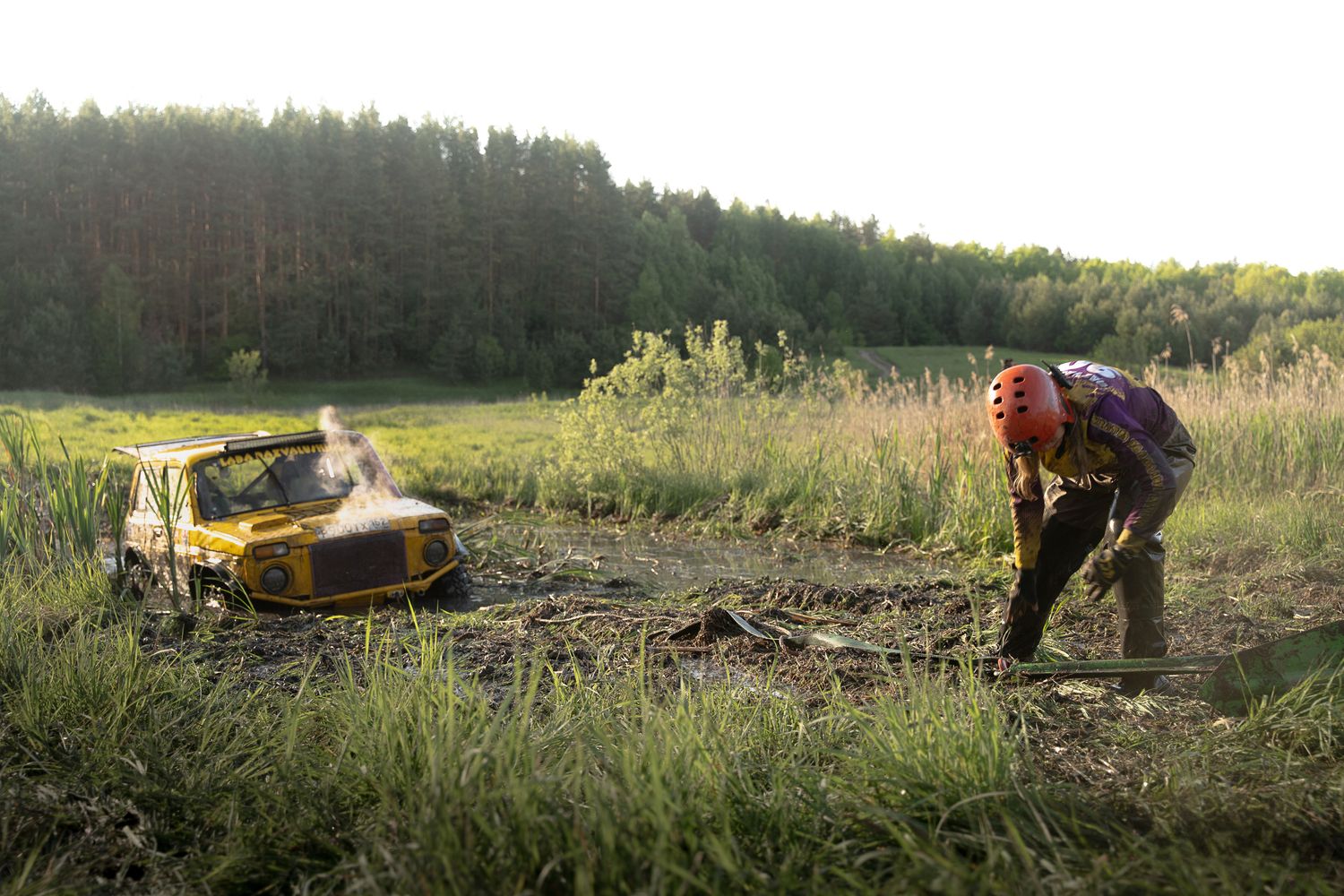
Use a snatch strap when:
- The stuck vehicle is genuinely buried (axle-deep mud, soft sand, deep snow)
- A controlled pull with a recovery strap has already failed
- Both vehicles have rated recovery points — not bumpers, tow balls, or random tie-down loops
- Everyone bystander is a strap-length-and-a-half away in a safe direction
Never use a snatch strap with metal hooks or shackles screwed directly to the loop ends. If anything fails — the strap, a recovery point, a shackle pin — that piece of metal becomes a missile. Use soft shackles or threaded soft loops instead, which fail safely without turning into shrapnel.
The One Spec That Actually Matters: Break Strength
Marketing copy loves "heavy-duty" language. Engineers care about one number: minimum break strength (MBS), sometimes called minimum tensile strength.
The rule of thumb most off-road clubs and recovery instructors teach is simple: your strap's MBS should be 2 to 3 times the gross vehicle weight (GVW) of the heaviest vehicle involved.
- Daily-driver pickup or SUV (~6,000 lbs GVW): Minimum 12,000 lbs MBS, ideally 18,000+
- Loaded overland rig (~8,000 lbs GVW): Minimum 16,000 lbs MBS, ideally 24,000+
- Heavy-duty truck or rig with trailer (~10,000+ lbs GVW): Minimum 20,000 lbs MBS, ideally 30,000+
This is why a strap with a clearly published rating (the TowPro is rated to 31,542 lbs, for example) beats a no-name strap from a gas station rack every time. If the package doesn't list a real break strength, assume the worst.
What About Soft Shackles, D-Rings, and Recovery Points?
A strap is only as strong as the weakest link in the recovery chain. Two of the most common failure points have nothing to do with the strap itself:
- Recovery points. Use the manufacturer's rated recovery points or aftermarket recovery hooks bolted to the frame. A trailer hitch ball is not a recovery point — they snap and become projectiles.
- Shackles. If you're connecting two straps or using a tree saver, run a properly rated shackle (steel D-ring or, better, a synthetic soft shackle) at the connection. Never knot two straps together — knots reduce strength by 50% or more.
If you're new to building a recovery kit, our guide to using a recovery strap safely walks through the full setup, including anchor points, dampers, and bystander positioning.
The Common Mistakes That Cause Recoveries to Go Wrong
Almost every serious recovery accident traces back to one of these:
- Using a tow strap as a snatch strap. Low-stretch webbing under shock load fails violently.
- Hooking metal directly to a strap loop. If anything breaks, that metal goes airborne.
- Anchoring to a tow ball or bumper. Both can shear off and kill someone. Use rated recovery points only.
- Skipping a strap dampener. A heavy blanket, jacket, or purpose-built dampener thrown over the middle of the strap dramatically reduces how far a snapped strap can fly.
- Letting bystanders crowd the scene. Anyone not actively recovering should be at least 1.5x the strap's length away, perpendicular to the line of pull.
- Storing a wet, muddy strap. Mud and grit chew the fibers. Rinse, dry, and store in a vented bag — not a sealed plastic tote.
Which One Should You Actually Buy?
If you're building a recovery kit from scratch and can only buy one strap, get a recovery strap with sewn loop ends and a published break strength rated for at least 2x your vehicle's GVW. It handles 90% of real-world stuck scenarios without the additional risk that comes with kinetic gear.
Once you've outgrown the basics — wheeling deeper trails, doing more solo recoveries, or running with a group that knows how to use kinetic gear safely — add a snatch strap or kinetic rope, soft shackles, and a strap dampener.
The tow strap is last on the list. Honestly, most off-roaders never need a true tow strap; a recovery strap can do the job at low speed. Save your money for better recovery points, a quality shackle, and gloves.
Recover Smart, Not Hard
The difference between tow, recovery, and snatch straps isn't marketing fluff — it's the difference between a quick trail story and a hospital visit. Match the strap to the situation, respect the load ratings, and never run metal hooks directly off a stretchy strap.
If you're piecing together your first recovery kit, start with a properly rated recovery strap, two soft shackles, and a dampener. Add a snatch strap when you're confident in your technique and the people you wheel with. Then go find a trail and use them the way they were designed to be used: carefully.