
Every winter, the first hard freeze catches thousands of drivers off guard. AAA responds to more than half a million crashes and hundreds of thousands of roadside rescues during winter weather each season — and the overwhelming majority are preventable. The difference between a white-knuckle scare and an uneventful commute usually comes down to two things: how you prepared your vehicle before the cold hit, and how you drive once the roads turn slick.
This guide covers the winter driving safety essentials that actually matter — the gear worth keeping on board, the maintenance that pays off, and the cold-weather techniques that keep you pointed in the right direction. Whether you're commuting through Colorado snow or just want to be ready for that one nasty storm, here's what you need to know before the temperature drops.
Prep Your Vehicle Before the First Freeze
Winter readiness starts in the garage, not on the interstate. Cold weather is brutal on the systems your car relies on most, and small problems become big ones fast when it's 15 degrees outside.
Run through this checklist before the season sets in:
- Battery: Cold slashes battery capacity by up to 35%. Have it load-tested if it's more than three years old.
- Antifreeze/coolant: Confirm a proper 50/50 mix so your system won't freeze.
- Wiper blades and washer fluid: Swap worn blades and top off with winter-rated, freeze-resistant fluid.
- Lights: Shorter days mean more night driving. Check every bulb.
- Fuel: Keep the tank at least half full to reduce condensation and give you a buffer if you get stranded.
Ten minutes of prep now saves you from a dead battery in a frozen parking lot later.
Check Your Tires and Tire Pressure
Your tires are the only thing connecting two tons of metal to an icy road, so they deserve extra attention in winter. Start with tread depth — anything under 4/32" struggles badly in snow and slush. If you live somewhere with regular winter weather, dedicated winter tires dramatically outperform all-seasons below 45°F.
Then there's pressure, and this is where most people slip up. Tire pressure drops roughly 1 PSI for every 10°F the temperature falls. A tire set correctly on a mild fall afternoon can be dangerously underinflated after the first cold snap — hurting traction, handling, and fuel economy exactly when you need them most. Check your pressure with an accurate gauge on a cold morning and set it to your door-jamb spec, not the number stamped on the tire's sidewall.

Build a Winter Emergency Kit

If you slide off the road on a rural stretch in a snowstorm, help can be a long time coming. A well-stocked kit turns a potentially dangerous wait into an inconvenience. Keep these in the trunk from November through March:
- Warm blanket, gloves, hat, and extra layers
- Flashlight or headlamp with spare batteries
- Non-perishable snacks and bottled water
- Small folding shovel and a bag of sand or cat litter for traction
- Ice scraper and snow brush
- Jumper cables or a portable jump pack
- First-aid kit, phone charger, and a reflective warning triangle
- A quality tire pressure gauge and a portable inflator
Check the kit at the start of the season and replace anything that's expired, drained, or missing.
Master Cold-Weather Driving Techniques
Even the best-prepped vehicle needs a careful hand on winter roads. Physics doesn't negotiate, so give it room:
- Slow down. Posted limits assume dry pavement. Cut your speed and let others rush past.
- Increase following distance. Stopping on snow and ice can take three to ten times longer — leave 8 to 10 seconds of gap.
- Be smooth. Gentle inputs on the throttle, brake, and steering keep your tires gripping. Abrupt moves break traction.
- Brake early and gently. If you don't have anti-lock brakes, threshold-brake without locking the wheels.
- Handle skids calmly. Ease off the gas and steer where you want to go — don't stab the brakes.
- Go easy on hills. Build momentum before the climb, then ease off at the top rather than powering up.
Keep a Portable Inflator On Board
Winter is exactly when tire pressure swings the most, and a gas-station air pump isn't always nearby — or working — when the mercury drops. A cordless inflator lets you correct low pressure in your own driveway or on the shoulder without hunting for an outlet or fumbling with a hose in the cold. It's also the fastest way to reseat a tire that's lost air overnight before a morning commute.
Pack one alongside your gauge so you can check and fix pressure anywhere. The pairing is one of the cheapest upgrades to your winter safety net.

What to Do If You Get Stuck
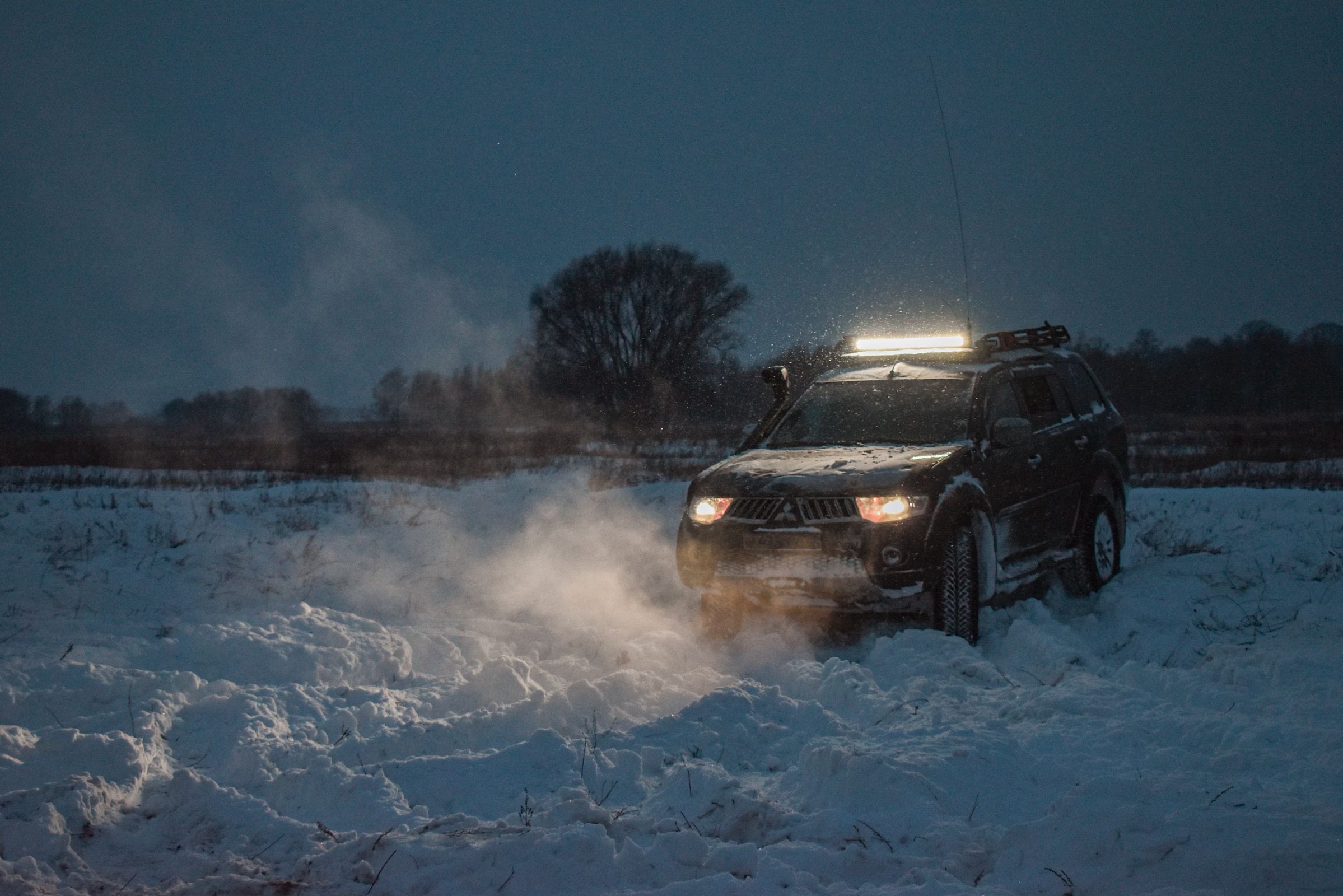
If you slide into a snowbank or lose traction on an unplowed road, don't panic and don't spin your tires — that just digs you deeper and can overheat your transmission. Instead:
- Clear snow away from around your tires and the underside of the car with your shovel.
- Improve traction by spreading sand or cat litter in front of (or behind) the drive wheels.
- Straighten your wheels and ease onto the throttle gently — rocking between drive and reverse can help.
- Lower tire pressure slightly to widen the contact patch if you're truly stuck, then reinflate with your onboard pump once you're free.
If you can't get out and conditions are dangerous, stay with your vehicle, run the engine sparingly for heat (with the exhaust pipe clear of snow), and call for help. Your car is far easier for rescuers to find than you are on foot.
Drive Ready All Winter Long
Winter driving safety isn't about luck — it's about preparation. Service your vehicle before the freeze, keep your tires and pressure dialed in, stock a real emergency kit, and adjust your driving to the conditions. Do those four things and the worst storms become far less intimidating.
Want to build out the rest of your cold-weather toolkit? Browse the full lineup of JACO tire pressure gauges, inflators, and accessories and head into the season ready for whatever the road throws at you. For more seasonal prep, check out our guide on winterizing your garage.